If you’ve ever walked past a traditional New England home and admired those smooth, overlapping horizontal boards going over the exterior, you’ve already seen clapboard siding in action. It’s one of the oldest and best recognizable siding patterns in North America, and it still holds up today, both in appearance and function.
What is clapboard siding, exactly? It’s a style of exterior wall covering created from long, narrow planks laid horizontally, with each board slightly overhanging the one below it. This guide lays down everything: what it’s composed of, how much it costs, how it compares to other siding kinds, and whether it’s the perfect choice for your home.
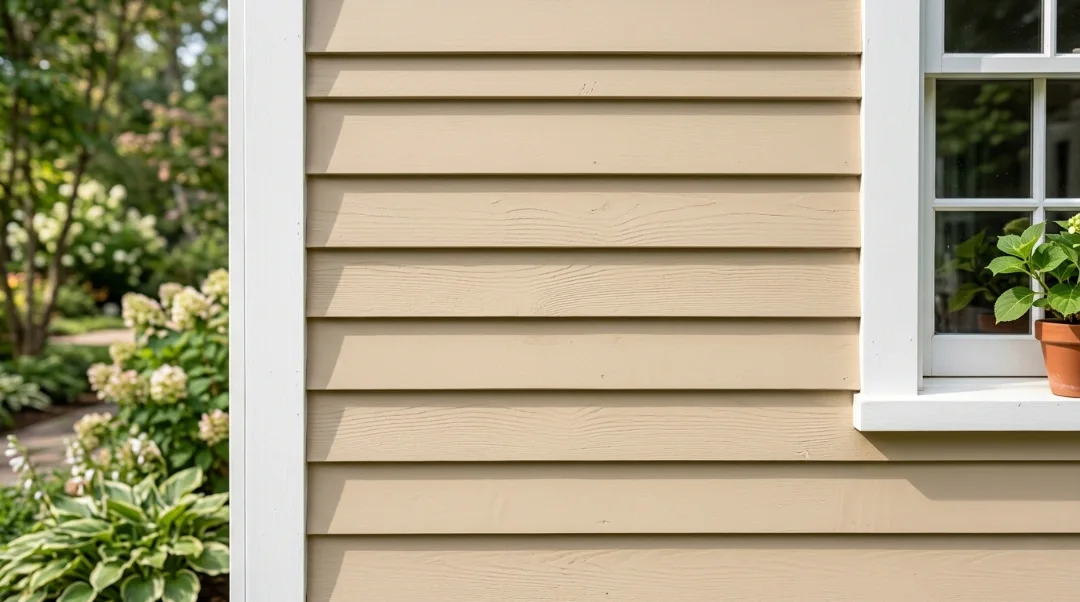
A close-up look at clapboard siding showing the clean horizontal overlap and subtle wood grain texture.
Quick Answer: What is Clapboard Siding?
When you utilize clapboard siding, you put long, tapering boards on the outside of a house in a horizontal pattern. The boards fit together such that they don’t let water through and look clean and elegant. It’s one of the most common types of siding used in American homes, notably in Colonial and New England-style homes.
Understanding Clapboard Siding
The word “clapboard” actually traces back to the Dutch word klappen, meaning “to split.” Early settlers in America would split raw timber into thin, wedge-shaped strips and nail them to the exterior of their homes. The thicker end of each board sat at the bottom, and the thinner end tucked behind the board above it.
That wedge shape isn’t just decorative. It’s what makes the overlapping design so effective at shedding rainwater away from the structure. The design has stayed the same for centuries, even as the materials have changed completely.
Today’s clapboard siding works the same way but performs much better than the original wood versions.
What Does Clapboard Siding Look Like?
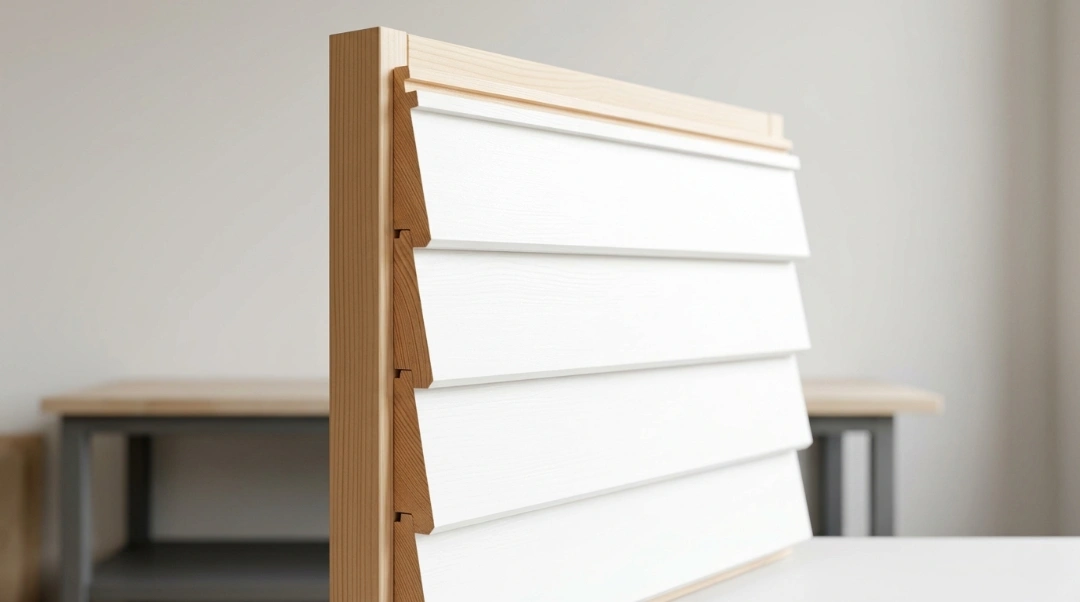
The surface of clapboard siding is smooth and level, with a small horizontal ridge where each board meets the next. The end result is a layered, clean look with soft shadow lines on the wall. It has a simple yet robust look on the outside that works with many different types of homes.
One of the most interesting visual aspects is the shadow lines. They add depth and character to the wall without being too heavy or fancy. Clapboard is a middle ground between the plain look of flat board siding and the ornamental look of Dutch lap or beaded seam siding.
What is Clapboard Siding Made Of?
Clapboard siding is traditionally made from wood, but modern versions use fiber cement, vinyl, steel, or engineered wood. The material you choose directly affects durability, maintenance needs, and cost. Fiber cement is currently the most popular option because it combines low maintenance with a realistic wood-like appearance.
Here’s a breakdown of each material:
Wood (Cedar, Redwood, Pine) Cedar siding is the most authentic choice. It has a natural resistance to rot, insects, and warping, which is why you’ll still find it on historical homes across New England. That said, wood clapboard requires painting or staining every 3 to 5 years. Skip the upkeep, and it will crack, swell, or develop dry rot.
Fibre cement is what most modern homes are made of. Fibre cement is a mixture of sand, cellulose fibres, and cement. It doesn’t get wet, catch fire, or get bugs, and it keeps paint on longer than raw wood. It’s tougher to put up and heavier than vinyl, but it pays dividends in the long run.
Vinyl Vinyl clapboard siding is affordable and requires very little maintenance. The downside? It fades with sun exposure, and matching replacement panels to faded sections is nearly impossible. It can also crack in extreme cold.
Steel Steel lap siding is gaining popularity as a durable, low-maintenance alternative. It resists rot, fire, and impacts, and it comes in woodgrain finishes that closely mimic the look of real cedar or pine. It won’t need repainting as frequently as wood or fiber cement.
Types of Clapboard and Horizontal Siding
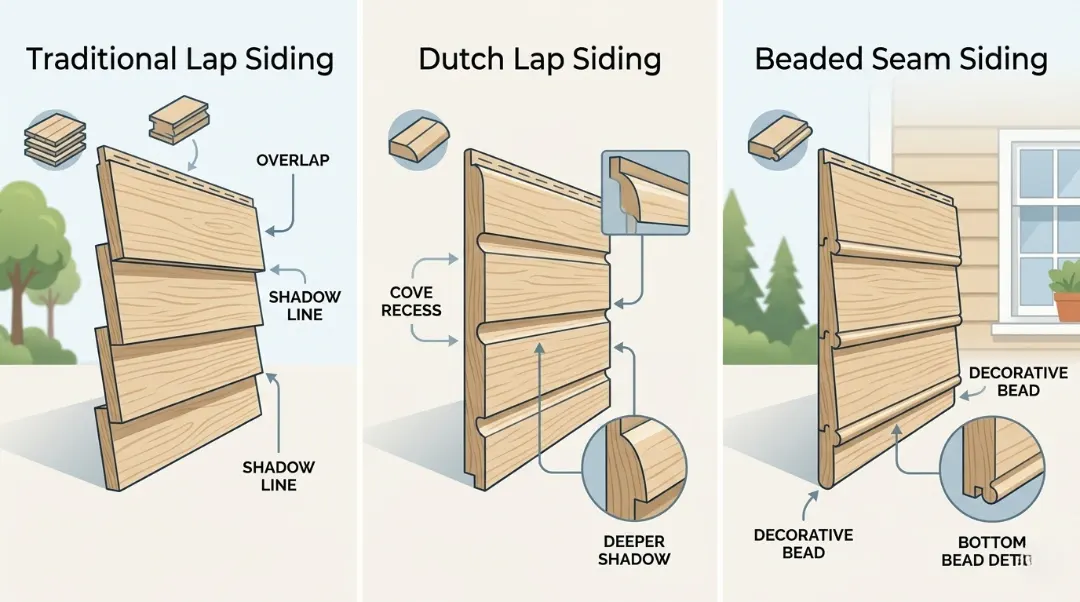
A visual comparison of three horizontal siding styles
Clapboard is one style within the broader category of horizontal siding. Here are the most common types worth knowing:
Traditional Lap Siding
Often used interchangeably with clapboard, but lap siding boards are uniform in thickness rather than tapered. It gives a flatter, more modern profile.
Dutch Lap Siding
The top of each panel of Dutch lap has a notch or groove carved into it. Compared to regular clapboard, this makes the shadow lines stronger and the texture better. A lot of Colonial Revival homes have it.
Beaded Seam Siding
This style has a small rounded bead along the bottom edge of each board. It’s rooted in Southern architecture and has a more refined, decorative appearance.
Where is Clapboard Siding Used?
Clapboard siding started in the Northeast and became a hallmark feature for New England homes, especially Colonial, Cape Cod, and Craftsman-style homes. It’s utilized all around the country now.
It can be used on houses, barns, garages, and small buildings. Some homeowners utilize clapboard siding all over the outside of their homes. In contrast, others only use it as an accent on certain parts, such as dormers or gable ends.
The white clapboard house is undoubtedly the most famous example of American residential architecture. Still, clapboard also looks well in grays, blues, and earthy tones.
Cost of Clapboard Siding
Clapboard siding costs vary quite a bit depending on the material:
| Material | Cost Per Sq Ft | Long-Term Maintenance Cost |
| Wood (Cedar/Redwood) | $7 – $14 | High (painting every 3-5 yrs) |
| Fiber Cement | $5 – $13 | Low to Medium |
| Vinyl | $3 – $8 | Low |
| Steel Lap | $4 – $9 | Very Low |
Benefits and Drawbacks of Clapboard Siding
Clapboard siding offers a timeless aesthetic, strong weather resistance, and wide material options. Its main drawbacks depend on the material: wood demands high maintenance, vinyl fades and cracks, and fiber cement can be heavy to install. Choosing the right material makes all the difference in long-term performance.
Benefits:
- Classic, versatile appearance that suits many architectural styles
- Strong water-resistant design from the overlapping board structure
- Available in multiple materials to fit any budget
- Works on full exteriors and as accent siding
- Natural insulation when built from wood
Drawbacks:
- Wood clapboard requires consistent upkeep to avoid rot and warping
- Vinyl fades over time and is hard to color-match for repairs
- Fiber cement is heavier and harder to install as a DIY project
- Harsh climates with heavy snow or rain accelerate weathering
Maintenance and Care for Clapboard Siding
Maintenance schedules depend entirely on the material you choose.
Wood clapboard needs inspection every year. Look for cracks, peeling paint, or soft spots that signal moisture damage. Plan to repaint or restain every 3 to 5 years. Address any rot early, because it spreads fast.
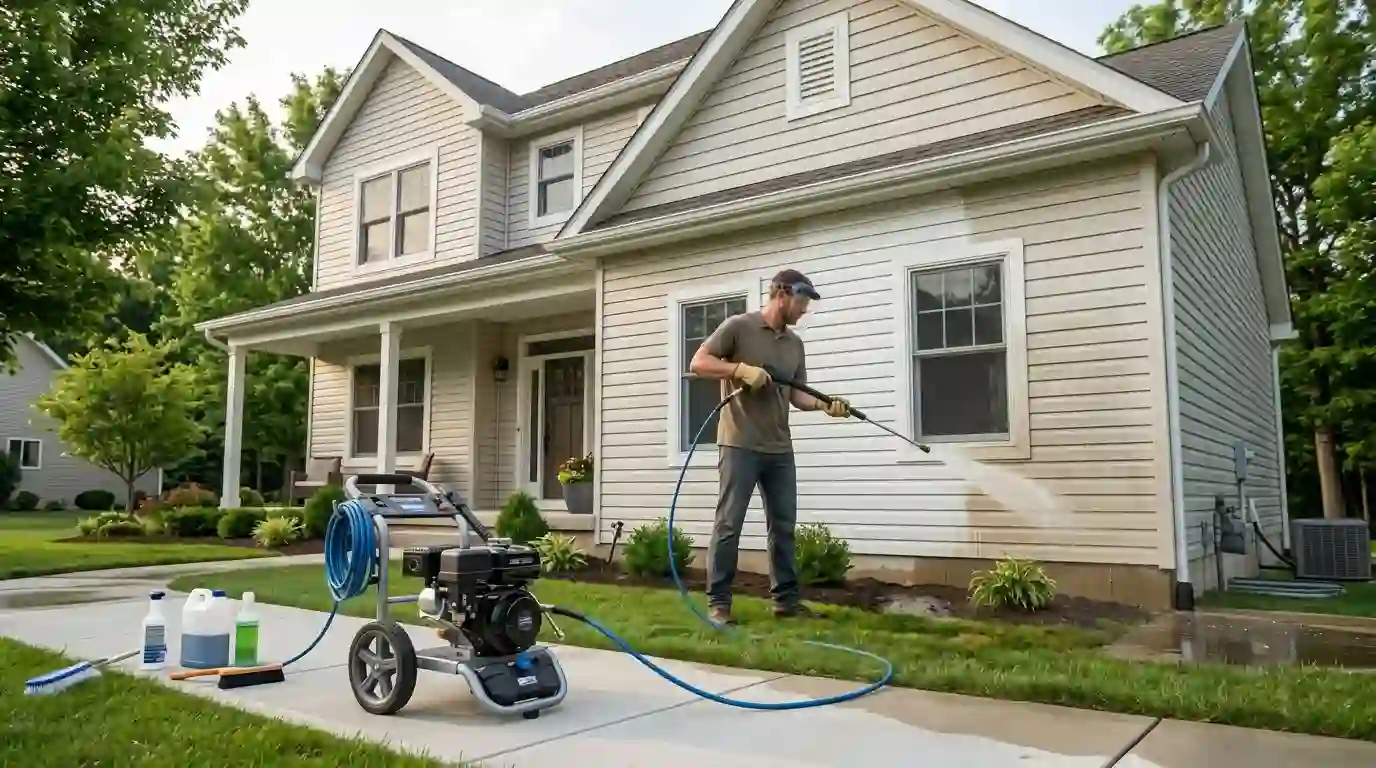
Vinyl needs periodic washing with a soft brush and mild detergent. Avoid pressure washing at high settings, as it can force water behind the panels.
Fiber cement is the most forgiving. It typically needs repainting every 10 to 15 years and occasional inspection for caulk cracking around joints and trim.
Steel lap siding is nearly maintenance-free. Rinse it occasionally and inspect for any dents or scratches that could expose the base metal to moisture.
Climate Considerations: Which Material Fits Your Region?
This is something both competitors miss completely, and it’s genuinely useful information.
Hot, dry climates (Southwest U.S.): Vinyl can warp under intense heat. Fiber cement or steel hold up much better and won’t expand and contract as dramatically.
Cold, wet climates (Northeast, Pacific Northwest): Wood clapboard absorbs moisture and is vulnerable to freeze-thaw cycles. Fiber cement or steel are the smarter picks here.
Coastal areas: Salt air accelerates corrosion and paint degradation. Fiber cement with a factory finish, or properly coated steel, performs best near the ocean.
Moderate climates: You have the most flexibility. Wood is viable with consistent upkeep, and vinyl is a cost-effective option where temperature swings aren’t extreme.
Does Clapboard Siding Add Home Value?
Yes, and it’s a meaningful upgrade. According to Remodeling Magazine’s Cost vs. Value Report, fiber cement siding replacement offers a return on investment of roughly 88% to 90% in many U.S. markets. That’s one of the strongest ROI figures for any exterior remodel project.
A freshly painted clapboard exterior, especially a white clapboard house with updated trim, consistently ranks among the most appealing looks for home buyers. Curb appeal isn’t just aesthetic, it directly influences perceived value.
Final Thoughts
Clapboard siding has been used on American homes for more than 400 years, and it is still one of the most popular choices for the outside of homes today. The design is basic, works well, and looks great on a lot of different homes.
The material you choose will affect everything from how often you need to clean it to how much it will cost you in the long run. Wood adds authenticity, but it also requires a lot of work. Most homeowners find that fibre cement is the perfect balance between looks and strength. Vinyl is a good choice for places with mild weather and a tight budget. If you want an exterior that lasts a long time and doesn’t need much upkeep, steel is becoming one of the best choices.
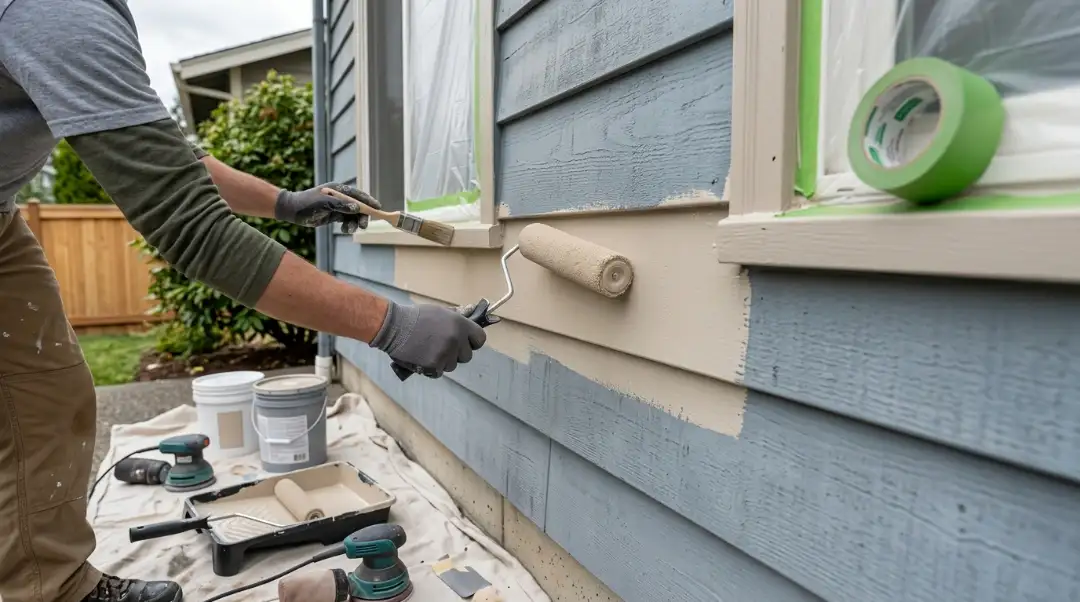
If you’re planning an exterior renovation and need professional help choosing the right siding or refreshing your home’s paint, Inter Color Painting LLC offers trusted Exterior Painting Services Seattle with years of hands-on experience. Getting the prep work and finishing right matters just as much as the siding material you choose.
Are you still not sure what kind of siding or paint finish is best for your home? We’re glad to help. Contact us immediately and our experts at Inter Color Painting LLC will go over your alternatives with you, with no pressure or guesswork. Just honest advice from those who work outside of buildings every day.
People Also Ask About Clapboard Siding
What’s the difference between siding and clapboard?
Siding is the broad term for any exterior wall covering. Clapboard is one specific style of siding, defined by its horizontal, overlapping tapered boards. Think of siding as the category and clapboard as one option within it, alongside vinyl panels, board and batten, shingles, and other styles.
What is clapboard siding made of?
Clapboard siding is made from wood (cedar, redwood, or pine), fiber cement, vinyl, or steel. Traditional clapboard used split wood boards, but modern versions rely heavily on fiber cement for its combination of durability and low maintenance needs.
What does it mean to call them clapboards?
The Dutch term klappen, which means “to split,” is where the name derives from. Early American settlers created clapboards by hand-splitting raw wood into thin, tapered strips. Even though the way things were made changed, the name stuck.
How does clapboard siding look?
It seems flat and layered, with horizontal boards on the outside. There are faint shadow lines where each board slightly overlaps the one below it. The overall look is clean and classic, and it’s most common on Colonial and New England-style residences.
What kind of siding should you stay away from?
If you live in a place with extreme weather, you should stay away from low-quality vinyl. It fades, cracks in the cold, and is hard to fix with a hue that matches exactly. Untreated wood is also a bad choice in hot or coastal areas since it is sensitive to moisture and can rot.