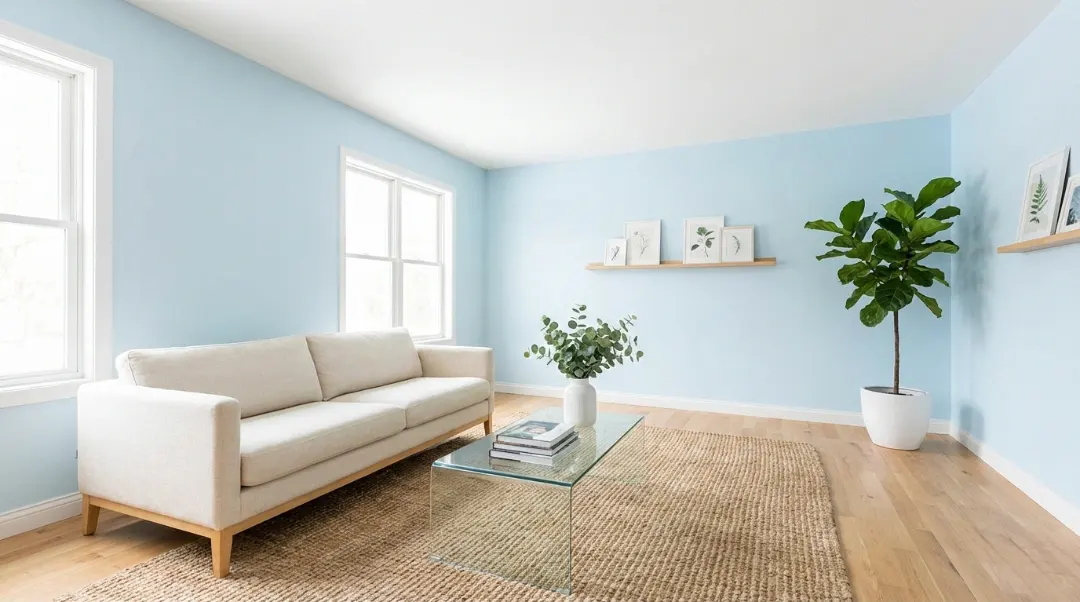
Have you ever walked into a tiny area and felt like the walls were closing in? You’re not the only one. Tight spaces, like a small bedroom, a small living room, or a narrow hallway, might be uncomfortable.
The good news? You don’t have to break down walls or move to a bigger area to remedy it.
The secret is simple: paint colour. Knowing what colors make rooms look larger is one of the most powerful and budget-friendly design tricks out there. The correct colour for the walls makes a room feel bigger than it is.
We’ll show you all you need to know in this article, from the best light paint colors for small rooms to how dark colors can actually help you.
How to Make Rooms Look Larger with Paint
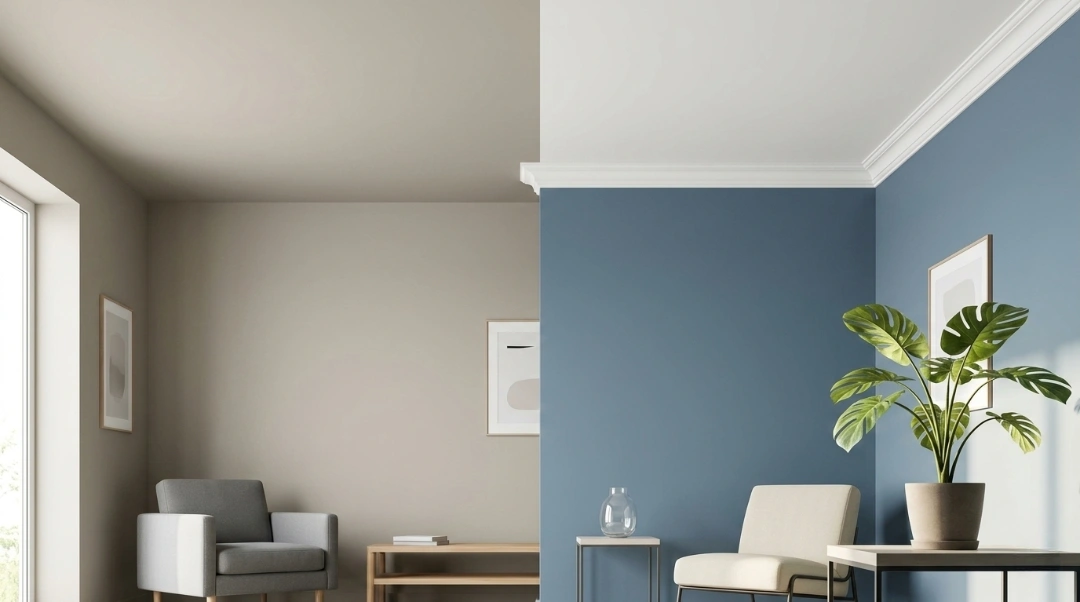
Knowing how a color interacts with light is more important than the color itself when it comes to creating the illusion of more space. Shadows provide the illusion of a smaller, more enclosed space, and light dispels them. By manipulating the direction of light, you may make a space appear larger just by changing the wall color.
Expert painters use colors that reflect light to accomplish this. Instead of absorbing light, these shades reflect it back into space. The room’s corners, edges, and boundaries become less noticeable when light bounces off of them, giving the impression that the walls are “pushing out.”
Choose Light Reflecting Paint Colours
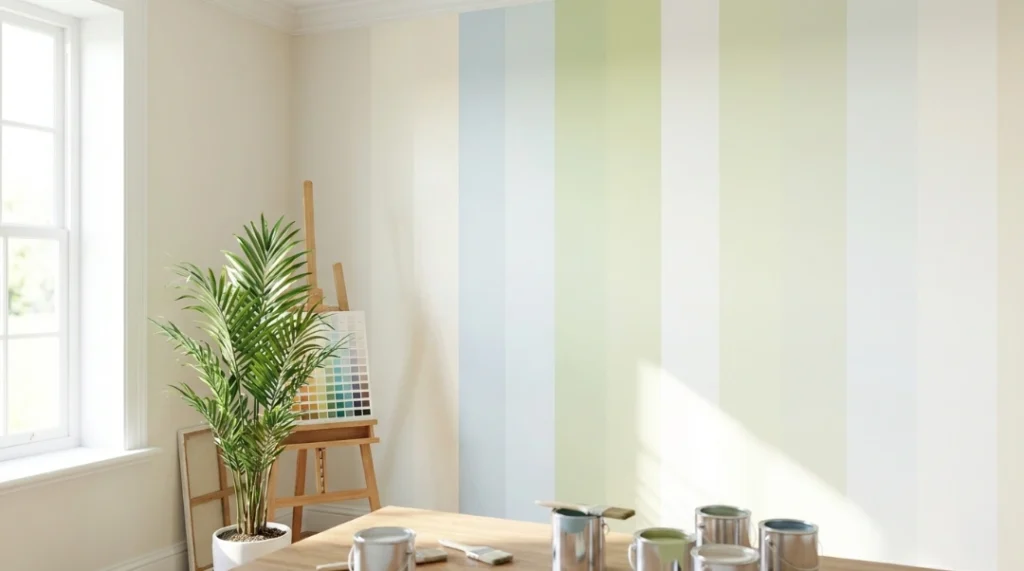
Take a look at the Light Reflectance Value (LRV) on paint swatches if you want to know which wall color would make a tiny bedroom seem more spacious. The higher the number, the greater the paint’s ability to reflect light..
- Soft Whites: Not all whites are created equal. A “cool” white can make a room feel clinical, while a “warm” white adds a cozy, expansive glow.
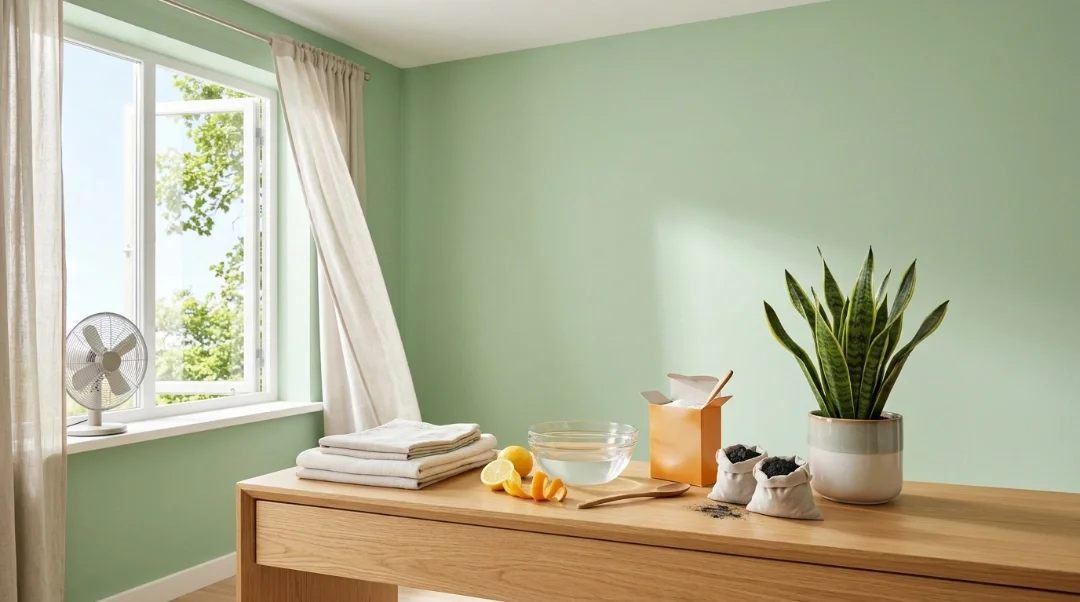
- Cool Blues and Greens: The term for these hues is “receding” hues. Color theory states that when an object or shade seems to be farther away from the viewer than it actually is, we say that it is receding.
- Pastels: Soft lavenders or mint greens offer enough pigment to show personality without making the walls feel like they are closing in.
Use Dark Paint Colors to Make Walls Seem Further Away
A lot of people are shocked to hear that dark paint may occasionally make a room feel bigger if it is used in the right way. If you want to know if dark colours make a space look smaller or bigger, it really depends on where they are and how the light hits them. Deeper colours can make a room look bigger and more interesting instead of making it feel closed in when there is a lot of light. To keep things in balance, designers generally paint one accent wall dark and mix it with light trim and ceilings. They might even employ dark paint in a monochromatic color scheme. Darker colors tend to make things look farther away, which might make the wall look farther away and provide depth to the area.
Introduce Vertical Painted Stripes to Create the Illusion of Height
Trying to make a space seem more expansive without actually raising the ceiling? Give vertical stripes a go on the walls. The process is as easy as it sounds, but the end product may be breathtaking.
A person’s gaze is drawn upwards by narrow vertical stripes. The illusion of a taller room is created when one looks up the wall rather than across it. When vertical space is at a premium in a room, this strategy really shines.
Selecting two hues that are only slightly different from one another within the same colour family will result in the most harmonious and sophisticated appearance. Imagine two shades of grey side by side, or a pale white and a warm cream. You can feel the stripes, but they aren’t particularly noticeable. A tiny area can be transformed into an elegant haven with that delicate, understated impact.
Paint Floorboards to Elongate a Room
The floor is one of the largest surfaces in a room, so it’s important to consider its color in addition to the walls.
By reflecting light upward and giving the impression of a bleached finish, light-colored painted wood floors can create the illusion of more space. If the floor and walls are the same colour, it will make the room appear bigger by blending the two surfaces into one seamless whole.
Use a lighter shade of paint and a longitudinal pattern to decorate hallway floors. It makes the corridor appear more spacious by drawing the viewer’s gaze forward.
Avoid Large Patterns or Bold Colors on Every Wall
The use of bright, eye-catching colours and big, striking patterns is like a visual cacophony. They serve to divert attention in all directions and amplify the sense of claustrophobia in a relatively compact space.
That being said, going all-out isn’t necessary. Subtle patterns, such as a textured surface or a small geometric in complementary tones, can enliven a room without drawing too much attention to itself.
What About Accent Walls?
In small spaces, you can use bold accent walls. Just stick to one wall, choose a color that is classy, and leave the rest of the room quiet and neutral. A deep, muted olive or dusty rose can make a beautiful focal point without making the area appear smaller.
Use Accent Pieces to Draw Attention Away from the Walls
One way to make a room feel bigger is to paint it. Choosing the proper wall color and clever decor may make a big difference in how the whole room looks. Mirrors are quite strong because they reflect both the room and natural light, which can make the area seem almost twice as big. Choosing low-profile furniture with legs that are easy to see instead of heavy, solid bases also helps make the space feel more open since it lets you see more of the floor. Also, light-colored furniture that matches the color of your walls blends in with the background, which makes the room look cleaner and more open.
What Color Ceiling Makes a Room Look Taller?
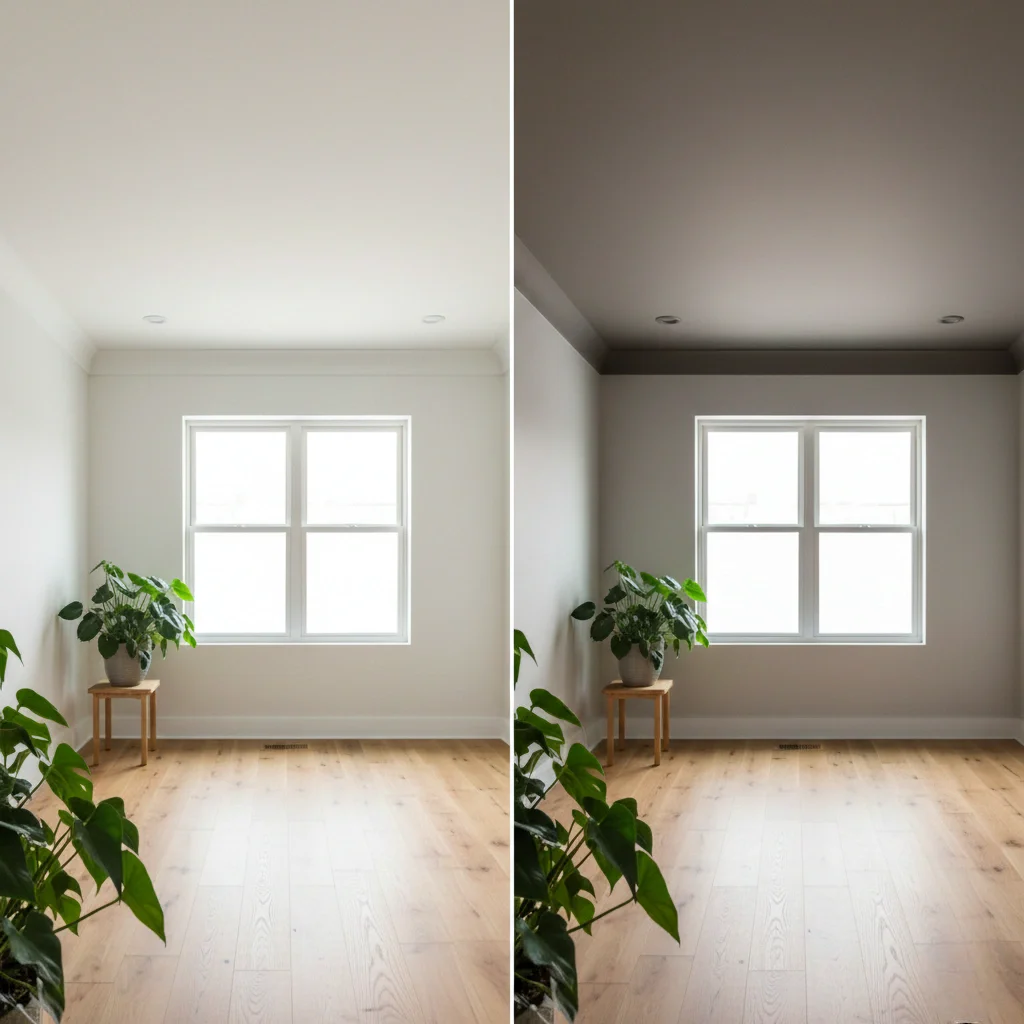
One way to make a room seem taller is to paint the ceiling a shade or two lighter than the walls. Classic white is another option.
As a design tip, paint the ceiling a shade or two lighter than the walls. The result is a soft gradient that draws the eye upwards without trying too hard. To create the illusion of more height in a room with sage green walls, try painting the ceiling a very light shade of sage green or white.
Keep low-key ceiling lights in areas with limited square footage; they reinforce the illusion of cramped quarters.
Why Is Off-White Such a Popular Color for Small Rooms?
There’s no doubt that off-white is the best hue for small rooms, and for good reason.
Pure bright white might feel cold and sterile, especially in places that don’t get a lot of natural light. Off-white is warm enough to make you feel welcome, and it also reflects light quite well.
Colors like creamy white, warm linen, and soft ivory give a room a delicate light. They also go well with practically any style of furniture, from modern and simple to warm and inviting.
Off-white looks great in rooms with an open floor plan. Using the same color in all of the adjacent rooms makes the whole area feel bigger and more connected since the eye moves smoothly from one room to the next.
Can Dark Grey Work in a Small Room?
Yes, but you have to do it the right way.
Dark gray may turn a small room from a claustrophobic box into a warm, opulent refuge. Here’s how to do it:
- Balance dark grey walls with light-colored furniture, white trim, and plenty of lighting
- Choose a dark grey with a warm undertone (charcoal rather than cool blue-grey)
- Add multiple light sources dark walls absorb light, so you need to compensate
For paint colors for small bedrooms specifically, many designers love dark grey for its calming, sleep-promoting qualities. Done right, it feels intentional and dramatic. Done wrong, it just feels dark.
Light vs. Dark Paint for Small Rooms: Which One Should You Choose?
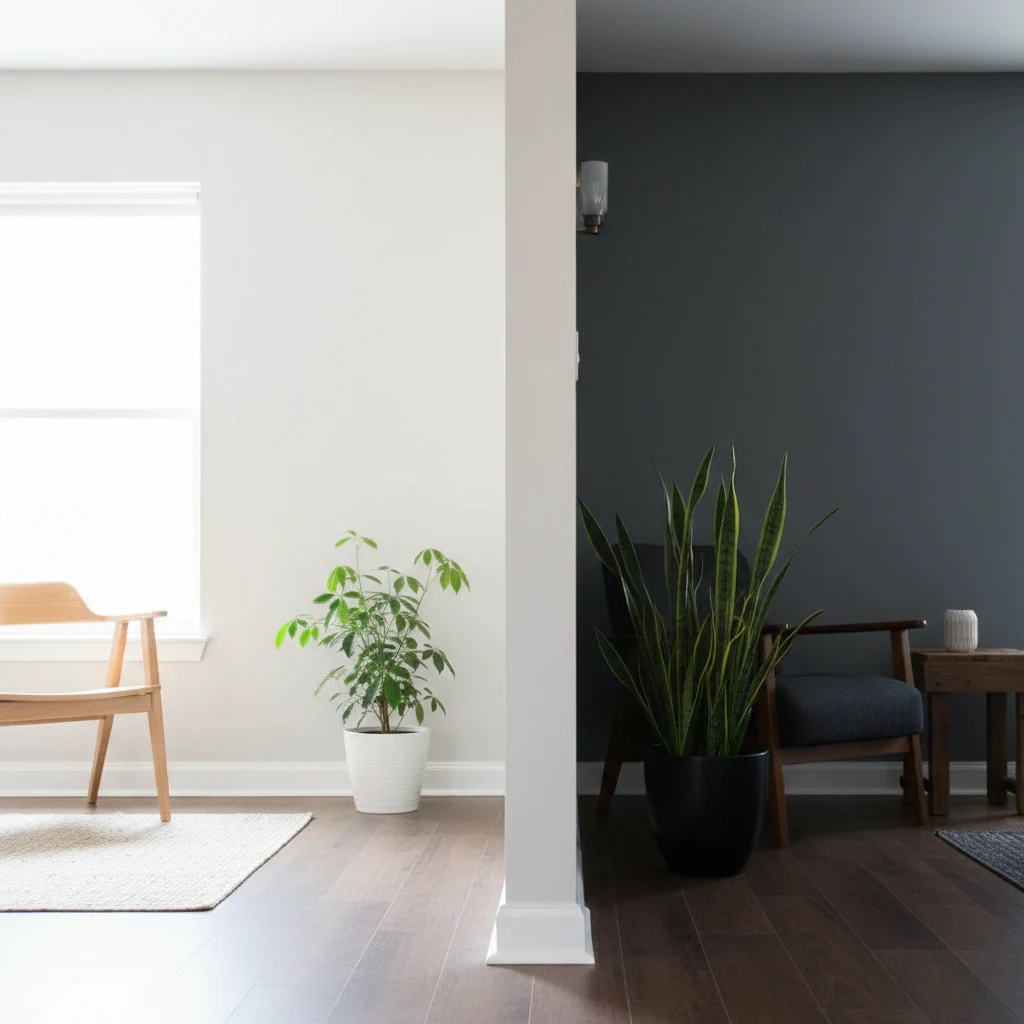
This is a question that many homeowners have, and the honest truth is that both can work well. It all depends on the room and how you want it to feel.
For most tiny rooms, light paint colours are the safer and more forgiving choice. If your room doesn’t get much natural light, has low ceilings, or is already full of dark, heavy furniture, a light colour will work best. Soft whites, warm creams, and light greys reflect light and give a tiny room that open, airy vibe that makes it feel less cramped and more comfortable.
Small rooms don’t have to be afraid of dark paint colours; they only require the correct conditions to look good. A deeper hue can offer a lot of warmth and drama to a space if it gets a lot of natural light or you have strong artificial light to make up for it. Dark colours also look great when you’re only painting one accent wall instead of all four, or when the space has higher ceilings that can take the visual weight of a bold, rich tone.
Why Choose Inter Color Painting LLC for Your Next Project?
Picking the proper colour of paint is one thing; painting it perfectly is another.
We at Inter Colour Painting LLC have years of expertise working on projects. We know how light, colour, and space work together, and we can help you pick the right colours to make your rooms look and feel their best.
We offer skilled Interior Painting Services Seattle, WA that pay attention to every detail, from the prep work and primer to the last coat. We only use high-quality, low-VOC paints that are safe for your family and will last.
Conclusion
It takes both art and science to choose colours that make spaces look bigger. You can drastically change a small area with colours that reflect light, smart contrast, and the right location. You don’t have to do a lot of work to make your home brighter and more open. Just use colours that reflect more light and smart design tricks. Contact Inter Colour Painting LLC immediately to talk about your project and get professional help picking the right colours and finishes. To keep your whole home looking coherent and open, make sure to read our linked piece, What Colour to Paint Interior Doors. It will give you even more colour ideas.
FAQs
What color makes a small room look bigger?
Soft whites, light grays, pale blues, and creamy off-whites are the best choices. These colors reflect the most light and create the strongest illusion of space.
Do light colors really make rooms look larger?
Yes. Light colors have high LRV scores, meaning they bounce both natural and artificial light around the room making it feel brighter, more open, and larger than it actually is.
Which paint color reflects the most light?
Pure white has the highest LRV of any paint color. However, warm whites and off-whites are often preferred because they reflect nearly as much light while feeling more welcoming.
Should ceilings be lighter than walls?
Yes, in most cases. A ceiling that’s the same shade or lighter than the walls draws the eye upward and creates a sense of height. White or a very pale version of your wall color works best.
What colors make a room look bigger and brighter?
Soft white, pale gray, light sky blue, warm cream, and pale sage green. The key is choosing colors with warm or neutral undertones and high LRV scores.
What color paint makes a room look larger with no windows?
Go with the brightest, most reflective white or cream you can find. Pair it with multiple light sources and consider a satin or eggshell finish these reflect artificial light better than flat/matte finishes.