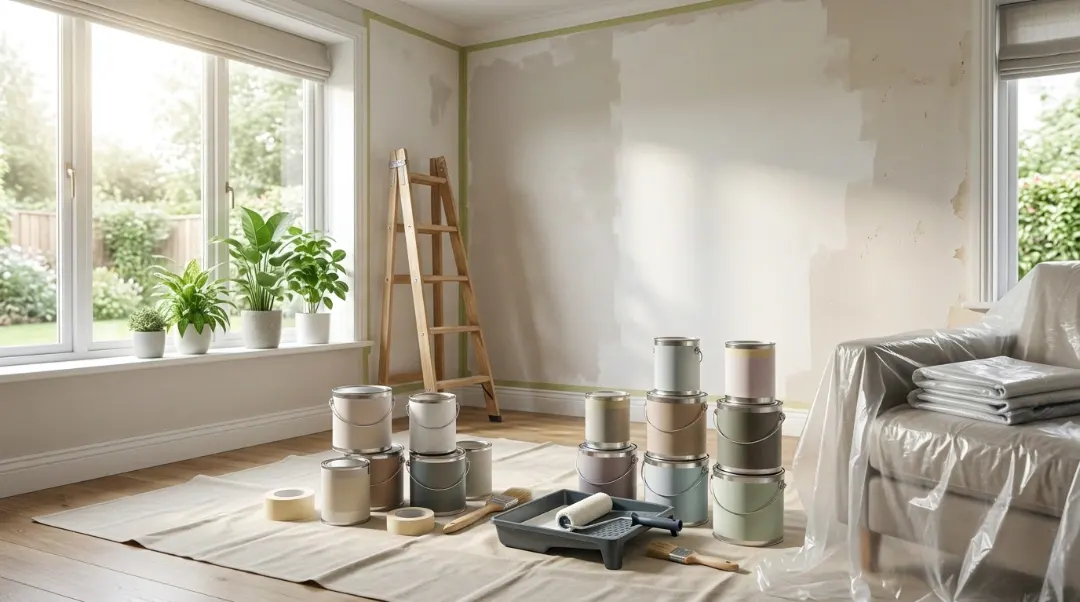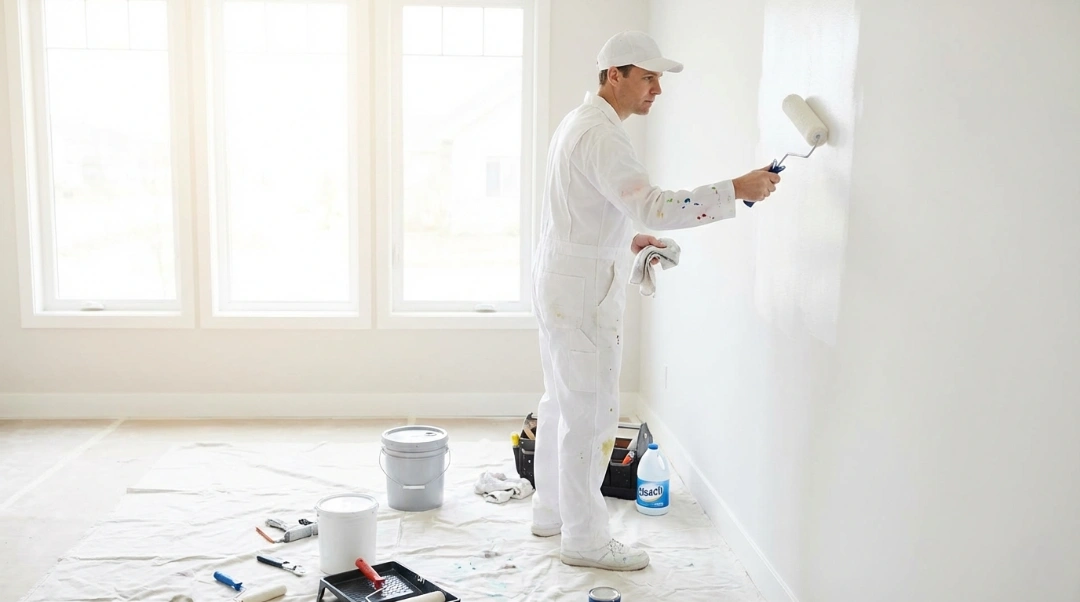
People spend a lot of time thinking about what color to paint their walls, yet they don’t think twice about painting the ceiling white. It’s the default choice, but for a lot of rooms, it’s the wrong one. The ceiling is the fifth wall in your room, and it has a bigger effect on how the room feels than most people know.
So, should the ceiling and walls be the same color? Yes, in the proper environment, it’s one of the best design choices you can make. It makes the area look clean and planned, and it may make a tiny space feel bigger. This article tells you when to match, when not to match, which paint finish to use, and what mistakes to avoid.
When to Paint the Ceiling a Color
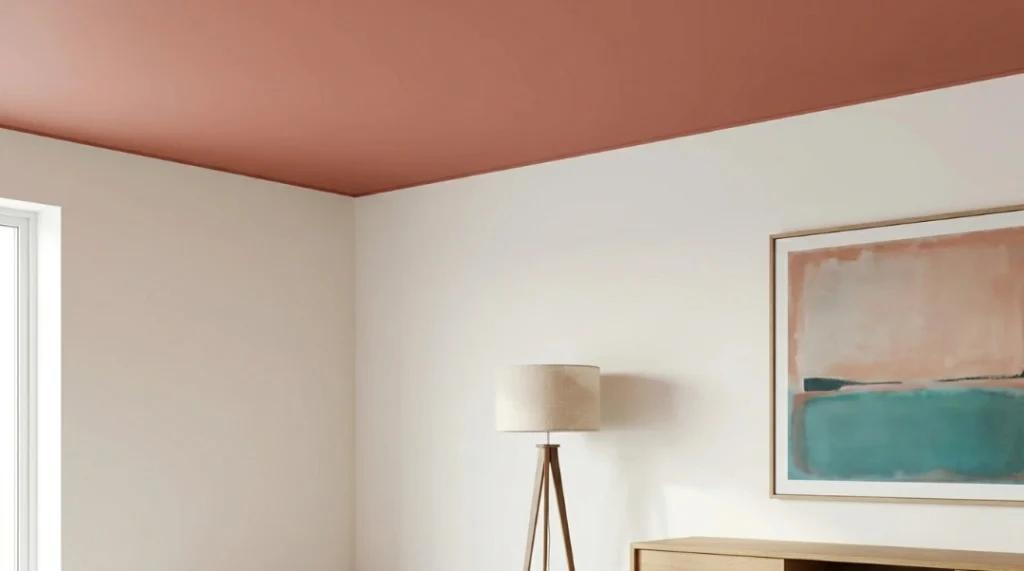
Paint your ceiling a color rather than white when you want to remove the harsh contrast line between the wall and ceiling, create a more intimate atmosphere, or visually correct a room with an awkward layout. This works best in rooms with high ceilings, sloped surfaces, or deeply toned walls.
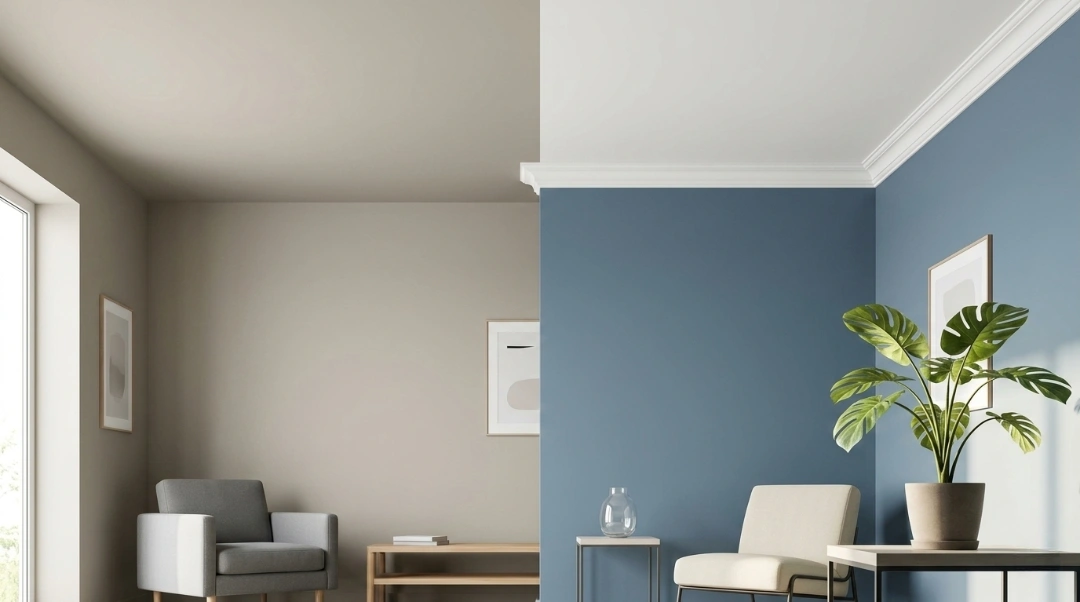
When the white ceiling and black walls meet, there is a clear optical break. That line draws your eye, and the room may feel rough or not finished. A colorful ceiling, whether it matches or goes with the walls, softens the line between the two and makes the room look more put-together and thought-out.
Dining rooms, bedrooms, media rooms, and any other room where you want to feel snug and enveloped are the perfect places for a colored ceiling. Open-plan living areas with high ceilings also look better since a single color on the ceiling binds the whole space together without breaking up the view.
Should You Paint the Ceiling the Same Color as Walls?
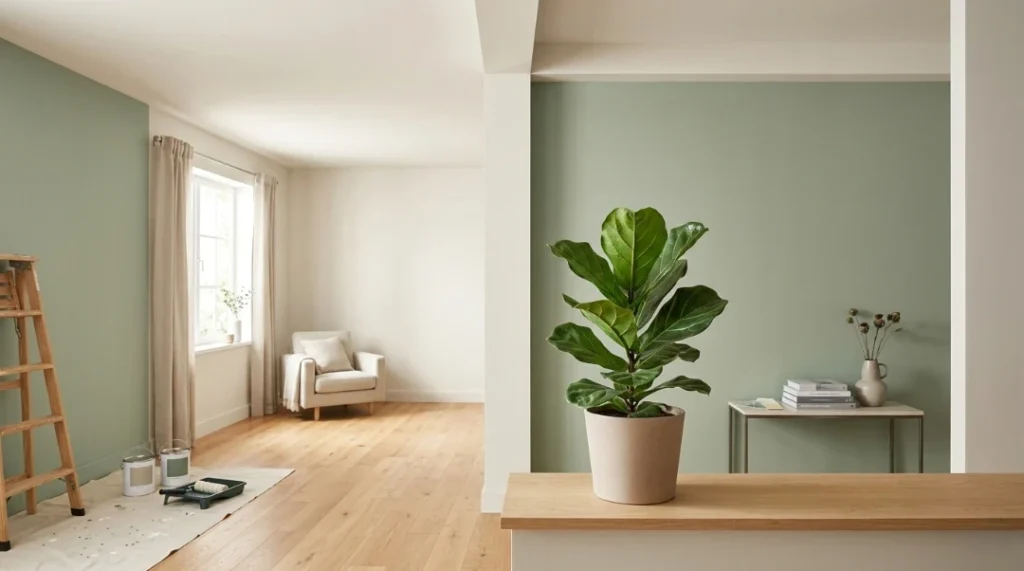
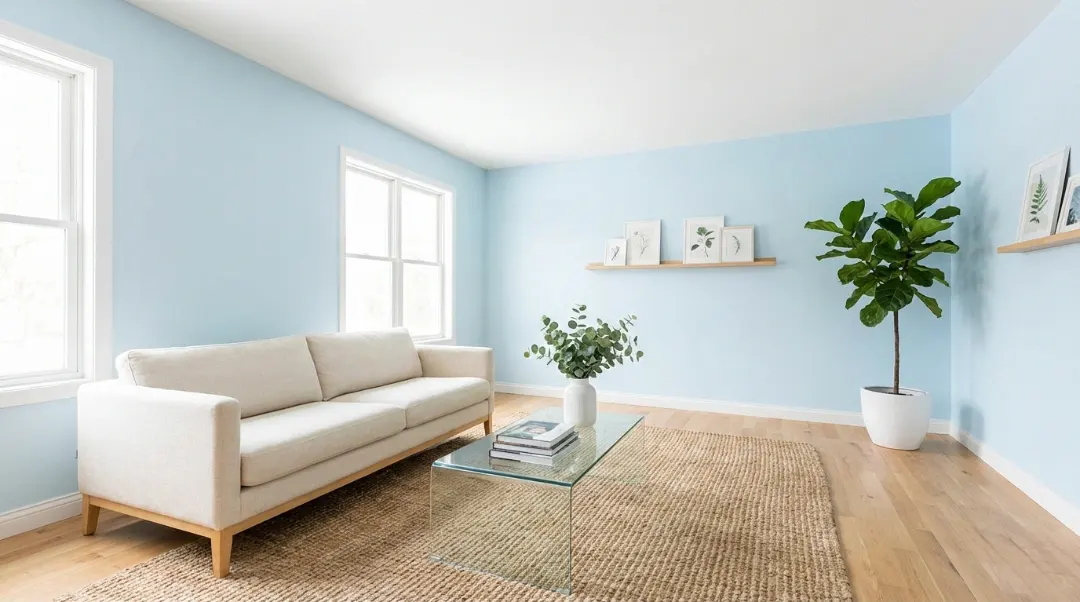
Painting the ceiling the same color as the walls can create a seamless and modern look that visually expands smaller rooms and softens harsh contrasts. This approach works best in rooms with flat ceilings, good lighting, and minimal architectural detail. However, it may not suit every layout or color scheme.
Where Matching Colors Works Best
- Small rooms like powder rooms, home offices, and compact bedrooms unified color removes visual clutter and opens the space
- Rooms with low ceilings a matching tone draws the eye upward and creates the illusion of height
- Dark, moody rooms matching ceiling and wall color makes the design feel deliberate rather than accidental
- Rooms with sloped ceilings or awkward angles one color minimizes those distracting architectural features
- Rooms with wood trim bright white on the ceiling often looks too stark next to warm wood tones
Where Matching Colors Doesn’t Work
- Rooms with very limited natural light matching dark colors on all surfaces can make the space feel closed in
- Traditional interiors with detailed crown molding a contrasting white ceiling highlights that craftsmanship beautifully
- Textured ceilings color draws attention to surface texture in ways that are rarely flattering
How to Choose the Best Paint Color for Your Ceiling
Choosing the best ceiling paint color comes down to three factors: your wall color, the amount of natural light in the room, and your ceiling height. The three main approaches are matching the ceiling to your trim color, using a lighter version of the wall color, or going fully monochromatic with walls and ceiling the same color.
Option 1: Match the Ceiling to the Trim Color
This is the most flexible and long-term-friendly choice. Painting the ceiling the same white as your trim creates consistency across the room and flows well into adjoining spaces. It also makes future repaints easier; you only need to change the walls.
Popular options include Benjamin Moore White Dove, Sherwin Williams Alabaster, and Benjamin Moore Simply White. If you already have white trim, match your ceiling to it exactly. Mixing two different whites, even subtle ones will make your trim look dirty or off-tone in real lighting conditions.
Option 2: Use a Lighter Version of the Wall Color
Ask your paint store to mix your wall color at 75% lighter for the ceiling. Going 25% or 50% lighter often produces no visible difference at all. At 75% lighter, you get a soft tonal variation that adds depth without adding contrast.
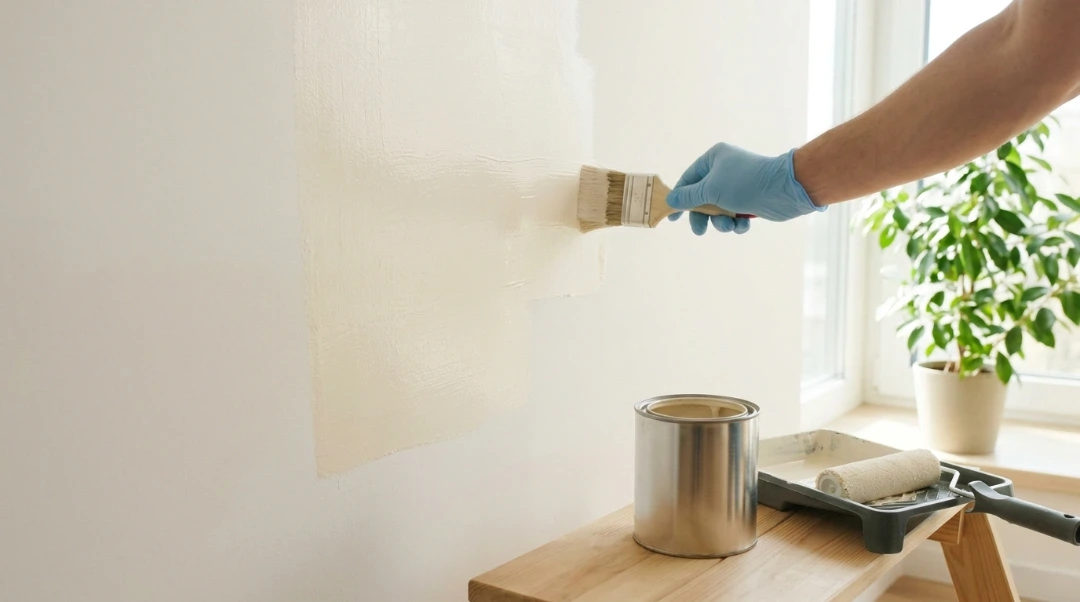
Always sample this lighter mix before buying full cans. Undertones shift significantly when a color is diluted a warm beige can turn peach, a soft green can go minty. A sample pot costs a few dollars and prevents a costly mistake.
Option 3: Paint Ceiling and Walls the Exact Same Color
This is the fully monochromatic approach: walls and ceiling are the same color, no tonal variation. It works best when the ceiling is smooth and flat (not textured) and the color is either very light or very deep. Mid-tone colors applied to both surfaces tend to look flat and undefined.
Paint the Ceiling Darker Than the Walls
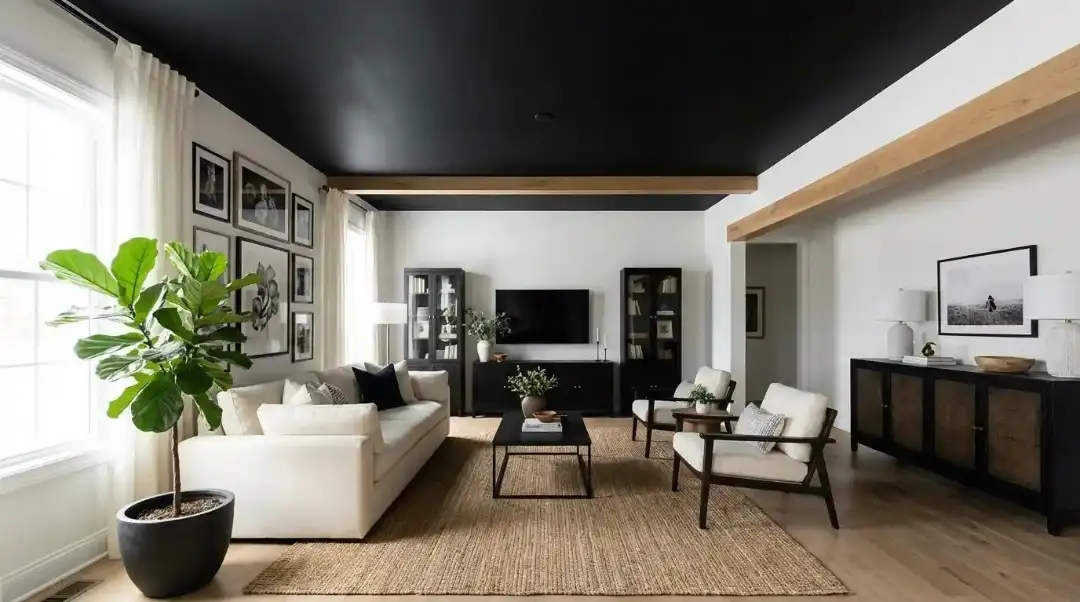
Painting the ceiling darker than the walls is a bold choice that creates an intimate, grounded atmosphere. It lowers the perceived ceiling height visually, which works well in rooms that feel cavernous dining rooms, home theatres, and spaces with very high ceilings that feel cold or oversized.
This method works best with tray ceilings. The bold accent colour on the recessed top layer adds drama without taking over the whole area. Dark ceiling paint over white moulding makes the moulding stand out even more.
One thing to keep in mind is that darker ceilings soak up light. In this case, wall sconces, pendant lights, or recessed lighting are all good options for adding enough artificial light to the room.
Pros and Cons of Painting Ceiling Same Color as Walls
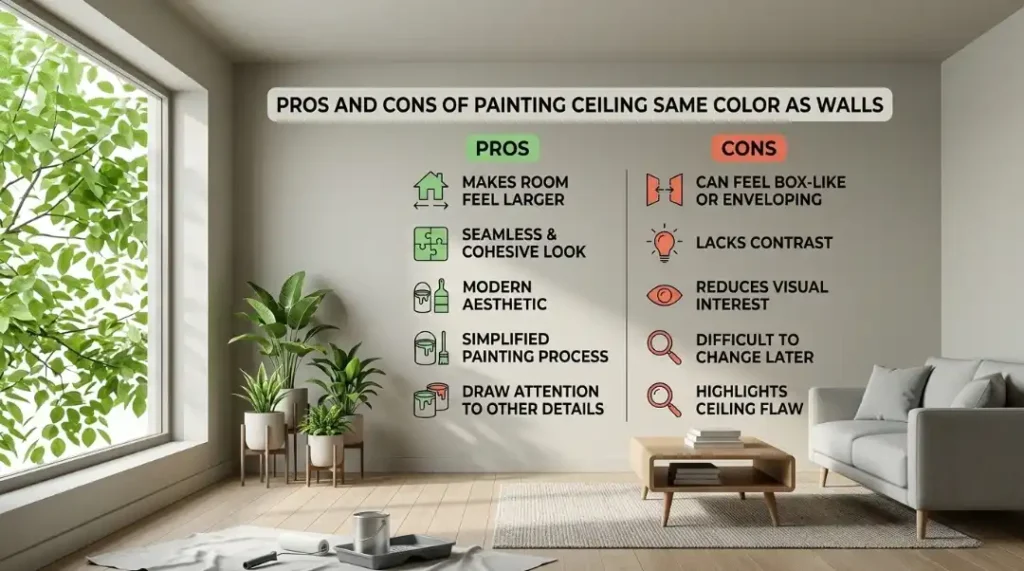
Pros
- Creates a unified, seamless look that feels modern and considered
- Makes smaller rooms feel more open by removing the ceiling-wall color break
- Downplays awkward architectural features like sloped ceilings and exposed beams
- Less cutting-in precision required at the ceiling line saves time on DIY projects
- Works particularly well in rooms with wood trim where white looks too stark
Cons
- When you repaint walls later, you also need to repaint the ceiling more cost and time
- Mid-tone colors on both surfaces can look flat and lack definition
- Not suitable for textured ceilings color emphasizes texture
- Can feel heavy in rooms without sufficient natural or artificial light
- Multiple adjoining rooms with different wall colors creates a disjointed ceiling flow across the home
What Paint Finish Is Best for Ceilings?
Flat or matte finish is the best choice for most ceilings. It hides surface imperfections, doesn’t create glare from overhead lighting, and is easy to touch up. Eggshell or satin finish works in high-humidity rooms like bathrooms and kitchens, where the ceiling surface may need occasional cleaning.
Here’s something both top-ranking competitors miss entirely: if your ceiling is flat finish and your walls are eggshell, the color will read slightly differently on each surface even if it’s the exact same paint. That’s normal. Sheen changes how color appears in light. When painting the ceiling and walls the same color, it’s perfectly fine to use flat on the ceiling and eggshell on the walls.
Avoid gloss or semi-gloss on ceilings unless it’s a very deliberate design choice. High sheen highlights every dip, brush mark, and drywall imperfection. It’s a common mistake that’s expensive to fix.
Best Ceiling and Wall Color Ideas
These combinations work consistently well across a range of room types and lighting conditions:
- Gray walls, white ceiling: one of the most searched pairings. Use a warm white like Sherwin Williams Alabaster with warm grays, and a cool white like Benjamin Moore Chantilly Lace with cool grays. Getting the undertone match right is everything here.
- Navy or deep teal walls with matching ceiling: excellent for bedrooms and media rooms. Use flat finish on both. The result is immersive and sophisticated.
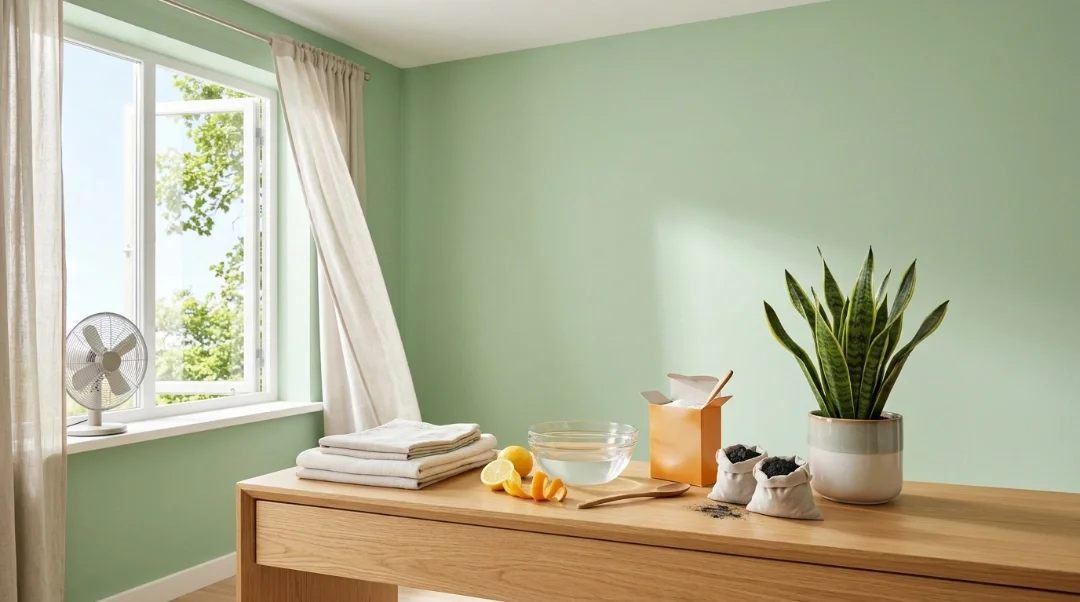
- Soft sage green walls and ceiling: a leading color direction for 2024-2025. Creates a calm, organic palette that works in bedrooms, bathrooms, and living rooms.
- Warm greige walls with a 75%-lighter ceiling: subtle depth without fully matching. The relationship between the two surfaces feels intentional but not obvious.
- Charcoal or near-black walls and ceiling in a home theatre: ceilings the same color as walls creates a fully immersive, cinematic environment.
- White walls and white ceiling: still the most versatile combination. Use the same white across trim, ceiling, and walls for a clean, cohesive, airy result.
Tips for Successfully Matching Ceiling and Wall Colors
- Always get a sample pot and test the color on both the wall and ceiling before buying full cans light hits each surface at a completely different angle
- Check samples at different times of day. Morning natural light and evening artificial light can make the same color look entirely different
- Paint the ceiling first, then cut-in at the ceiling-wall line. That’s the professional sequence. Do you paint the ceiling first or the walls? Ceiling first, always drips land on unpainted walls that way
- Use ceiling-specific paint where possible. It’s thicker, less prone to dripping, and formulated to minimize lap marks
- If your trim is cream or off-white, match the ceiling to the trim not to the walls. Competing off-whites in the same room always look worse than a straightforward color mismatch
- In rooms with wood trim, avoid bright white on the ceiling. A warm off-white or a matching wall color almost always looks more natural alongside warm wood
Common Ceiling Painting Mistakes to Avoid
When painting the walls and ceiling the same colour, the most common mistake is not taking into account the “Light Reflectance Value” (LRV). If you paint a room with one small window a colour with a low LRV (extremely dark), the room will feel much smaller. You also make a mistake when you use “Wall Paint” on the ceiling without checking to see if it’s a non-drip recipe.
Don’t forget about the crown moulding. You might “hide” the lovely, pricey trim you bought for if you paint it the same colour as the walls and ceiling. Keep the trim white or use a different gloss of the same colour if you want it to stand out.
Want a Professional Result? Inter Color Painting LLC Can Help
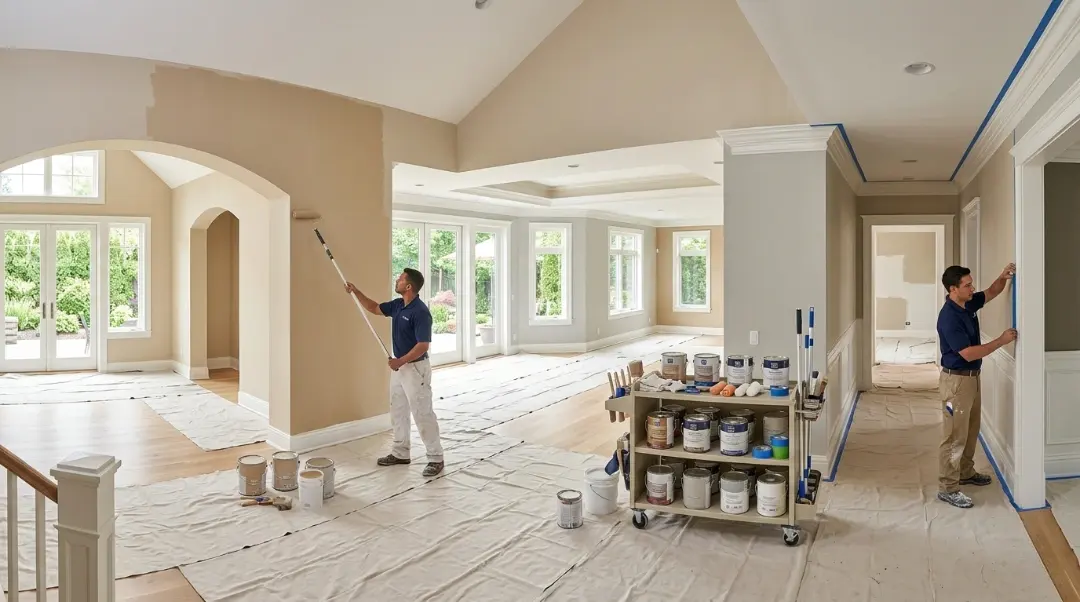
Choosing the right ceiling and wall color is half the job. Getting a clean, accurate, professional finish is the other half. At Inter Color Painting LLC, we’ve worked on every ceiling type smooth drywall, textured surfaces, tray ceilings, sloped ceilings, and everything in between. We know which approach works for each space.
If you’re in the Seattle area and want a professional opinion before you pick up a roller or if you’d rather leave it to someone who does this every day our team is ready to help. Our Interior Painting Services Seattle include color consultation, so you get the right ceiling color the first time, not after a costly redo.
Final Thoughts
The ceiling is one of the most overlooked surfaces in a home but the paint decision you make up there affects the entire feel of the room. Whether you match the ceiling to the walls, use a lighter tonal version, keep it white, or go bold with a dark accent ceiling, each approach creates a genuinely different atmosphere.
The right choice comes down to your room’s specific characteristics: size, light quality, ceiling height, and trim color. Get a sample pot. Test it. Look at it in the morning and at night. Then commit with confidence.
Should the ceiling and walls be the same color? In the right room, with the right color absolutely yes. And when it works, the result is a room that feels completely finished.
Not sure where to start? Our team at Inter Color Painting LLC is happy to walk you through the right color choices for your specific space. Contact Us today and let’s figure it out together no guesswork, no costly repaints.
FAQs About Painting Walls and Ceiling the Same Color
Should I paint the ceiling the same color as walls?
Yes, painting the ceiling and walls the same color works well in smaller rooms, spaces with very high or very low ceilings, and rooms with rich or dark wall tones. It creates a cohesive, seamless look by reducing the harsh visual break between wall and ceiling. Always test a sample on both surfaces before committing light reads the two surfaces differently.
What is the current trend for painting ceilings?
The current ceiling color trend has shifted away from default white toward tonal matching and bold accent ceilings. Soft greens, warm greiges, deep navy, and charcoal are leading the direction for 2024-2025 interiors. Painted ceilings that echo or match the wall color are increasingly common in contemporary and transitional design, replacing the plain white that dominated interior spaces for decades.
What is the best color combination for ceiling and wall?
The most reliable ceiling and wall combination is a mid-tone wall color paired with a white or slightly lighter ceiling in a matching undertone. For smaller or low-light rooms, matching the ceiling and wall in a light neutral or deep tone creates the most cohesive result. Gray walls with a white ceiling remain one of the most widely used and searched pairings in interior design.
What are the common ceiling painting mistakes?
Mixing various whites between the trim and the ceiling, not trying out paint samples before making a decision, using the wrong finish (especially gloss), and not taking into account how natural light changes colour are all typical mistakes people make when painting ceilings. Many people often forget that ceilings reflect colours from the walls and furniture around them. This means that a white ceiling in a room with a strong wall colour can never look like pure white.
What not to do when painting a ceiling?
A strong colour on a textured ceiling will make flaws stand out and usually doesn’t look nice. Only use a gloss or semi-gloss finish if you really want to. Don’t forget to sample. Don’t think that the ceiling and trim can be two different whites. Even a small difference will be easy to see in real-life lighting..
What is the hardest color to paint over?
Red is the hardest color to paint over on any surface, followed by deep yellows and oranges. These pigments are highly saturated and bleed through lighter colors, often requiring a dedicated primer coat sometimes two before the new color applies cleanly. On ceilings specifically, dark colors like navy and charcoal also require multiple coats when transitioning back to white, which is worth factoring into your project budget and timeline.