Paint on metal doesn’t always age well. Over time, it chips, flakes, or traps rust underneath. That’s when many homeowners start searching for how to remove paint from metal without damaging the surface or wasting hours on the wrong method.
The best way to do it depends on the kind of metal, the kind of paint, and the size of the thing. You can use chemical paint strippers, heat guns, sanding, or even just vinegar from your kitchen. This guide goes over the safest and most useful ways to get the metal surface ready for a clean, long-lasting coat of paint.
Ready to Learn How to Remove Paint from Metal?
You need to be patient and have the correct setting to work on a project like this. You’re not just taking off a sticker; you’re disrupting the chemical bond between the coating and the substrate. It’s important to know if you’re dealing with lead-based paint before you pick up a scraper, especially in homes built before 1978.
If you think there might be lead, stop and use a DIY kit to test the surface. To keep harmful dust from getting into your home, you need special HEPA vacuums and wet-scraping methods to deal with lead. After you’ve made sure the area is secure, you can pick a method that works with your schedule and your comfort level.
How Do You Properly Remove Paint from a Metal Surface Before Repainting?
The best way to remove paint from a metal surface before repainting depends on the metal type, paint type, and how much paint needs to come off. For small spots, a wire brush and denatured alcohol work well. For full stripping, a chemical paint stripper gives the most reliable results without scratching the surface.
First, figure out what kind of metal you have. Put a magnet on it. If it sticks, you have steel or wrought iron. You’re working with non-ferrous metals like aluminium or brass if it doesn’t. This is important because non-ferrous metals are softer and scratch more easily.
Next, look at the kind of paint you have. Use a cloth and isopropyl alcohol to wipe the surface. It’s acrylic if the colour of the paint comes off on the rag. It’s probably an alkyd or oil-based finish if the surface stays clean, but the paint stays on.
Step-by-Step Instructions for How to Remove Paint from Metal
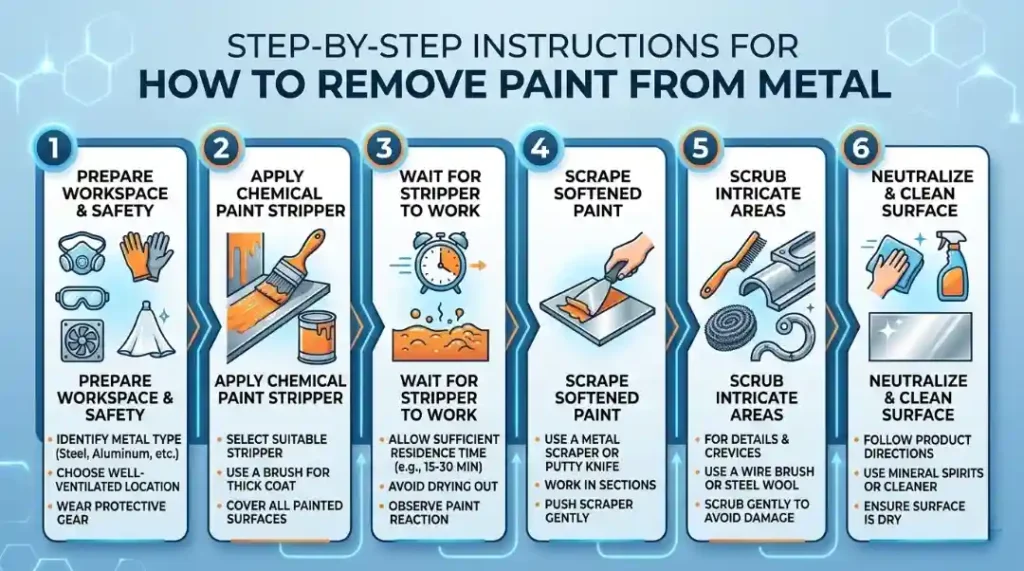
If you’re tackling a standard DIY project, following a logical order saves time and reduces waste. Here is the path I recommend for most mid-sized metal projects.
1. Preparation and Setup
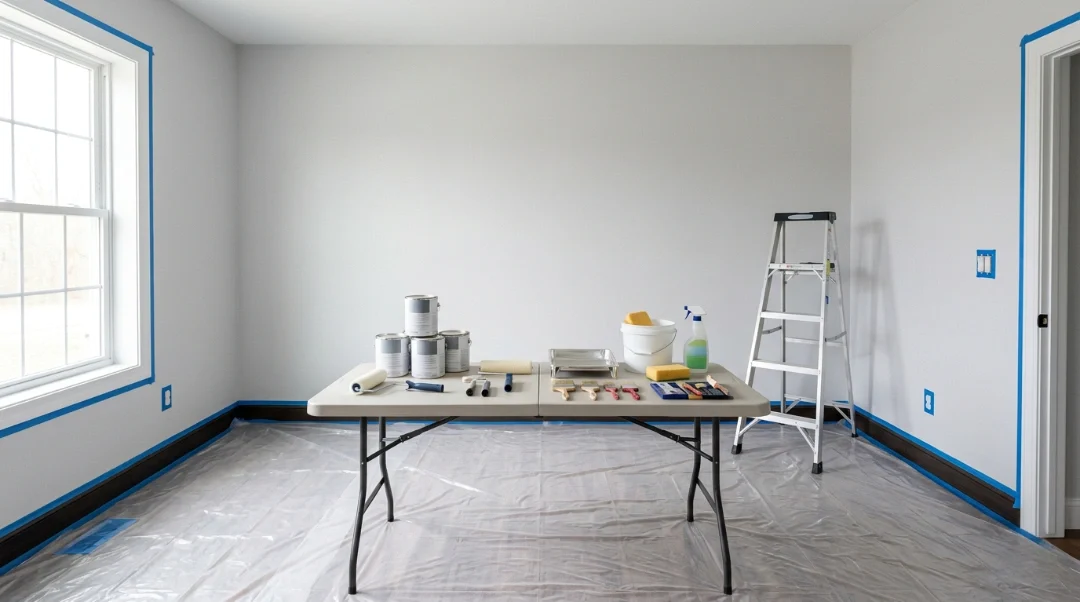
Move your items to a well-ventilated area, preferably outdoors or in a garage with the door open. Lay down heavy-duty plastic sheeting to catch the paint chips. If you’re working on a fixed object like a radiator, tape off the surrounding walls and flooring.
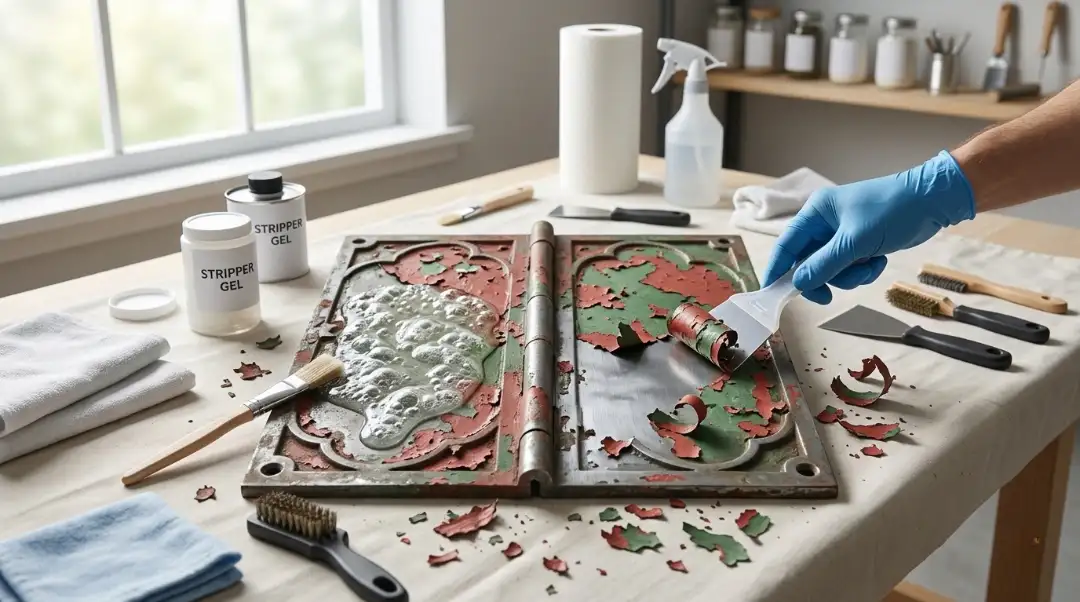
2. Apply the Stripper or Heat
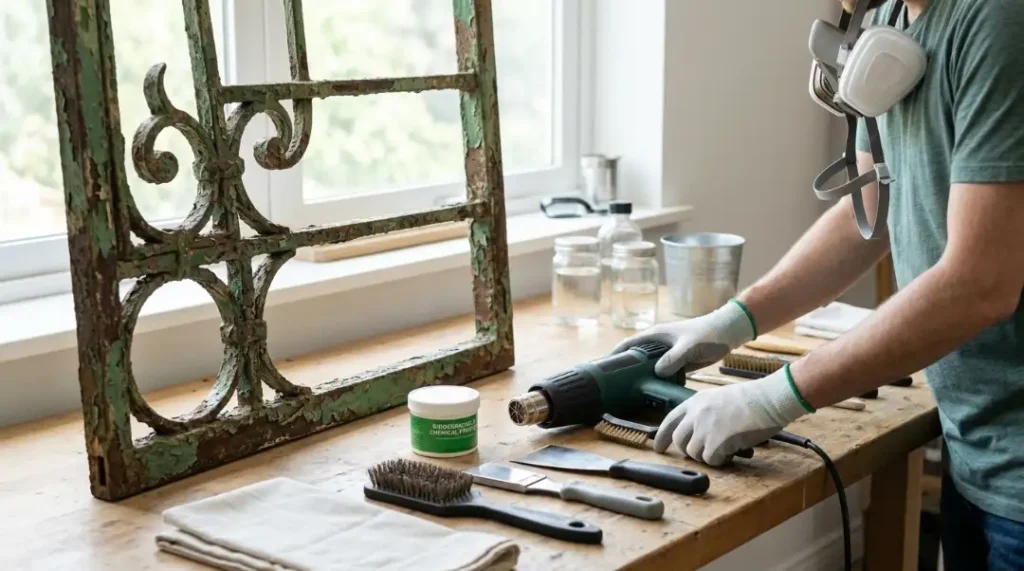
When applying a paint stripper on metal, use an inexpensive chip brush to achieve a thick, even application. Don’t brush it back and forth; just put it on and leave it alone. If you’re using a heat gun, hold it approximately 4 inches away from the surface and move it slowly until the paint starts to bubble.
3. Scrape and Collect
When the paint bubbles, use a putty knife made of metal or plastic to lift the sludge. Do little parts at a time so the stripper doesn’t dry out. For convenient disposal, put the trash directly into a metal container or on your plastic sheeting.
4. Detail Work and Cleaning
For cracks and crevices, use a brass wire brush or a special pick. Use mineral spirits or a degreaser to clean the whole surface after most of the paint has come off. This takes rid of any oily residue left behind by the chemicals, which is very necessary for the next step of your interior or exterior painting services.
5. Vinegar Soak (Gentlest Option for Delicate Metals)
If you’re afraid of damaging the surface of antique hardware, aluminium fixtures, or anything else, white vinegar is a slow but safe way to clean anything.
Put the metal in undiluted white vinegar for 6 to 8 hours. Look at it every several hours. When the paint starts to come off, use an old toothbrush or soft wire brush to scrub it off, then rinse it well with clean water.
As soon as you rinse it, dry it off. Vinegar dissolves away protective coats, so exposed metal will rust quickly if it stays damp.
Essential Safety Precautions for Paint Removal
Paint removal on metal is not a casual task. Chemical strippers are hazardous, grinding throws debris, and old paint may contain lead.
Always wear: chemical-resistant gloves, safety goggles with side shields, and a respirator (not just a dust mask) when working with strippers or power tools.
Lead paint warning: If your metal piece originates from a house or building built before 1978, it probably has lead paint on it. Do not sand or grind lead paint since this makes harmful dust. Instead, use chemical stripping or wet procedures, and get rid of all the leftover materials as hazardous trash at your local facility.
Never mix methods: Don’t use a heat gun immediately after applying a chemical stripper. The heated chemicals release dangerous fumes. Let the surface dry fully before switching techniques.
Best Methods to Remove Paint from Metal
Choosing the best way to remove paint from metal depends on the size of the object and the type of metal.
| Method | Best For | Pros | Cons |
| Chemical Strippers | Intricate details, many layers | Very thorough | Messy, requires ventilation |
| Heat Gun | Large, flat surfaces | Fast, no chemicals | Risk of scorching or fumes |
| Abrasives (Sanding) | Small rust spots, flat areas | Low cost | Lots of dust, physically tiring |
| Boiling Water | Small hardware (hinges, knobs) | Free, safe, easy | Only for small items |
After Paint Removal: Protecting Your Bare Metal
Bare metal rusts fast sometimes within 24 hours in humid conditions. You need to act quickly once paint removal is done.
Step 1: Wipe the entire surface with mineral spirits to remove any stripper residue.
Step 2: Use a degreaser if the metal feels oily.
Step 3: Rinse with clean water and dry completely with rags. Use compressed air for crevices.
Step 4: Apply a rust-inhibiting primer within 24 hours.
If you’re not repainting right away, a paste wax coat creates a temporary moisture barrier. It’s not a permanent solution, but it buys you a week or two. Rust replacement costs far more than a can of primer.
How to Remove Paint from Metal Without Chemicals
If you’re working inside the house and don’t want to deal with fumes, you have a few surprisingly effective “kitchen cabinet” solutions. These are perfect for hardware you’ve removed from cabinets or doors.
The Baking Soda Simmer
This is the simplest way to get paint off of little brass or steel things. Add roughly 1/4 cup of baking soda to every quart of water in an old kettle. Put your things in for around 20 minutes after it has come to a simmer, not a rolling boil. The heat makes the metal bigger and the paint softer, and the baking soda helps break the connection. If you use tongs to pull them out, the paint should come off like the skin of an orange.
The Vinegar Soak
Vinegar is a mild acid that can eventually soften paint. It’s a slow process, often requiring a 24-hour soak. It’s less effective on modern epoxy paints but works wonders on old, brittle layers.
Tools Needed for Paint Removal
You don’t need a massive workshop, but having these basics will make the job much smoother:
- Putty Knives: Both 1-inch and 3-inch sizes.
- Wire Brushes: Stainless steel for tough jobs, brass for softer metals like aluminum.
- Chemical-Resistant Container: For holding your stripper or waste.
- Mineral Spirits: For the final wipe-down.
- Scouring Pads: Great for final detail cleaning.
Common Mistakes to Avoid
Using the improper stripper on your metal. Aluminum needs a delicate recipe that is based on citrus. Steel can handle rough strippers. Using a steel-grade solution on aluminum might leave lasting pits and stains on the surface.
Scraping too early. If the paint isn’t fully bubbling, the stripper hasn’t done its job. Scraping early means more effort and more coats. Wait the full time listed on the product label.
Not neutralizing. After chemical stripping, any leftover residue on the metal will keep new paint from sticking. Wipe down with mineral spirits before priming every time.
Working in very hot or very cold weather. Chemical strippers don’t function well when it’s below 50°F, and they dry out too quickly when it’s above 90°F. Choose a day that isn’t too hot or too cold for this endeavor.
Not using a primer. This is the mistake that happens the most. You need to put a primer on bare metal that stops corrosion within 24 hours. If you don’t do it, rust will build under the new paint.
When to Call a Professional
Some paint removal projects go beyond DIY. Call a professional if you’re dealing with:
- Lead paint on large surfaces or structural metal
- Powder-coated finishes (extremely hard and needs specialized equipment)
- Valuable antiques or custom metalwork you can’t risk damaging
- Projects covering more than 100 square feet
- Commercial or industrial equipment
If you’re in the Seattle area, the team at Inter Color Painting LLC handles both residential and commercial metal surface preparation as part of their full Interior Painting Services and Exterior Painting Services Seattle offerings. Whether it’s a single metal door or a full exterior railing system, getting professional prep done right means your new paint job will last years longer.
Final Thoughts
Old paint on metal can hide rust, make the surface weaker, and make it harder for new paint to stick. When you take it off the appropriate way, you get a clean base that helps the following coat last longer. No matter if you use sanding, heat, chemical paint removal, or natural treatments like vinegar, the most important thing is to be patient and get ready.
If your project includes huge metal surfaces, railings on the outside, or a full repainting job, hiring a professional can save you time and money. Contact us today to talk about your project and get professional advice for your home.
People Also Ask
What is the quickest way to remove paint from metal?
A commercial-grade chemical gel stripper and a putty knife are the quickest way to do this. An angle grinder with a flap disc takes paint off of big, flat surfaces like steel doors or metal furniture even faster, but it needs more skill and safety precautions.
Does WD-40 remove paint from metal?
WD-40 can make new or water-based paint easier to wipe off by loosening and softening it. It doesn’t work on thick, dry, or oil-based coatings. It works best for little paint splatters on metal, not for jobs that need to peel paint off of metal completely.
Does vinegar remove paint from metal?
Yes, white vinegar can soften and loosen paint on metal, especially on tiny things like fasteners and fixtures. It’s the gentlest method available, but it requires 6 to 8 hours of soaking time and works best on older, more brittle paint layers.
Can I paint over already painted metal?
Yes, if the paint that is already there is in good shape, with no rust, peeling, or flaking. Before you put on your topcoat, clean the surface, lightly sand it, then put on a primer that works with it. Check to see if the new paint type (acrylic or oil-based) works with the old finish.
Do you have to remove all old paint before repainting metal?
No, not always. If the metal isn’t rusted and the existing paint is still firmly attached, you can paint over it after light sanding and cleaning. Full paint removal is only necessary when there’s rust, heavy flaking, or you’re switching between incompatible paint types.