Have you ever looked at your walls and noticed that those beautiful bumps and grooves are starting to look a little… gray? Textured walls add a lot of character to a home. They can make a room feel cozy and hide small mistakes in the drywall. But let’s be honest: they are also absolute magnets for dust, pet hair, and cobwebs.
Cleaning them isn’t as simple as wiping down a smooth table. If you use too much water, you might ruin the texture. If you scrub too hard, you might flake off the paint. So, how do you clean textured walls without making a mess?
In this guide, we will walk you through the safest and best way to clean textured walls. Whether you are dealing with a little bit of dust or a stubborn kitchen grease stain, we have the expert tips you need to keep your home looking fresh.
Table of Contents
ToggleUnderstanding Your Wall Texture
Before you grab a bucket, you need to know what you are working with. Not all textures are the same, and they all react differently to water and scrubbing.
Common Types of Texture
- Popcorn Texture: Most common on ceilings, this is very delicate. It can crumble if you touch it too hard.
- Orange Peel: This looks like the skin of an orange. it is a bit tougher and can handle a light damp wipe.
- Knockdown Texture: These are flattened “splatters.” They have deep textured surface crevices where dust loves to hide.
- Swirl or Slap Brush: These have high ridges and deep valleys.
Knowing your texture helps you choose gentle cleaning techniques. For example, if you have a very soft popcorn finish, you should almost always stick to dry dusting vs wet cleaning. If you’re unsure about your wall’s integrity, it might be time to look into professional Wall Texturing Services in Seattle to ensure your surfaces are properly sealed before you start a deep clean.
What You’ll Need
You do not need expensive tools or harsh products. In fact, avoiding harsh chemicals is one of the best ways to protect textured paint.
Household Cleaning Tools
Here is a simple list of tools that work well for cleaning textured walls:
- Vacuum with brush attachment
- Dry sponge (also called a chemical sponge)
- Soft microfiber cloths
- Texture-safe mop or cloth with an extendable handle
- Soft-bristle brush or old toothbrush
- Bucket of warm water
- Mild cleaning solution (dish soap works)
Optional but helpful:
- Baking soda for stain removal
- White vinegar (diluted)
- Step ladder for higher areas
Avoid scrub pads, stiff brushes, and strong cleaners. These flatten texture and strip paint faster than most people expect.
Step by Step: How to Clean Textured Walls
This is the core process professionals use. The key is working from dry to damp and never rushing.
Step 1: Dry Dusting Comes First
Always start with dry dusting vs wet cleaning. If you skip this step, dust turns into mud and spreads.
Use a vacuum with brush attachment to gently pull dust out of textured surface crevices. Work from top to bottom in slow passes. For corners and edges, a dry sponge works well.
This method is also ideal for textured ceilings cleaning, where moisture can cause sagging or flaking.
Step 2: Prepare a Mild Cleaning Solution
Mix a few drops of dish soap into warm water. The goal is a mild cleaning solution, not foam. Strong mixtures lead to streaks and paint damage.
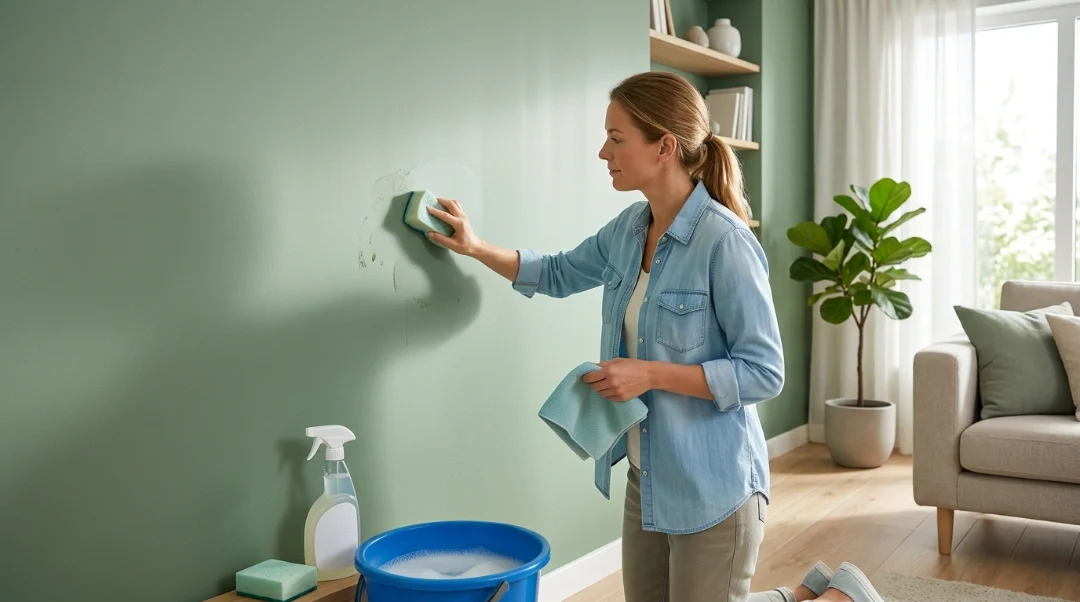
Dip a microfiber cloth or texture-safe mop into the solution and wring it out well. The cloth should be damp, not wet. Always avoid over-wetting walls.
Step 3: Gentle Spot Cleaning
Instead of scrubbing large areas, focus on spot cleaning. Light pressure is enough. Dab or lightly wipe in one direction.
For small marks, fingerprints, or smudges, this step is often all you need. Let the wall air dry and check the result before moving on.
Step 4: Deep Cleaning Textured Surfaces (When Needed)
If walls are heavily soiled, repeat the process in sections. Never soak the wall. Rinse your cloth often and keep water clean.
Deep cleaning textured surfaces should be done no more than once or twice a year. Regular dust and dirt removal prevents buildup and protects the finish.
This full process answers the question most homeowners ask: what is the best way to clean textured walls without repainting?
Stain-Type Solutions
Sometimes a general wash isn’t enough. Here is how to handle the “big three” wall stains:
| Stain Type | Recommended Solution | Technique |
| Scuff Marks | Baking soda paste | Dab on, let sit for 5 mins, wipe gently. |
| Kitchen Grease | Vinegar and water (1:1) | Spray lightly and blot; do not scrub. |
| Crayon/Ink | Dry sponge | Use the sponge dry to “erase” the wax. |
For spot cleaning, always remember to blot. Rubbing back and forth can “sand down” the texture and leave a flat, shiny spot that looks worse than the stain!
Safety and Paint Protection
At Inter Color Painting LLC, we always tell our clients that the best defense is a good offense. If your walls are painted with a “Flat” or “Matte” finish, they are much harder to clean than “Semi-Gloss” or “Satin” finishes.
Expert Safety Tips:
- Avoid harsh chemicals: Bleach can eat away at the texture material (which is often just joint compound).
- Protect your floors: Even a mild cleaning solution can spot your hardwood or carpet. Use a drop cloth.
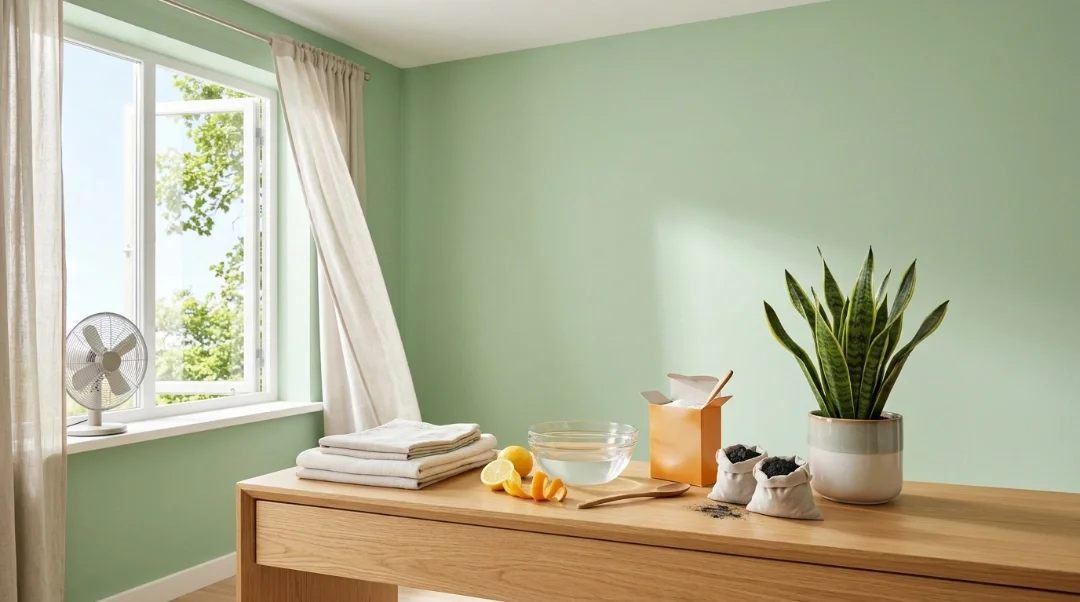
- Airflow is key: Use a fan to help the walls dry quickly. If moisture sits in the texture too long, it can lead to mold.
If your walls are so dirty that cleaning isn’t helping, or if the texture is starting to crumble, it may be time for a fresh start. You can Contact Us at Inter Color Painting LLC to discuss a fresh coat of high-durability paint that makes future cleaning a breeze.
Final Thoughts
Learning how to clean textured walls is about patience, light pressure, and the right tools. Start dry, clean gently, and protect the paint at every step. Most damage happens when people rush or use the wrong products.
With regular dusting and careful spot cleaning, textured walls can stay fresh for years. And when cleaning no longer does the job, knowing when to call professionals saves time and money.
FAQs
What is the best way to wash textured walls?
The best way to wash textured walls is to start with dry dusting using a vacuum with a brush attachment, then gently spot clean using a damp microfiber cloth and a mild cleaning solution. Avoid soaking the wall and never scrub aggressively, as textured surfaces can lose paint or flatten easily.
What is the 20 minute rule in cleaning?
The 20 minute rule means letting a gentle cleaning solution sit on dirt or stains for up to 20 minutes before wiping. This allows grime to loosen naturally, reducing the need for scrubbing and lowering the risk of paint damage, especially on textured walls.
Is texture paint washable?
Yes, texture paint is washable, but only with gentle methods. Flat or matte texture paint should be cleaned lightly with minimal moisture, while satin or eggshell finishes handle damp cleaning better. Over-wetting or harsh cleaners can damage textured paint.
How to clean walls that aren’t smooth?
Walls that are not smooth should be cleaned using dry dusting first, followed by gentle spot cleaning with a damp cloth. Use tools that reach into crevices, like soft brushes or microfiber, and avoid heavy pressure to protect the texture.
How to clean a bumpy wall?
To clean a bumpy wall, vacuum it with a brush attachment to remove dust, then dab stains gently using a mild soap and water solution. Always wring out cloths well and clean in small sections to prevent moisture buildup.
Does Magic Eraser remove wall stains?
Yes, a Magic Eraser can remove wall stains, but it should be used cautiously. It acts like fine sandpaper and can remove paint from textured walls. Always test in a hidden area and use very light pressure.
What do professional painters use to clean walls?
Professional painters typically use vacuum dusting, mild detergent mixed with water, microfiber cloths, and soft sponges. They avoid harsh chemicals and excessive water to ensure proper paint adhesion and surface protection.
How can I make my textured walls look better?
Textured walls look better when they are regularly dusted, gently cleaned, and evenly painted. Touch-up painting, improved lighting, and repairing damaged texture can dramatically improve appearance without removing the texture.
How do I smooth my existing textured walls?
To smooth textured walls, professionals skim coat the surface with joint compound, sand it smooth, and then repaint. This process requires skill and is best handled by experienced painters to avoid uneven results.