Walls get hit a lot. Fingerprints, scuff marks, grease, and dust build up over time. A lot of folks don’t want to wipe them down because they’re afraid of hurting the paint. The good news is that how to Clean Painted Walls safely isn’t complicated when the right tools and gentle methods are used.
A meticulous practice gets rid of stains without making the color or finish dull. This tutorial tells you the best and safest ways to clean walls, as well as the mistakes that might harm paint. By the end, it will be easy and predictable to keep the walls inside clean and fresh.
How Often Should You Clean Painted Walls?
Most walls need a full clean once or twice a year. High-traffic areas like hallways, kitchens, and kids’ rooms need attention every 3 to 4 months. Spot-cleaning stains as they happen prevents buildup and protects the paint long-term.
Most people don’t realize how quickly dust settles on walls. A quick dusting with a microfiber cloth once a month keeps things under control. It’s like cleaning your counters: a little bit of work every day is better than one big clean.
What You’ll Need to Clean Painted Walls
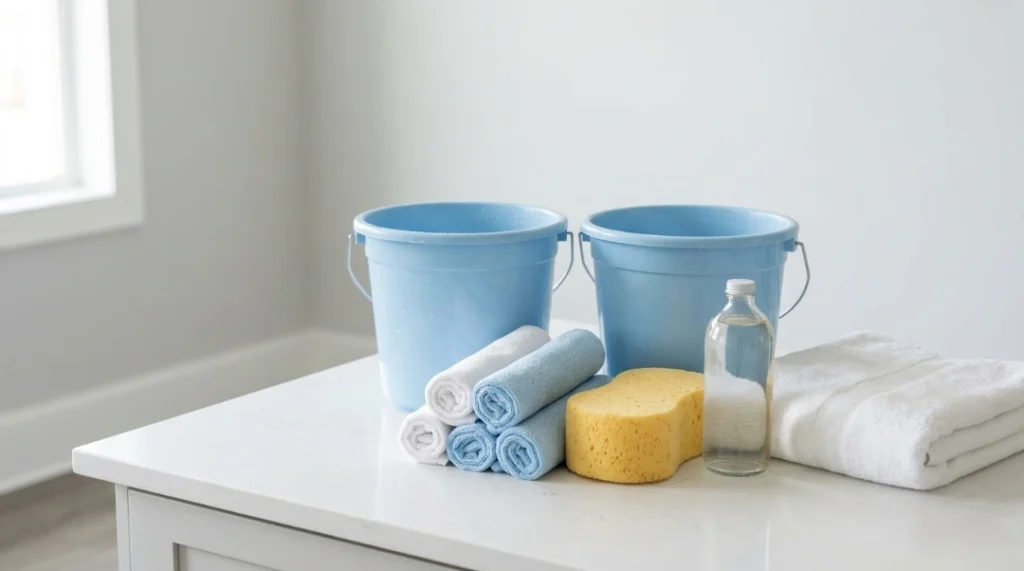
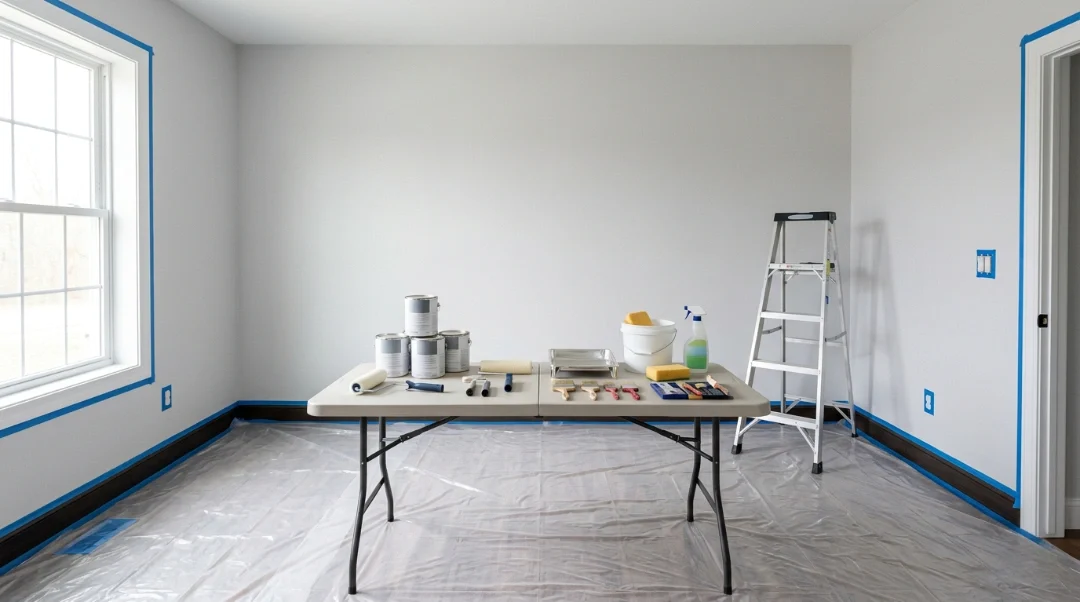
Before you start, gather your toolkit to avoid running back and forth to the kitchen. Professional results require the right materials to ensure you don’t leave scratches or lint behind.
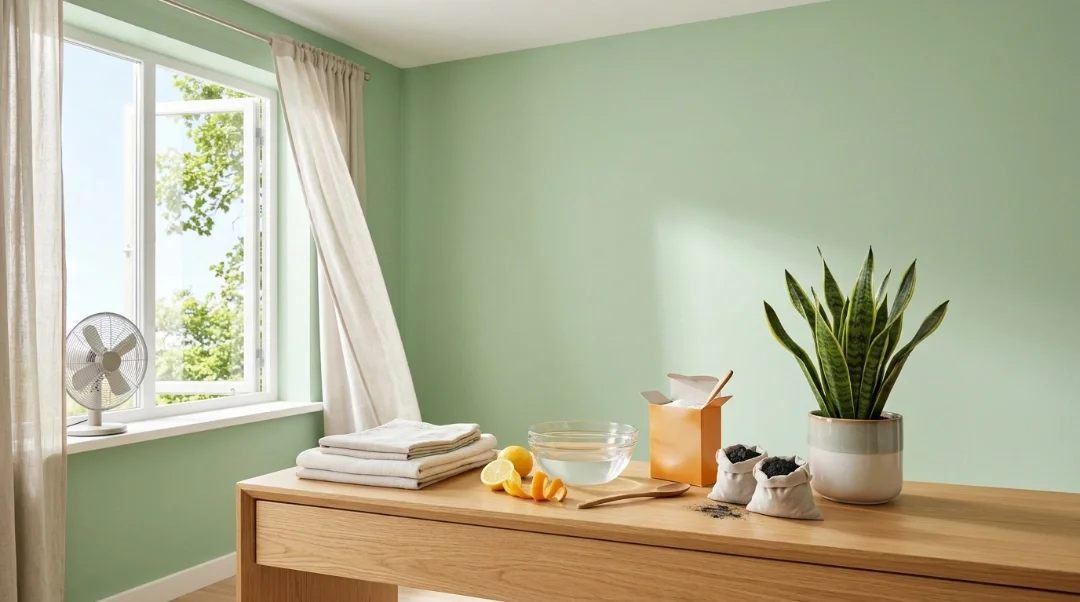
- Two Buckets: One for your cleaning solution and one with plain warm water for rinsing.
- Microfiber Cloths: These are superior to sponges as they don’t shed and are gentler on matte finishes.
- Mild Dish Soap: Look for a “clear” soap to avoid any dye transfer to light-colored walls.
- White Vinegar: Perfect for cutting through kitchen grease or cigarette smoke film.
- Baking Soda: A natural, mild abrasive for those “mystery” scuffs.
- Vacuum with Brush Attachment: Essential for removing loose debris before wetting the surface.
Multimedia Suggestion: An infographic showing the “Wall Cleaning Kit” with icons for each item would help readers quickly check their supplies.
Best Cleaning Solutions for Painted Wall
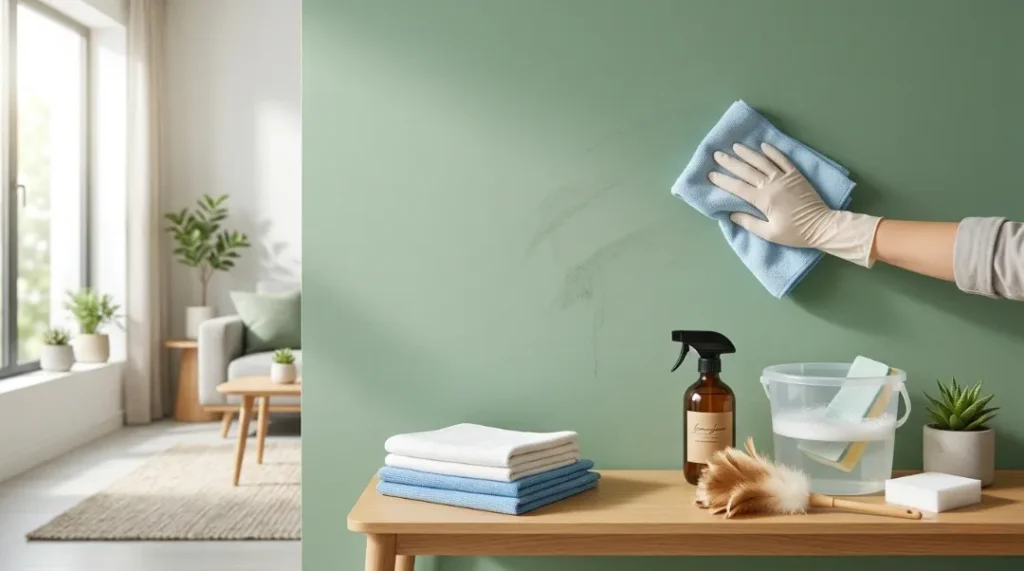
The best thing to clean painted walls with is a simple mixture of one gallon of warm water and one teaspoon of mild liquid dish soap. This pH-neutral solution is powerful enough to break down skin oils and dirt but gentle enough for latex and oil-based paints.
For kitchen walls where grease is a factor, add half a cup of white vinegar to your bucket. The acidity of the vinegar cuts through the oily film without the need for harsh degreasers that can strip the paint’s sheen.
| Paint Finish | Recommended Solution | Cleaning Intensity |
| Flat / Matte | Plain water or very diluted soap | Extremely Gentle |
| Eggshell / Satin | Mild soap and warm water | Light to Moderate |
| Semi-Gloss | Soap, water, and vinegar | Moderate |
| High-Gloss | Mild degreaser or soapy water | High Durability |
Know Your Paint Finish First
This step most people skip and it’s the one that causes the most damage.The finish of your paint determines how much scrubbing it can handle. Higher gloss finishes like semi-gloss and high-gloss are the most washable. Lower sheens like matte and flat paint are sensitive and need a much gentler touch.
Here’s a simple breakdown:
- Flat/Matte: Most delicate. Use only water and a barely damp sponge.
- Eggshell: Slightly more durable. Mild soap and water is fine.
- Satin/Pearl: Good washability. Handles mild cleaning solutions well.
- Semi-gloss/High-gloss: Most durable. Can handle stronger cleaning agents like diluted all-purpose cleaners.
If you’re unsure what finish is on your walls, test your cleaning solution in a hidden corner first. Always.
Step-by-Step Guide to Cleaning Painted Walls
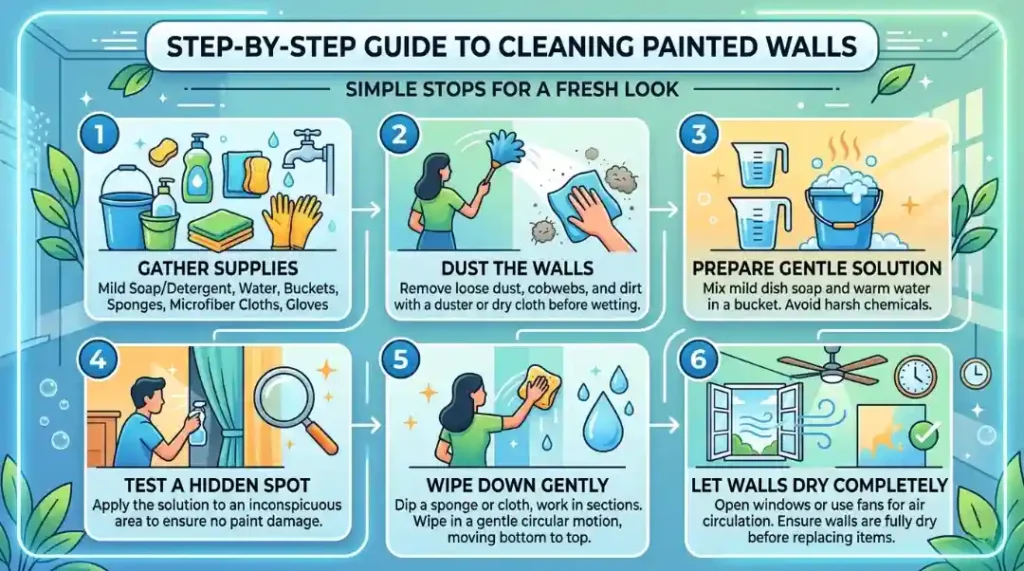
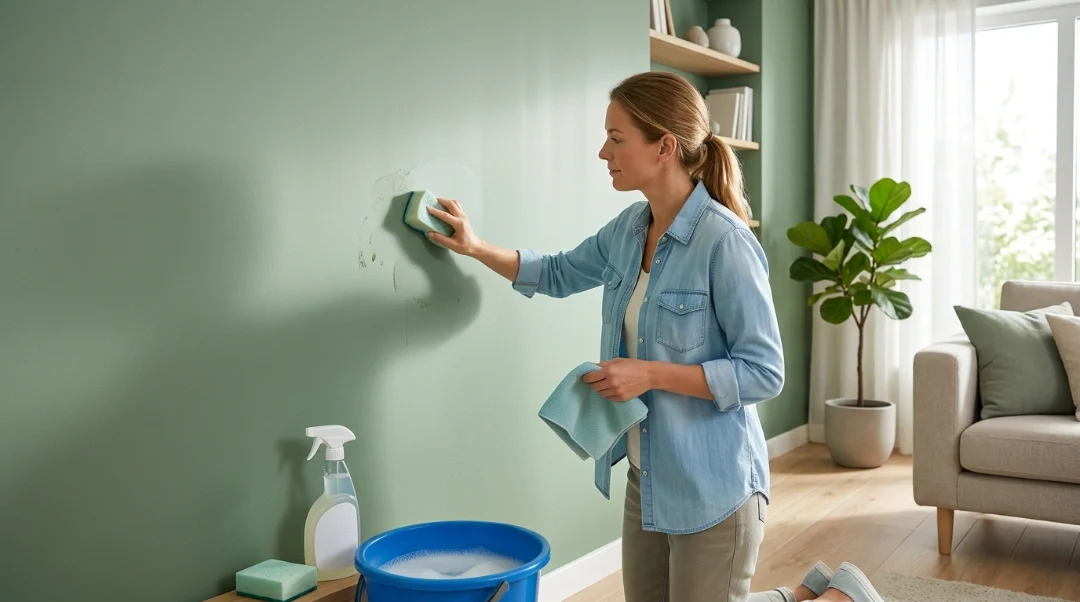
The best approach to clean a wall is to start at the bottom and move up to the ceiling. This may seem strange, but it stops dirty water from running down dry areas and leaving permanent vertical “drip” stains. When the wall is wet, any drips wipe away without leaving a mark.
1. Dry Dusting
Never apply liquid to a dusty wall; you’ll just create a muddy mess that’s harder to remove. Use your vacuum’s soft brush attachment or a dry microfiber mop to clear cobwebs and loose grit. Pay extra attention to the corners and baseboards.
2. The Wash Phase
Put your fabric in the soapy water and wring it out until it is very slightly wet. Move in circles slowly. I learned that putting too much pressure on flat paint will actually “burnish” it, leaving a bright spot that never goes away and ruining the even effect.
3. The Rinse and Dry
Right after you wash with soap, use a second cloth that has been dipped in the clean water bucket. This gets rid of the “tackiness” that soap leaves behind, which makes it easier for fresh dust to stick to it. Use a clean towel to dry the area off at the end.
How to Clean Painted Walls: Tackling Tough Stains
Stains need targeted treatment. Here’s what works:
Draw lines: Make a paste out of baking soda and a few drops of water. Put it on the mark, wait two minutes, and then wipe it off gently with a soft cloth. Baking soda is a gentle abrasive that gets rid of the wax without scratching the paint.
To get rid of a permanent marker stain, dab rubbing alcohol on a clean cloth and press it against the spot. Don’t rub; just blot. This raises the ink without spreading it. Check your clothes often to make sure you’re not pushing ink back onto the wall.
Grease stains: Apply a small amount of diluted dish soap directly to the stain. Let it sit for 5 minutes. Wipe gently in circular motions, then rinse thoroughly.
For semi-gloss and satin finishes, a Mr. Clean Magic Eraser works effectively to get rid of scuff marks. Use it sparingly. Don’t use the magic eraser on flat or matte paint at all; it works like fine sandpaper on low-sheen finishes.
How to Clean Walls Without Streaks
To clean walls without streaks, you must work in small sections and dry the surface immediately after rinsing. Most streaks are caused by either using too much soap or allowing the water to air-dry slowly, leaving mineral deposits behind.
If you notice a hazy film after the wall dries, it usually means your rinse water was dirty. Change your buckets frequently. If the water looks cloudy, it’s no longer cleaning; it’s just moving dirt around.
Room-by-Room Cleaning Tips
Kitchen walls: Grease is the main enemy here. Clean these walls every 2 to 3 months. Use a vinegar and dish soap solution. Pay extra attention to the area directly behind the stove.
Bathroom walls: Humidity causes mildew. Use a diluted vinegar solution and ensure proper ventilation while cleaning. Dry the walls completely.
Kids’ rooms: Crayon, marker, and sticky handprints are standard. Baking soda paste and mild soap handle most of it. These walls need attention more often than anywhere else in the house.
Hallways: High foot traffic means scuffs. A slightly damp microfiber cloth used regularly prevents buildup. Semi-gloss paint in hallways is popular for a reason it’s far easier to keep clean.
Cleaning Newly Painted Walls
You should wait at least two weeks before scrubbing walls that have just been painted. Washing paint too soon might make the surface soft and cause it to peel or lift. If a spill happens sooner, gently blot it with a cloth that is only a little damp.
You can carefully blot up new spills with ordinary water after 4 to 6 hours. But you shouldn’t clean everything till the cure period is over.
Mistakes to Avoid When Cleaning Painted Walls
The biggest error I see is the use of “magic erasers” on matte or flat paint. These sponges are actually micro-abrasives, basically very fine sandpaper. While they work wonders on glossy trim, they will leave a visible “bald spot” on flat-painted drywall.
- Don’t use bleach: It can cause yellowing and weaken the paint bond.
- Don’t over-saturate: Too much water can seep into the drywall, causing it to swell or grow mold.
- Don’t skip the test: Different brands of paint react differently to cleaners.
Data Insight: According to home maintenance surveys, nearly 40% of DIY wall damage is caused by using “all-purpose” spray cleaners that contain harsh solvents like ammonia. Always stick to the “mildest first” rule.
Tips to Keep Painted Walls Clean Longer
Small habits prevent big cleaning jobs. These actually work:
- Dust walls monthly with a dry microfiber cloth
- Address spills and marks the moment they happen fresh stains are 10x easier to remove
- Use washable paint in kitchens, bathrooms, and hallways
- Place mats near entrances to reduce dirt tracking
- Keep furniture a few inches from walls to prevent scuff buildup
How do professional painters clean walls?
Professional painters clean walls using a TSP (trisodium phosphate) solution or a TSP substitute before painting. For routine maintenance, they use mild soap and water with microfiber cloths. They always test cleaning solutions in small areas first and work in sections.
Need Help? Inter Color Painting LLC Has You Covered
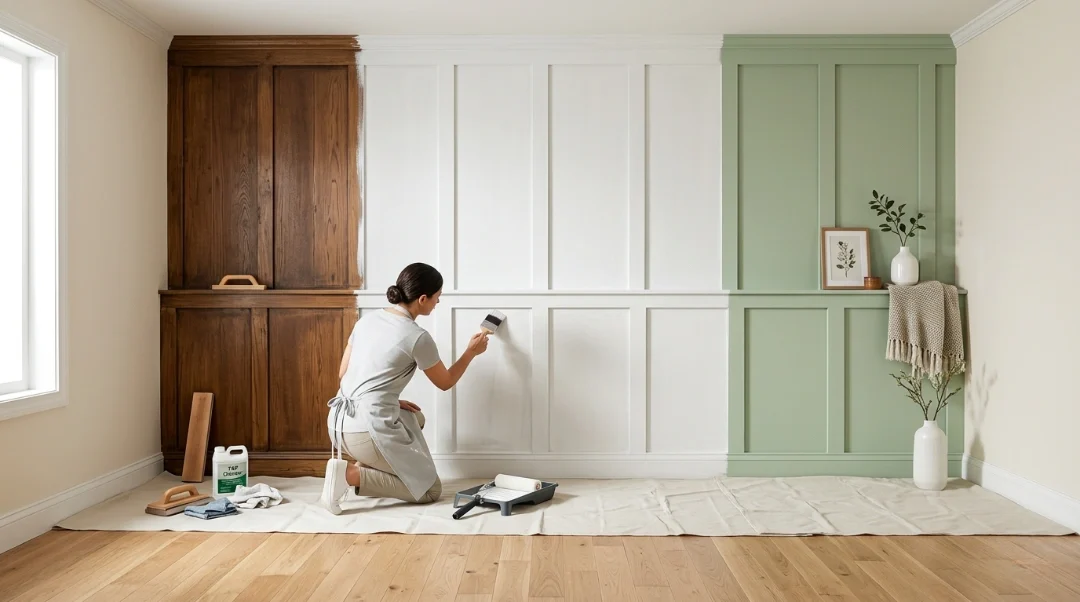
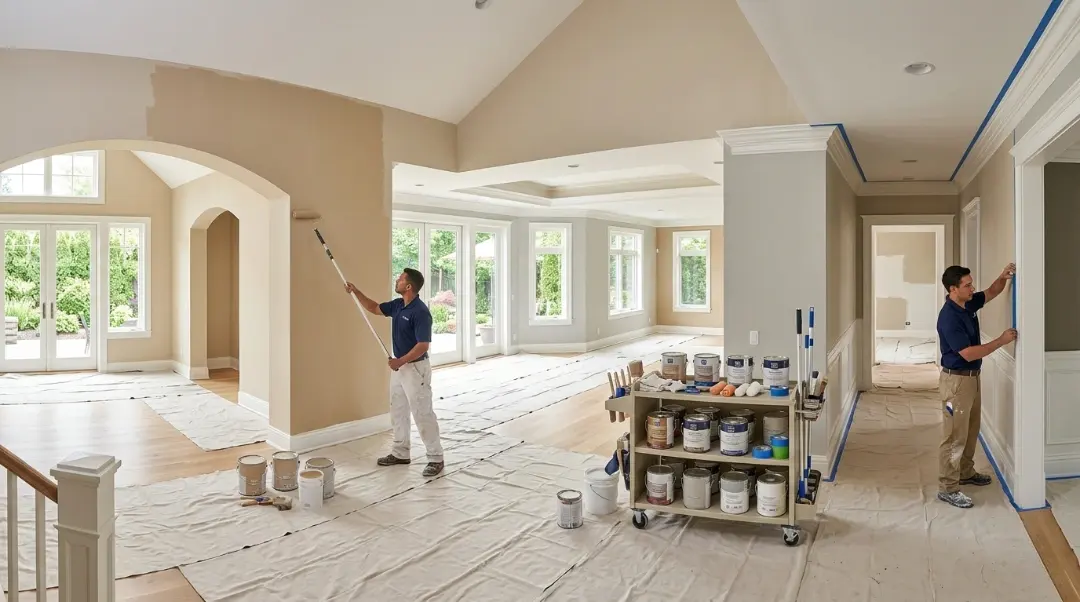
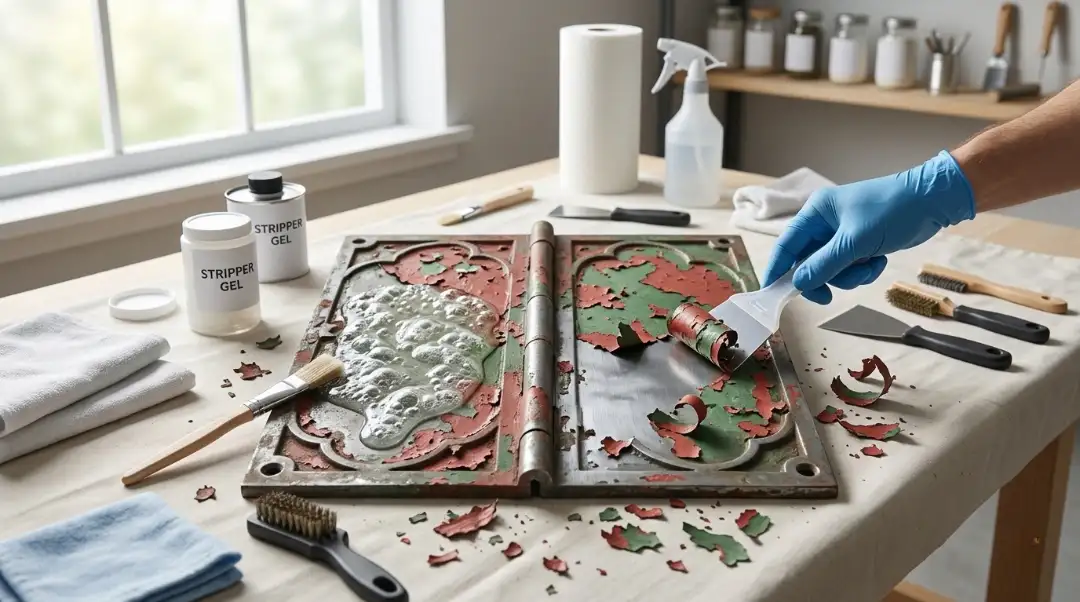
Sometimes walls need more than just a clean they need a fresh start. If your paint is peeling, stained beyond cleaning, or just due for an update, Inter Color Painting LLC offers professional Interior Painting Services that bring walls back to life.
Based in the Seattle area? Their Wall Texturing Service Seattle WA is worth a look if you want to add character to your space at the same time.
For more tips on keeping your home looking its best, check out this related guide: How to Prepare Walls for Painting. It covers everything from patching to priming before a fresh coat goes on.
Conclusion
The way a space feels changes when the walls are clean. Even the nicest paint job will lose its shine over time if you don’t clean it. Gentle cleaning methods safeguard the paint and bring back its brilliance. Most stains may be removed safely with just warm water, mild soap, and a microfiber cloth. If your walls are really dirty or need a new coat of paint, If you need help or have concerns about your next project, go to our Contact Us page and talk to a professional who can help you choose the best solutions for yo
FAQs
What is the best thing to clean painted walls with?
A damp non-abrasive sponge with warm water and a few drops of mild dish soap is the best option for most painted walls. For tougher grime, add white vinegar. Always rinse thoroughly and dry right away.
How to clean walls without losing paint?
Use a soft sponge and move it in little circles. Don’t soak the wall too much. Before you use it, make sure to wring out your sponge well. Never scrub flat or matte finishes; they need the lightest touch possible.
Can you use vinegar to clean painted walls?
Yes. Most painted walls are safe with diluted white vinegar (1 part vinegar to 3 parts water), and it works well on grease and light mildew. Don’t use it full-strength because the acidity can damage some paint finishes over time.
How long after painting can you clean walls?
Wait at least two weeks for full cleaning. The paint needs time to cure completely. You can gently blot fresh spills after 4 to 6 hours, but avoid any scrubbing until the cure period is done.
What’s the easiest way to clean walls in high-traffic areas?
Keep a spray bottle of diluted dish soap solution nearby and wipe marks down as they appear. Regular microfiber dusting once a month prevents buildup. Semi-gloss paint in these areas makes the whole process significantly easier.