If you are planning a painting project, here is the short answer. One gallon of paint typically covers 350 to 400 square feet on a smooth, properly prepared surface. That range represents standard paint coverage for most interior and exterior wall paints.
Understanding paint coverage before you buy saves time, money, and frustration. At Inter Color Painting LLC, this is one of the most common questions homeowners ask before starting a project, especially when trying to avoid leftover paint or running short halfway through a job.
In this guide, we will break down exactly how far a gallon goes, what affects coverage, how finishes and primers change the math, and how to estimate your needs with confidence. Everything here is written for real-world use, not theory.
What’s the Standard Coverage for a Gallon of Paint
A standard gallon of paint coverage falls between 350 and 400 square feet per coat. That number assumes the surface is smooth, clean, and already primed or previously painted in a similar color.
To visualize that coverage, one gallon can typically paint:
- A 12 x 12 foot room with 8-foot ceilings for one coat
- About four average-sized interior walls
- A single-car garage interior with one coat
The actual square feet gallon paint numbers vary based on surface texture, paint quality, and how the paint is applied. Rough surfaces absorb more paint, which reduces coverage.
Understanding Paint Coverage Rates
Think of paint coverage like gas mileage. Your car might get 30 mpg on the highway, but hit city traffic or haul a heavy load, and that number drops. Paint works the same way.
Coverage by Paint Type
Different paints have different jobs, and that means different coverage rates. Here’s the breakdown based on manufacturer specifications from major brands:
Interior wall paint typically covers 375 to 425 square feet per gallon. These formulas have good flow and leveling properties, making them efficient for smooth drywall or previously painted surfaces.
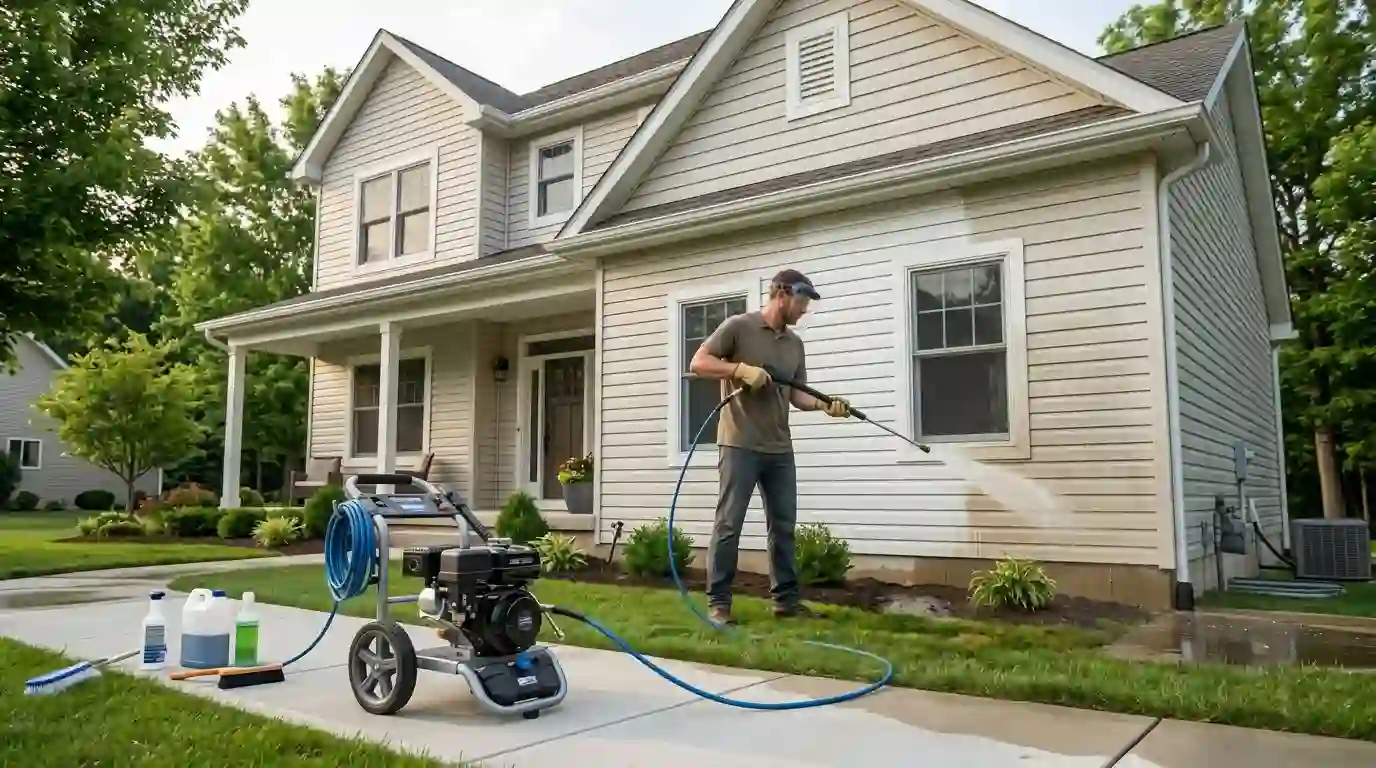
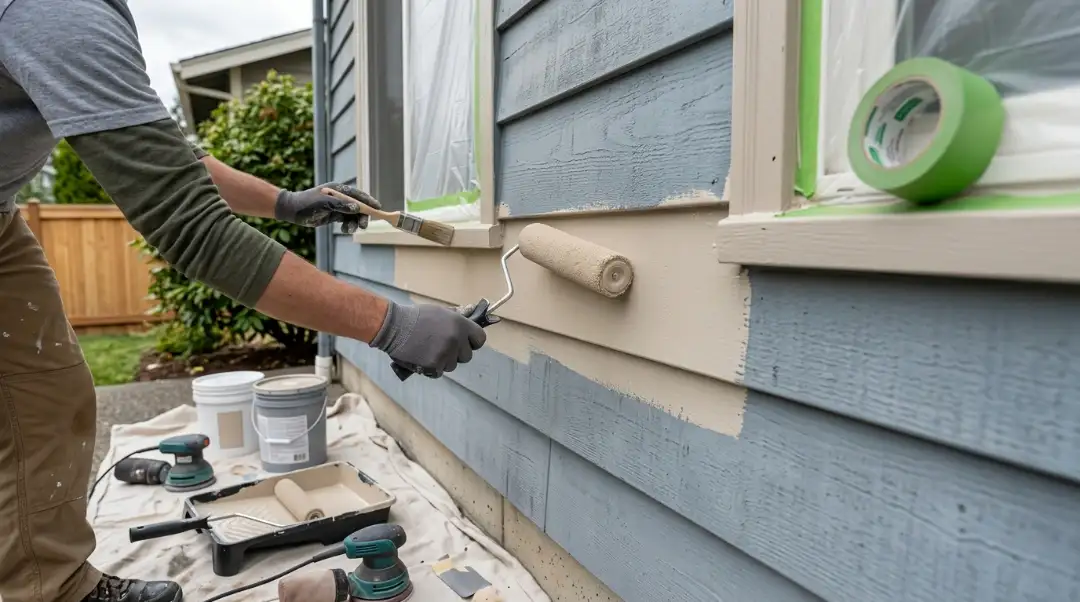
Exterior paint drops to 250 to 350 square feet per gallon. Why? It’s thicker, packed with more binders and additives to handle weather, UV rays, and temperature swings. That extra body means less coverage but way more protection.
Primer coverage: ranges from 225 to 275 square feet per gallon. Primers soak into surfaces to create a stable base. Raw drywall drinks up primer like a sponge, which is exactly what you want but it also means you’ll use more.
Ceiling paint: matches interior wall paint at 350 to 400 square feet. Most ceiling paints have a flat finish that hides imperfections and reduces roller marks, but they go on about the same as wall paint.
Trim and cabinet paint: covers 375 to 425 square feet, similar to wall paint. The difference is in the finish glossier sheens look beautiful but show every stroke, so application technique matters more than quantity.
Specialty paints (metallic, textured, or faux finishes) drop to 200 to 300 square feet per gallon. These contain extra pigments, metallic particles, or texture additives that make them thicker and more concentrated.
Coverage by Surface Type
Your wall’s texture plays a massive role. According to the Paint Quality Institute, surface porosity can change coverage by up to 30%.
Smooth drywall: with a previous coat of paint hits the 400 square feet mark consistently. You’re working with a sealed, non-porous surface that doesn’t absorb much.
New drywall: without primer can drop coverage to 250 square feet per gallon. Fresh drywall paper soaks up paint like crazy. Always prime first trust me on this one.
Textured or stucco walls: slash coverage by 25% minimum. All those peaks and valleys mean more surface area to cover. A wall measuring 100 square feet flat might actually have 125 square feet of paintable surface when textured.
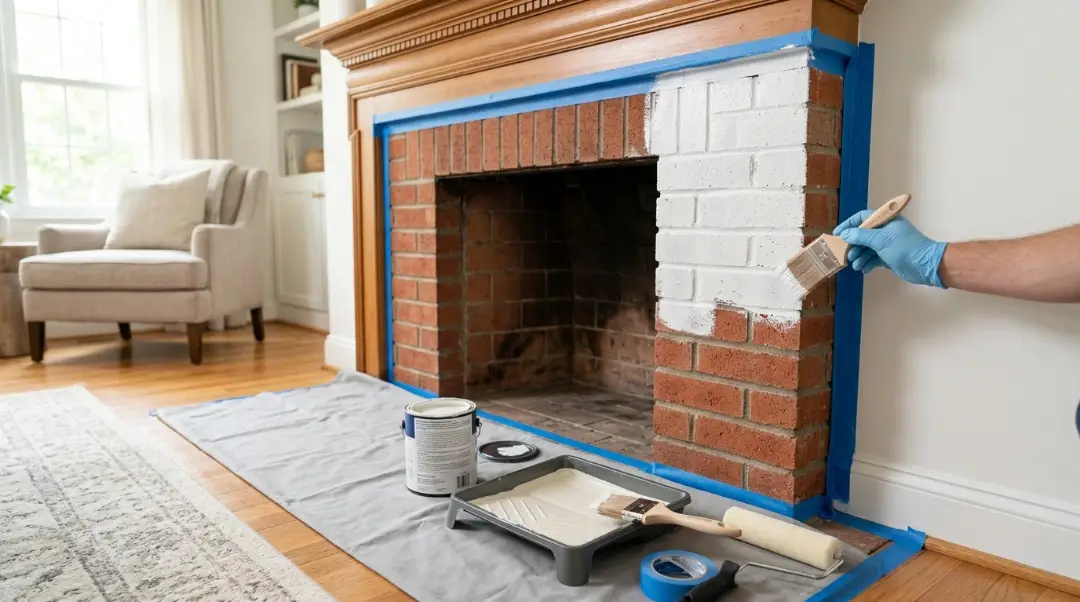
Brick or concrete: can push coverage down to 200 square feet per gallon. These porous materials absorb paint and have irregular surfaces that trap product in every crevice.
Wood surfaces: vary wildly. Smooth, sealed wood behaves like painted drywall. Raw, porous wood acts like a paint-eating monster, sometimes requiring 50% more product than expected.
11 Critical Factors Affecting Paint Coverage

Surface Texture and Porosity
This is factor number one for good reason. The National Paint and Coatings Association confirms that surface preparation and condition impact paint usage more than any other variable.
Smooth surfaces let you stretch every drop. Rough surfaces create more area to cover and have tiny spaces that trap paint. A “popcorn” ceiling might measure 200 square feet on paper but require enough paint for 260 square feet in practice.
Paint Quality and Formulation
Not all gallons contain the same amount of actual pigment and solids. According to paint chemistry research, premium paints contain 35-45% solids by volume, while economy paints drop to 25-35%.
Higher solids content means better coverage, period. A gallon of Benjamin Moore Aura contains more hiding pigments than a gallon of basic paint, so you get better results with fewer coats even though you’re paying more upfront.
Color Changes Matter
Going from navy blue to pale yellow? You’re signing up for three coats minimum, no matter what the can says. PPG’s technical resources show that dramatic color changes can double or triple paint requirements.
Light colors have less hiding power because they contain fewer pigments. Dark colors pack more pigment punch but show every thin spot if you’re covering them with something lighter.
Application Method Changes Everything
Brushing, rolling, and spraying use different amounts of paint. Professional painters know that spray applications waste 20-30% of your paint to overspray but they work faster and create smoother finishes.
Rollers provide the best balance. A quality roller with the right nap (thickness) puts down a nice, even coat without excessive waste. Cheap rollers shed fibers and hold too much paint, creating drips and using more product than necessary.
Number of Coats Required
Here’s what nobody tells you at the store: two coats is standard for most jobs. That 400 square feet per gallon suddenly becomes 200 square feet when you calculate correctly.
Single-coat promises from paint manufacturers assume ideal conditions: sealed surface, minimal color change, premium paint, and professional application. In real life? Plan on two coats for walls, sometimes three for ceilings.
Primer Makes a Difference
Using primer isn’t just good practice it’s an investment in coverage efficiency. According to Sherwin-Williams technical data, properly primed surfaces use 15-25% less finish paint.
Skip the primer, and that first coat soaks in unevenly. Your second coat tries to compensate, but you’ll probably need a third. Do the math: one gallon of primer plus two gallons of paint beats four gallons of paint-only application every time.
Surface Condition and Preparation
Clean, smooth walls drink less paint than dirty, damaged ones. Grease spots, water stains, and patched areas all absorb paint differently, creating a patchwork effect that requires extra coats.
Professional painters spend more time prepping than painting for this exact reason. According to the Painting and Decorating Contractors of America, proper surface preparation can reduce total paint usage by 20%.
Paint Sheen Affects Coverage
Flat paint hides sins. Those non-reflective surfaces scatter light and make imperfections disappear, but they also soak into walls slightly more than glossy finishes.
High-gloss paint sits on the surface like glass it covers less square footage but hides nothing. The sheen comes from extra resin, which makes the paint thicker and slightly less spreadable.
Satin and eggshell sheens hit the sweet spot for coverage, combining decent hiding power with washability. They’re the most forgiving finishes for DIY applications.
Temperature and Humidity
Paint chemistry doesn’t work well in extreme conditions. According to manufacturer guidelines, apply paint when temperatures stay between 50-85°F and humidity runs 40-70%.
Too cold, and paint thickens, making it harder to spread. Too hot, and it dries too fast, creating lap marks where wet paint meets dried edges. High humidity keeps paint from drying properly, while super-dry conditions make it skin over before it levels out.
Tool Quality Impacts Coverage
A $3 roller from the bargain bin isn’t saving you money. Cheap rollers have loose fibers, poor paint retention, and uneven coverage patterns. They actually waste paint by holding too much in some spots and too little in others.
Professional-grade rollers cost $8-15 but create consistent, even coats. The right nap thickness for your surface makes a huge difference too:
- Smooth walls: 3/8″ nap
- Light texture: 1/2″ nap
- Heavy texture: 3/4″ to 1″ nap
Painter Skill Level
Let’s be honest experience matters. Professional painters know how much paint to load onto a roller, the right stroke pattern to minimize waste, and how to maintain a wet edge for seamless results.
DIY painters often over-apply paint, thinking more is better. That creates drips, sags, and actually uses more product. One gallon of paint coverage in professional hands might only cover 300 square feet when applied by an enthusiastic amateur.
How to Calculate Paint Needed for Your Project

Math time! Don’t worry, this won’t hurt.
Step-by-Step Calculation Method
Step 1: Measure your room’s perimeter. Add up the length of all walls. A 12×12 room has a 48-foot perimeter (12+12+12+12).
Step 2: Multiply perimeter by wall height. Standard 8-foot ceilings in that 12×12 room give you 384 square feet (48×8).
Step 3: Subtract windows and doors. Standard door = 20 square feet. Standard window = 15 square feet. Let’s say you have one door and two windows: subtract 50 square feet. Now you’re at 334 square feet.
Step 4: Divide by paint coverage rate. Using 350 square feet per gallon as your baseline: 334 ÷ 350 = 0.95 gallons needed per coat.
Step 5: Multiply by number of coats. Two coats standard: 0.95 × 2 = 1.9 gallons total.
Step 6: Round up and add 10% buffer. Round 1.9 to 2 gallons, plus 10% safety margin means buy 2.2 gallons which rounds to 3 gallons in actual purchase terms (since paint comes in whole gallons).
On the otherhand you use Lowe’s Paint Calculator and Sherwin-Williams Calculator.
Room Size Examples
Let’s work through some real-world scenarios using standard room dimensions and typical conditions.
Powder Room (6×6 feet, 8-foot ceiling)
- Wall area: 192 square feet
- Minus door (20 sq ft): 172 square feet
- One coat needs: 0.5 gallons
- Two coats needs: 1 gallon total
- Purchase: 1 gallon
Master Bedroom (14×16 feet, 9-foot ceiling)
- Wall area: 540 square feet
- Minus door and 3 windows (65 sq ft): 475 square feet
- One coat needs: 1.4 gallons
- Two coats needs: 2.8 gallons
- Purchase: 3 gallons
Open Living Room (15×20 feet, 10-foot ceiling)
- Wall area: 700 square feet
- Minus openings (80 sq ft): 620 square feet
- One coat needs: 1.8 gallons
- Two coats needs: 3.6 gallons
- Purchase: 4 gallons
Kitchen (12×14 feet, 8-foot ceiling)
- Wall area: 416 square feet
- Minus cabinets, windows, door (120 sq ft): 296 square feet
- One coat needs: 0.85 gallons
- Two coats needs: 1.7 gallons
- Purchase: 2 gallons
These examples assume smooth, previously painted walls. For textured walls or dramatic color changes, bump each number up by one gallon.
Brand-Specific Coverage Comparison
Real talk about different paint brands and what you actually get.
Premium Paint Brands
Sherwin-Williams Duration Interior claims 400 square feet per gallon coverage. According to their technical data sheets, lab testing confirms this on sealed, smooth surfaces. In practice, professional painters report achieving 380-400 square feet consistently.
Benjamin Moore Aura advertises similar 400 square feet per gallon numbers. This paint has a reputation for exceptional one-coat coverage on color changes though “one coat” still means two coats for most real-world applications. The high solids content (45% by volume) backs up the coverage claims.
PPG Manor Hall promises 350-400 square feet per gallon. Professional contractor feedback suggests it hits the lower end of that range on average, around 360 square feet in typical conditions.
Farrow & Ball (luxury UK brand) claims 376 square feet per gallon based on British standards. Note that this paint contains different pigments than American brands, creating unique colors but not necessarily better coverage.
Budget-Friendly Options
Behr Premium Plus (Home Depot’s mid-tier) states 350-400 square feet per gallon. Real-world results land around 320-350 square feet on average. It’s decent paint that requires two coats for most applications.
Valspar Signature (Lowe’s equivalent) matches Behr’s claims and performance. Both deliver solid results for the price point, though you’ll use slightly more product than premium brands.
Glidden Premium covers 350-400 square feet according to the label. User reports suggest 300-350 is more realistic, especially on textured or porous surfaces. The lower price makes it tempting, but factor in potentially needing an extra gallon.
The math gets interesting here: if premium paint at $65/gallon covers 400 square feet but budget paint at $35/gallon covers 300 square feet, you’re paying roughly the same per square foot and premium paint looks better, lasts longer, and often requires fewer coats.
Cost Analysis & Optimization
Let’s talk money. Smart paint buying isn’t just about the price tag.
Price per square foot comparison:
- Premium paint: $65 ÷ 400 sq ft = $0.16 per square foot
- Mid-grade paint: $45 ÷ 350 sq ft = $0.13 per square foot
- Budget paint: $30 ÷ 300 sq ft = $0.10 per square foot
But that’s one coat. For two coats:
- Premium (often one coat): $0.16-0.32 per square foot
- Mid-grade (always two coats): $0.26 per square foot
- Budget (sometimes three coats): $0.20-0.30 per square foot
The budget option suddenly isn’t so budget-friendly.
Gallon vs. quart buying strategy: Paint comes in gallons ($30-65) and quarts ($10-20). For small touch-up jobs under 100 square feet, quarts make sense. For anything larger, gallons win on price per ounce.
Here’s the breakdown: one gallon = four quarts. Buying four individual quarts costs 1.5-2× more than one gallon. Do the bulk purchase unless you’re absolutely certain you need minimal paint.
When to buy extra: Always. Seriously. Buying an extra quart for touch-ups later saves you from trying to match a color from a discontinued batch. Paint formulas change, and “Swiss Coffee” from 2025 might not match “Swiss Coffee” from 2027.
Store leftover paint properly (sealed tight, right-side up, moderate temperature), and it lasts 2-5 years. That $15 quart is worth it when your toddler decorates the wall with markers in six months.
Common Paint Coverage Mistakes to Avoid
Even experienced DIY painters make these mistakes:
- Ignoring surface texture
- Skipping primer to save time
- Not accounting for multiple coats
- Using low-quality rollers
- Underestimating trim and detail areas
Avoiding these issues improves paint coverage and reduces wasted effort.
Tips to Maximize Paint Efficiency
Getting the most from your paint is about preparation and technique, not stretching the paint too thin.
Here are practical ways to improve paint coverage without sacrificing quality:
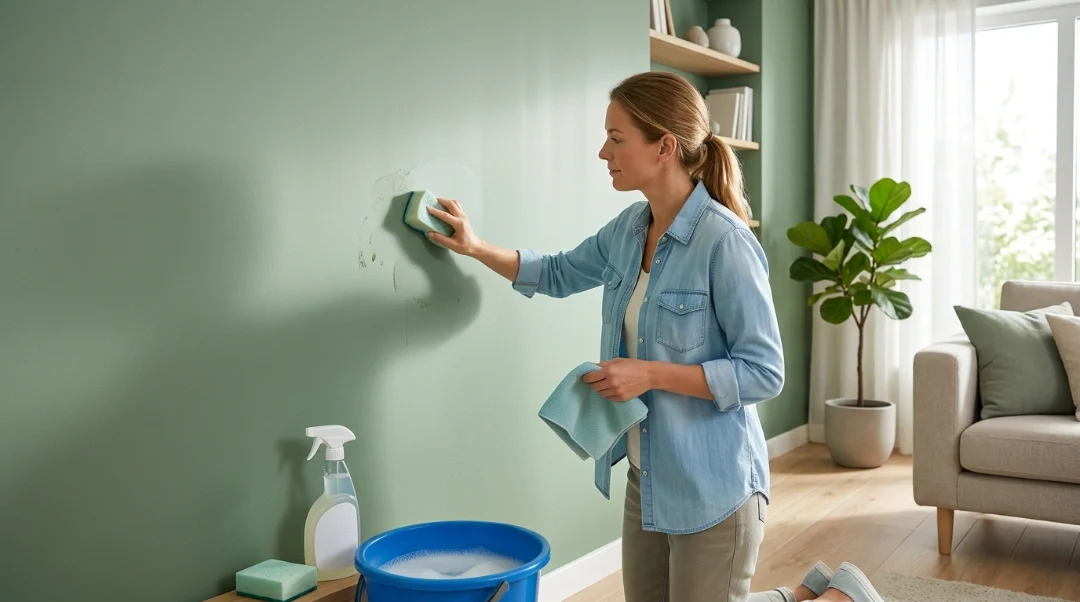
- Clean surfaces thoroughly to remove dust and grease
- Repair holes and cracks before painting
- Use primer when needed instead of extra coats
- Apply paint with consistent pressure
- Use high-quality rollers matched to surface texture
Overloading the roller or brushing too thin both reduce efficiency. Proper technique ensures even coverage and fewer coats.
How Much Does 5 Gallons of Paint Cover
A five-gallon bucket typically covers 1,750 to 2,000 square feet per coat under ideal conditions. That makes it a popular choice for whole-home interiors, large exteriors, or commercial spaces.
If the surface is rough or requires multiple coats, that coverage drops. Always calculate based on the worst-case scenario to avoid running short.
Conclusion
So, how much does a gallon of paint cover? In most cases, you can expect about 350 to 400 square feet per coat, as long as the surface is smooth and properly prepared. Factors like texture, color changes, primer use, and paint finish can lower or raise that number, which is why planning ahead matters. Knowing your true paint coverage helps you buy the right amount, avoid delays, and get a clean, even result.
If you would rather skip the guesswork and get professional results, Inter color Painting LLC is here to help. Our team provides reliable House Painting Services In Seattle, from accurate paint estimates to flawless application. Contact us today to discuss your project and get expert guidance that saves you time, money, and stress.
Frequently Asked Questions
How much does one gallon of paint cover on rough surfaces?
Rough surfaces like stucco, concrete block, or heavy knockdown texture typically reduce coverage to 250-350 square feet per gallon, compared to 350-400 square feet on smooth surfaces. The irregular surface creates more area to cover and absorbs more paint into crevices and pores.
Can I really paint a room with just one gallon?
A small bathroom or powder room (roughly 6×6 feet) can be done with one gallon for two coats, assuming smooth walls and minimal trim. Anything larger needs multiple gallons. Most standard bedrooms require 2-3 gallons total for proper coverage.
How many gallons to paint a 12×12 room with two coats?
A 12×12 room with 8-foot ceilings has approximately 384 square feet of wall space. Subtracting doors and windows leaves about 350 square feet. Two coats require roughly 700 square feet of coverage, which means 2 gallons of paint. Buy 2-3 gallons to account for texture and safety margin.
Does exterior paint coverage differ from interior paint?
Yes, significantly. Exterior paint covers 250-350 square feet per gallon compared to interior paint’s 350-400 square feet. Exterior paint contains more resins and additives for weather resistance, making it thicker and less spreadable. Exterior surfaces are also often rougher (wood siding, stucco) which reduces coverage further.
How much coverage is in a gallon of primer?
Primer typically covers 225-275 square feet per gallon on raw, unpainted surfaces like new drywall or bare wood. Primer soaks into porous surfaces to seal them, which means it absorbs more readily than finish paint. On previously painted surfaces, primer coverage improves to 300-350 square feet per gallon.
What’s the paint coverage for textured walls?
Textured walls reduce coverage by 20-30% compared to flat measurements. A wall measuring 100 square feet might require enough paint for 125 square feet due to texture. Heavy “popcorn” texture on ceilings can reduce coverage even further, sometimes requiring 40% more paint than flat measurements suggest.
Does paint quality really affect coverage?
Absolutely. Premium paints contain 35-45% solids (pigments and binders) versus 25-35% in economy paints. Higher solids content means better hiding power and coverage. You might get 400 square feet per gallon from premium paint versus 300 square feet from budget paint making the cost per square foot nearly identical despite different price tags.
How do I calculate paint needed for walls and ceiling together?
Calculate walls and ceiling separately. For walls: multiply room perimeter by wall height, subtract windows and doors. For ceiling: multiply room length by width. Add both numbers together, divide by your paint’s coverage rate (usually 350 sq ft per gallon), multiply by number of coats, and add 10% buffer.