One of the best ways to update and make your home’s interior your own is to paint it. But many homeowners want to know how long does interior paint last? In this in-depth guide, we’ll talk about important things that determine how long paint lasts, when it’s time to repaint, how long different types of paint and finishes last, when paint goes bad, and useful methods for helping your paint work last longer.
Table of Contents
ToggleWhen Should I Repaint the Interior?
When you repaint depends on both objective and subjective criteria. If you paint the inside of your house on a well-prepared surface, the paint should last between 5 and 15 years. But depending on how you use the area, how much wear and tear it gets, and the weather, you could have to repaint sooner.
Signs It’s Time to Repaint
- Visible wear: Cracks, peeling, fading, stains, chips, or scuffs that can’t be cleaned effectively.
- Paint age: Knowing your last paint date helps. Generally, if it’s been over 7-10 years since your last paint, it’s a good idea to inspect walls.
- Room changes: Lifestyle changes like kids, pets, or increased foot traffic cause faster wear.
- Personal preference: Sometimes, it’s simply time for a color change or fresh look.
Rooms that get a lot of foot activity, such kitchens, bathrooms, and corridors, tend to wear out faster, maybe in three to five years. On the other hand, guest rooms and formal rooms, which are used less regularly, tend to keep their finish for a lot longer.
Things That Make Paint Last Longer
The length of time your interior paint lasts depends on the decisions you make while applying it and how well you take care of it thereafter. You need to focus on three important things: quality, preparation, and the environment to come closer to that 10–15 year threshold.
The Quality of Paint (The Investment Factor)
The amount you pay per gallon is the most important factor in how long interior paint lasts. A higher price tag usually means that the ingredients are of greater quality and will last longer.
| Paint Tier | Typical Cost (per Gallon) | Estimated Lifespan | Key Benefit for Longevity |
| Contractor/Budget | Under $35 | 3-5 Years | Low volume of durable resins; prone to fading and poor washability. |
| Mid-Grade | $40 – $60 | 5-10 Years | Better hide and color retention; reasonable durability for moderate-traffic areas. |
| Premium/Designer | $70+ | 10-15+ Years | Highest volume solids (pigments & resins); maximum resistance to scrubbing, fading, and cracking. |
The Science of “Volume Solids”: Quality paint has a higher percentage of “volume solids” the material that remains on the wall after the solvents (water or mineral spirits) evaporate. Budget paints are essentially more water and less pigment/resin, resulting in a thin film that washes away, fades quickly, and provides minimal protection. Premium paints have superior resin technology designed to withstand frequent cleaning and UV exposure for a decade or more.
Surface Preparation (The Pro Factor)
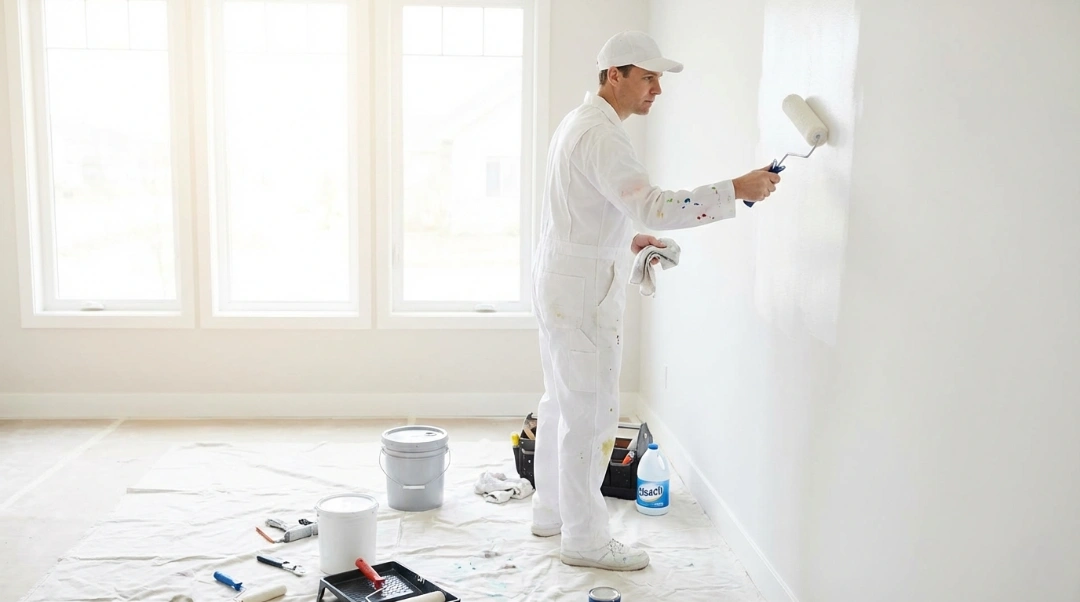
If you paint over a dirty, dusty, or shiny surface, even the most costly paint will not last long. Professional painters will tell you that 90% of a paint job’s life is in the prep work and 10% is in the painting.
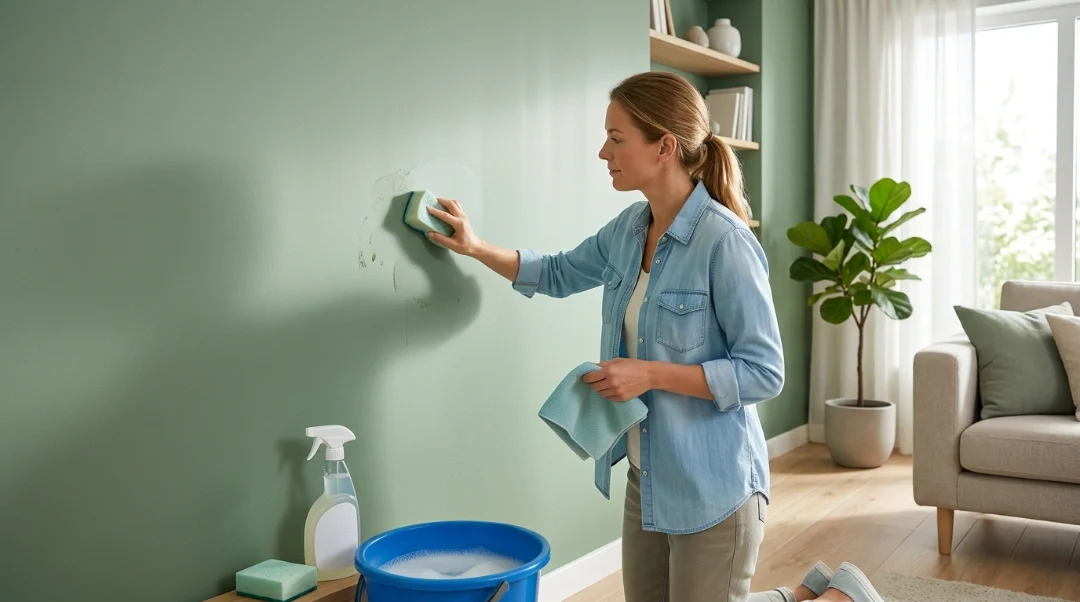
- Cleaning is Critical: All dust, grease (especially in kitchens), and mildew must be removed. Applying paint over dirt is the definition of poor adhesion.
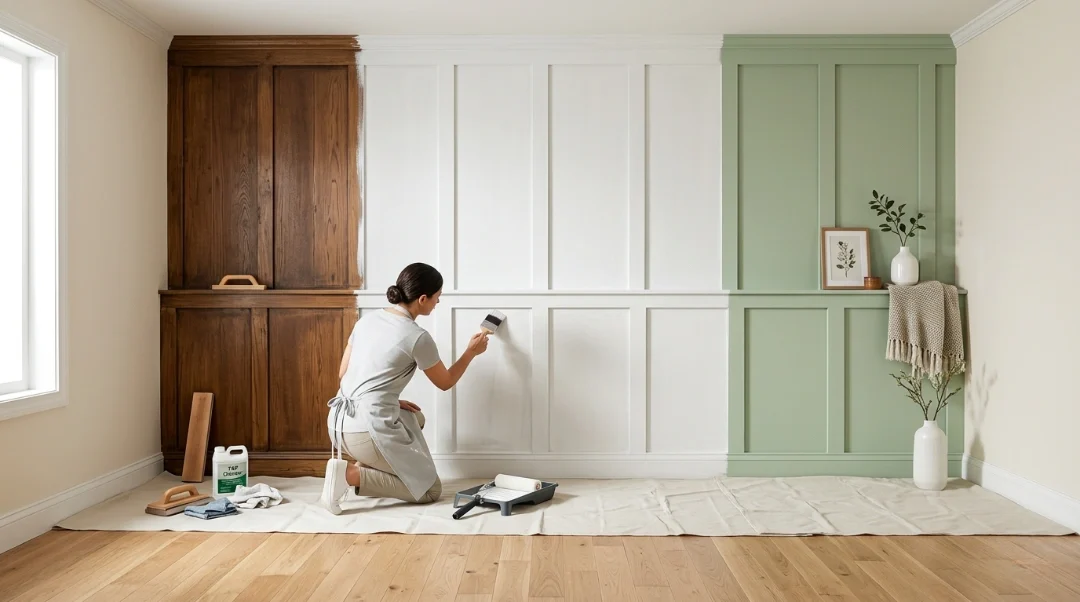
- Proper Priming: Primer serves two roles: it creates a uniform surface for the topcoat, and it promotes adhesion. Never skip priming on bare drywall, new joint compound patches, or glossy surfaces. Primer seals the surface, ensuring the topcoat bonds chemically, dramatically extending the time how long does interior paint last.
- The Two-Coat Rule: Manufacturers base their lifespan and performance guarantees on two full coats. The first coat provides adhesion and a solid base color; the second coat builds the thick, protective film needed for durability and washability.
Environment and Maintenance (The Care Factor)
Your lifestyle directly impacts paint life. A home with toddlers and pets is an environment of accelerated wear compared to an adult-only household.
- Humidity Control: In bathrooms and laundry rooms, excessive moisture is the enemy. Always use the exhaust fan during and after showers to reduce condensation. Moisture causes paint to lose adhesion, leading to bubbling and peeling.
- Sunlight Protection: Walls receiving direct afternoon sunlight are highly susceptible to UV fading. Installing sheer blinds, curtains, or UV-protective window film can significantly extend the color life of your paint.
- Correct Cleaning: Use only mild soap (like dish detergent) and water for cleaning. Abrasive cleaners or sponges can quickly wear down the sheen of eggshell or satin finishes. Always use the appropriate method for your finish type.
How Long Different Types of Paints Last on Walls
The paint’s chemical foundation must be taken into account when talking about how long it will last, since each variety has its own pros and cons when used in everyday life.
Water-Based (Latex or Acrylic) Paints
- Lifespan: 7 to 10 years (Up to 15 years for high-end acrylic formulations).
- Characteristics: These are the most common interior paints today. They are highly flexible, which means they can expand and contract slightly with temperature and humidity shifts without cracking. They are low-odor, quick-drying, and easy to clean up with soap and water. Modern acrylic-based latex paints have significantly improved in durability and scrub-resistance, making them suitable for all interior spaces.
Oil-Based (Alkyd) Paints
- Lifespan: 10 to 15 years.
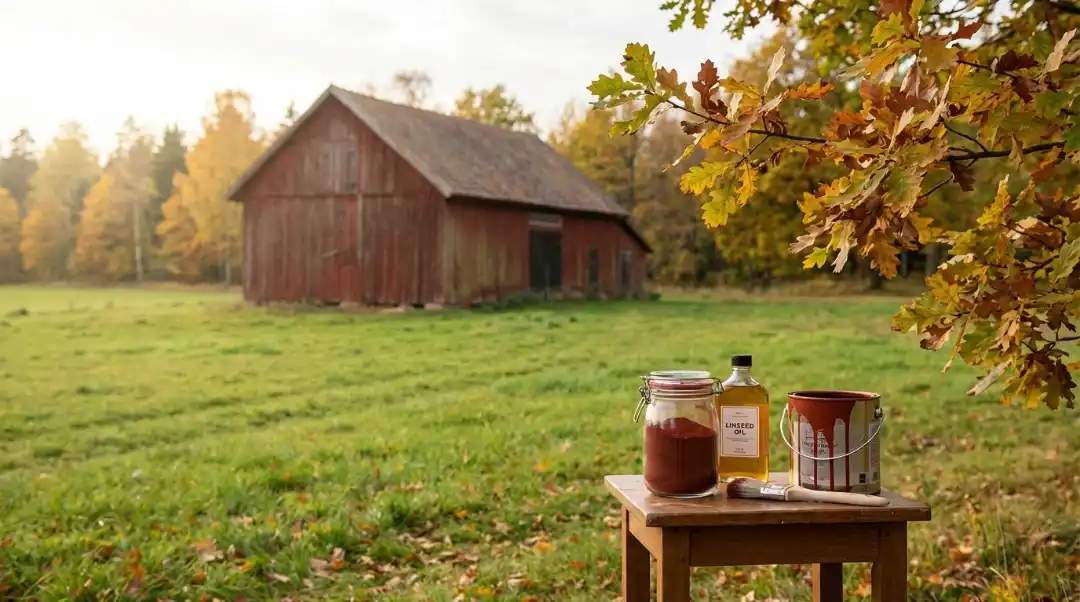
- Characteristics: While less common for walls due to their high odor and slow drying time, oil-based paints offer an exceptionally hard, durable finish. This makes them the top choice for high-wear areas like trim, cabinets, and interior doors. Their hard finish can withstand constant impact and heavy cleaning better than most latex varieties. However, they lack flexibility and are prone to yellowing over time, especially in lighter colors. Cleanup requires mineral spirits or paint thinner.
Specialty Finishes (The Gloss Factor)
The sheen, or gloss level, is directly related to the paint’s binder and its ultimate durability. The higher the sheen, the longer the lifespan and the easier the washability.
- Flat/Matte: 5–7 years. Hides imperfections best but offers almost no washability. Ideal for ceilings and formal rooms with zero contact.
- Eggshell/Satin: 7–10 years. The workhorse of interior paint. Offers moderate washability and durability. Perfect for bedrooms, living areas, and dining rooms.
- Semi-Gloss/High-Gloss: 10–15 years. Maximum durability and washability. The protective resins are densely packed. Essential for moisture-prone areas (bathrooms, kitchens) and contact areas (trim, doors).
Additional Considerations for Interior Paint
When professional painters assess a room, they don’t just consider the paint type; they evaluate the room’s function to provide the most accurate lifespan estimate.
Room-by-Room Interior Paint Lifespan Chart
| Room Type | Estimated Repaint Cycle | Primary Deterioration Factor |
| Bathrooms & Kitchens | 3-5 Years | Moisture, steam, temperature fluctuation, and grease/food splatter compromise adhesion and stain resistance. |
| Hallways & Entryways | 4-6 Years | High physical abrasion, scuffs, and fingerprints. Paint is constantly bumped by people, furniture, and bags. |
| Kid’s Bedrooms & Playrooms | 4-7 Years | High impact, staining, and friction from cleaning. Frequent touch-ups are usually required. |
| Adult Bedrooms & Home Offices | 7-10 Years | Low to moderate physical wear. Repainting is often done for aesthetic reasons (fading, boredom) rather than structural failure. |
| Formal Living/Dining Rooms | 10-15+ Years | Very low traffic and controlled environment. Paint usually lasts until a complete style renovation is desired. |
The Impact of Previous Layers
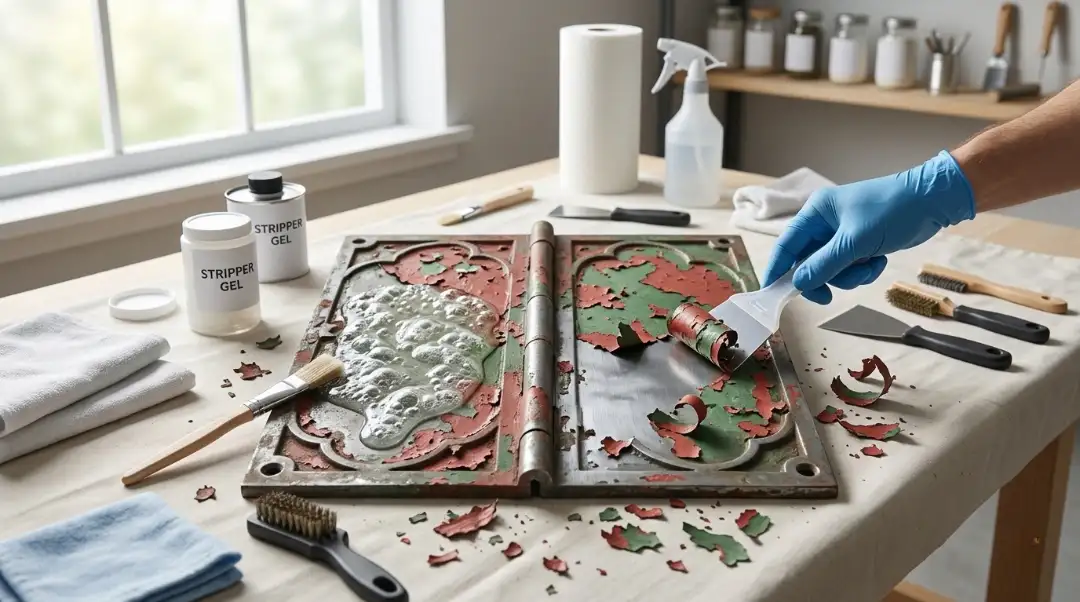
If you’ve painted your walls more than once over the years without preparing them properly between coats, they might not last as long as they should. When you put on too many coats of paint, it gets thick and stiff. When the substrate (the drywall) changes, the thick, brittle paint layers shatter or come off the original surface, usually in big sheets. If you are painting an ancient house, you may need to strip or sand it down a lot to make sure the new coat lasts as long as possible.
Does Paint Expire?
This is a frequently asked question that separates the life of the paint on the wall from the life of the paint in the can. Yes, paint does expire, and it’s critical to know the shelf life if you rely on leftovers for future touch-ups.
How Long Can Paint Be Stored? (The Shelf Life)
The question of how long is paint in a can good for has two distinct answers:
- Unopened Paint: An unopened can of high-quality latex or oil-based paint, stored under ideal conditions, can last up to 10 years, though 3 to 5 years is a more conservative and reliable estimate. Once the factory seal is intact and air is fully excluded, the paint components remain stable for a considerable time.
- Opened Paint: Once the seal is broken and the paint has been used, the clock starts ticking. Even if the lid is hammered back on, air has been introduced. An opened can of paint is typically good for 1 to 2 years if stored correctly.
5 Signs Your Paint Is Gone Bad
Trying to use paint that has gone bad will ruin your finish and waste your time. Here’s how to tell if your paint is bad:
- Mold or Mildew: A film or layer of mold may form on the surface, especially if water was introduced during the previous use.
- Rancid Odor: Paint contains volatile organic compounds (VOCs) and binders. If it has a foul, cheesy, or strongly rancid smell, it’s a sign of bacterial contamination or chemical breakdown. Even after stirring, this smell won’t go away.
- Lumps and Clumps: If, after thorough stirring, the paint remains curdled, chunky, or gritty, the components have permanently separated or dried out.
- Inability to Re-Mix: When paint is stored, the components naturally separate (pigment sinks, solvent rises). This is normal. If you stir it vigorously for several minutes and the settled pigments simply won’t reintegrate to form a smooth, uniform consistency, then the paint does latex paint expire has answered with a definitive ‘yes.’
- Rust in the Can: If the metal can has rusted, the flakes can contaminate the paint, and the rust may weaken the seal, allowing more air in.
Does Paint Go Bad If It Freezes?
Yes, freezing latex (water-based) paint often kills it. When the paint’s water freezes, it expands, which breaks up the emulsion polymers for good. When the paint thaws, it typically looks lumpy and gritty, and even after being professionally shaken, it won’t go back to a workable consistency. Most of the time, oil-based paints can handle freezing conditions far better.
To find out how long paint lasts, you need to keep it in a place where the temperature is always between 50°F and 90°F. Never store it in a garage or shed that becomes too cold or too hot.
Lastly, if you’re not sure how long paint stays blended for touch-ups, write the date and room used on the can’s lid with a sharpie. This easy step will save you years of guesswork.
Ready to Get Started? The Smart Repaint Strategy
Given all these variables from the difference between flat and semi-gloss to knowing how long does interior paint last in a steamy bathroom planning a repaint can be overwhelming.
Here is a simple, smart strategy for tackling your interior painting projects:
- Prioritize by Function, Not Aesthetics: Start with the high-wear areas first. Your bathroom, kitchen, and main hallway should always be the priority. This is preventative maintenance; high-quality, durable paint in these areas protects your walls and your investment.
- Invest in Quality Where It Matters: Use premium-grade, highly scrubbable paint (satin or semi-gloss) in high-wear zones. You can save money by using a high-quality, mid-grade paint in low-traffic bedrooms.
- Choose the Right Sheen: Do not use flat paint in a kitchen or bathroom, no matter how much you like the look. The lack of durability will force you to repaint in 3 years instead of 5, costing you more in the long run.
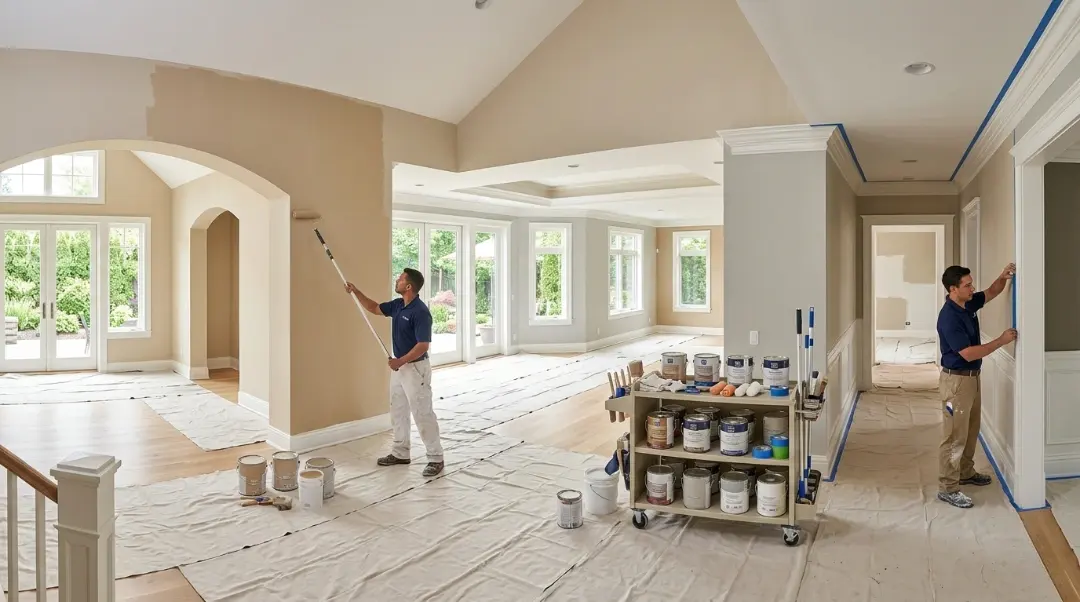
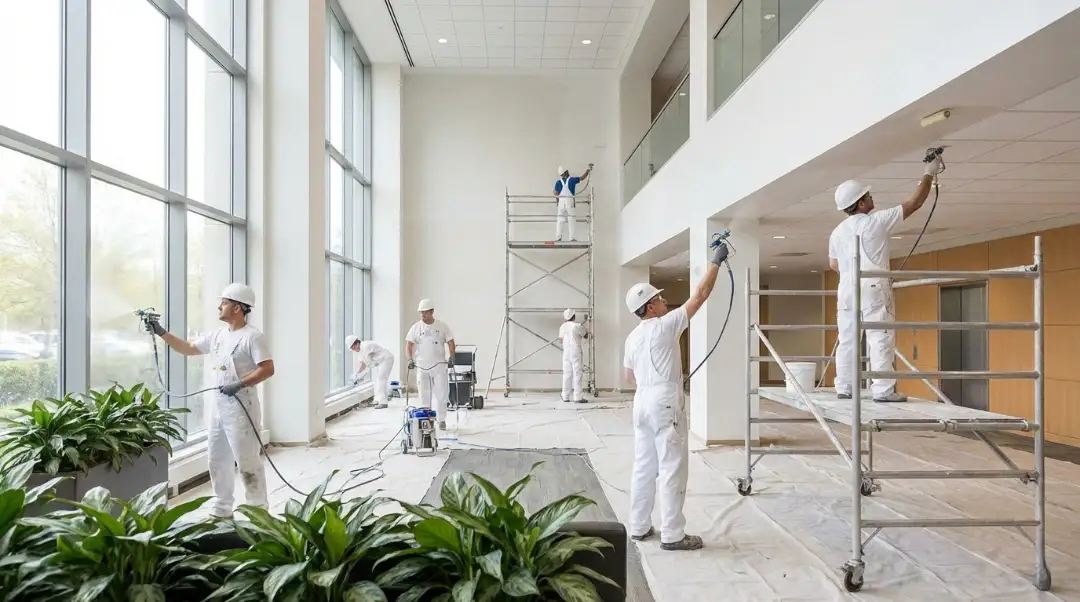
- Embrace Professional Preparation: If your walls are peeling, cracking, or require heavy patching, hiring a professional for the preparation phase will dramatically increase the life of your new paint job. A clean, properly primed surface guarantees maximum adhesion and longevity.
Looking for expert Interior Painting Services in Seattle? Contact us today for your free estimate.
Final Words
Understanding how long does interior paint last helps you maintain a beautiful home, avoid unnecessary repainting, and save money in the long run. If you take care of them, use good materials, and apply them correctly, your interior walls can look new for a long time.
If you’re going to paint soon and want to make sure the work is done right, check out our House Painting Service Seattle. Seattle Painting Expert offers high-quality services that will last a long time and provide you great results.
FAQs
What is the main difference in longevity between professional and DIY interior paint jobs?
A professionally applied paint job can easily last 3 to 5 years longer than a DIY job. This is primarily because professionals adhere strictly to surface preparation standards (cleaning, patching, priming) and apply uniform, two-coat coverage using high-quality tools, which ensures the paint film achieves its maximum engineered durability.
Is it true that interior paint can last 20 years?
While some high-gloss, oil-based paints in extremely low-traffic areas (like formal ceilings or wood trim) might still be structurally sound after 20 years, they will likely be discolored or faded. A realistic maximum for modern interior wall paint retaining an acceptable aesthetic is 15 years in low-traffic areas.
Does the color of the paint affect how long it lasts?
Yes, to an extent. Darker, deeper colors contain more pigment, which can sometimes provide slightly better UV resistance. However, when dark colors do fade, the change is often more noticeable than it is with lighter colors. Light colors are generally better at hiding dust and minor scuff marks.
If I have old paint, should I use a primer/sealer before repainting?
If the old paint is glossy, oil-based, or you are making a dramatic color change (e.g., dark to light), a high-quality primer is essential. It ensures the new paint bonds correctly, covers the old color, and prevents peeling or adhesion failure all of which significantly affect the longevity of the new coat.
How long is paint in a can good for if it’s stored in my basement?
A cool, dry basement (as long as it stays above 50°F) is an ideal storage spot. If the paint can was opened, expect 1-2 years. If it was never opened and the seal is intact, you can likely use it for 5+ years. Always write the date and room on the can for future reference.