Every year, the outside of your house gets a lot of wear and tear. Dirt, mildew, pollen, and algae build up over time, so slowly that most people don’t notice until the siding seems like it’s always been stained. The good news? In just one afternoon, a pressure washer can get rid of years of dirt.
When you learn how to pressure wash a house the right way, you can save money, maintain your siding, and make the outside of your house seem new again without employing anyone. I’ll show you all you need to know in this book, including the necessary tools, the right PSI, a clear 8-step method, safety laws, expenses, and the blunders that can really hurt things. By the end, you’ll know exactly what you should and shouldn’t do.
What Is Pressure Washing?
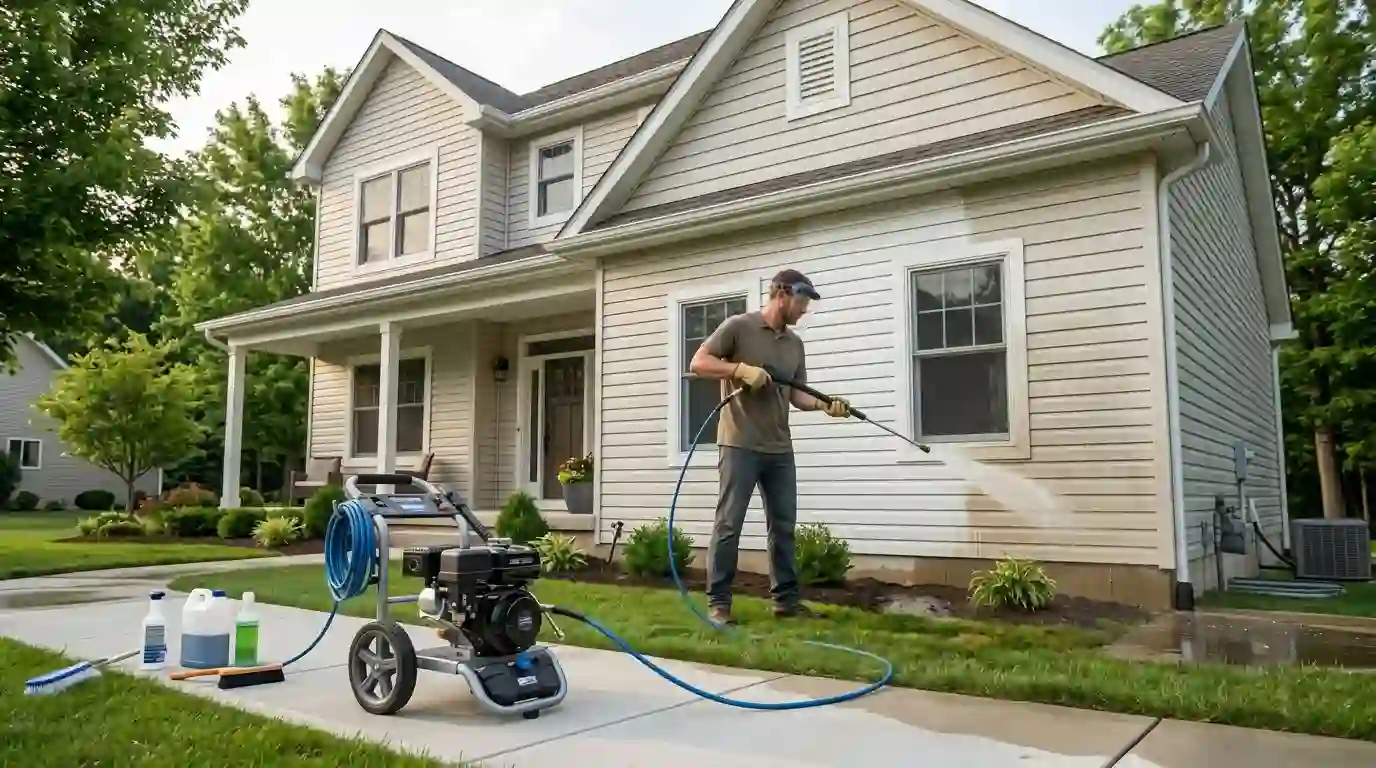
Pressure washing uses a high-powered stream of water to blast away dirt, mold, mildew, algae, and grime from exterior surfaces. It works by forcing water through a narrow nozzle at controlled pressure levels, measured in PSI (pounds per square inch) and GPM (gallons per minute). It’s faster and far more effective than scrubbing by hand.
Soft washing is a related technique that uses lower pressure combined with stronger cleaning solutions. It’s better suited for delicate surfaces like stucco or older wood siding where high pressure can cause damage.
How to Prepare for Pressure Washing Your House
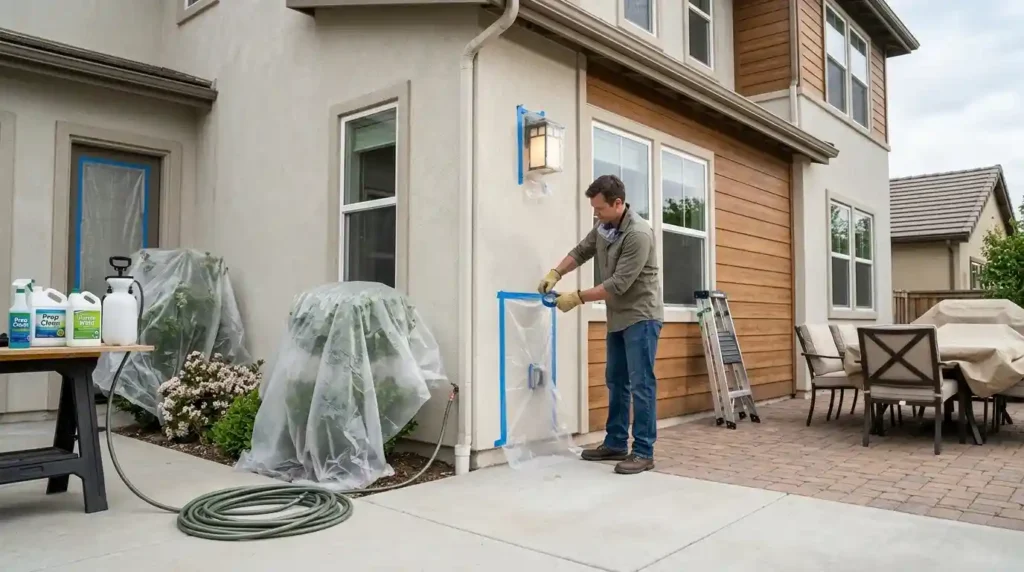
Preparation is 80% of the job. I’ve seen people start spraying only to realize their windows were cracked open an inch. Don’t be that person.
- Seal the Perimeter: Close every window and door. Check the seals. If you have old windows, consider taping a piece of plastic over them.
- Protect the Greens: High-pressure water and detergents can stress your plants. Thoroughly wet your shrubs and flowers with a garden hose before you start. This dilutes any soap that drips onto them.
- Power Down: Cover all outdoor electrical outlets, doorbells, and light fixtures with plastic and painter’s tape. Water and electricity are a bad mix.
- Clear the Deck: Move patio furniture, toys, and the grill at least 15 feet away from the house.
How to Choose the Right Pressure Washer for Your House
A pressure washer with 1,500 to 2,000 PSI is safe to use on siding, driveways, decks, and patios in most homes. Electric models are better for home use because they are lighter, quieter, and easier to handle than gas-powered ones.
Here’s a quick breakdown by surface type:
| Surface | Recommended PSI | Nozzle Tip |
| Vinyl siding | 1,500–2,000 | 25–40 degree |
| Wood siding | 1,200–1,500 | 40 degree |
| Brick | 2,000–2,500 | 25 degree |
| Stucco | 1,000–1,500 | 40 degree only |
| Concrete/Driveway | 2,500–3,000 | 15–25 degree |
Electric vs. Gas: Electric pressure washers are great for cleaning the outside of your house and doing other cleaning tasks. They’re easy to use, small, and don’t need much upkeep. Gas variants have more raw power and are better for bigger homes or tough commercial jobs.
GPM matters too. While PSI measures pressure, GPM (gallons per minute) measures water flow. A higher GPM cleans faster. Look for at least 1.5–2.0 GPM for residential use.
How to Pressure Wash a House in 8 Steps
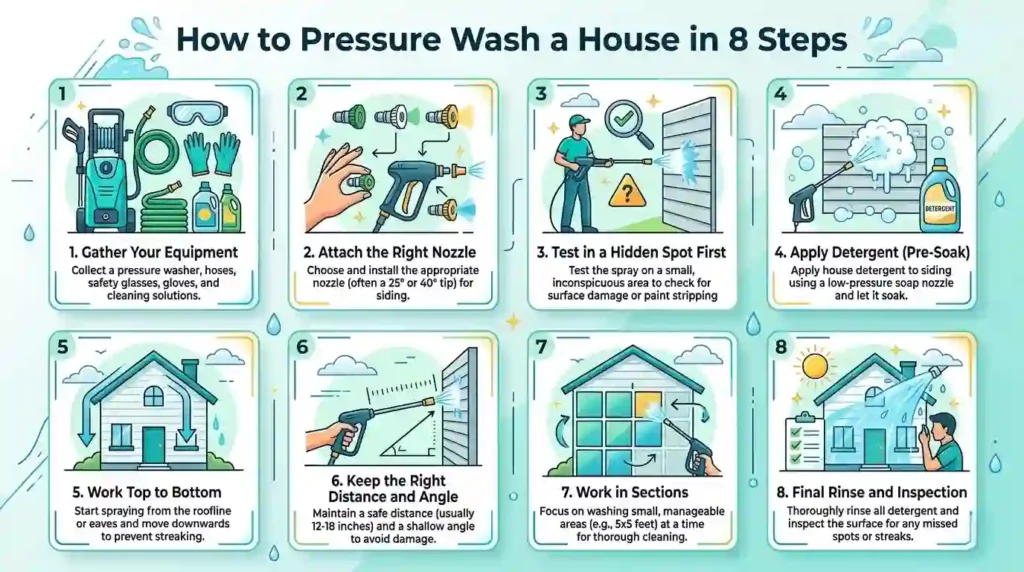
This is the core of the process. Follow these steps in order and you’ll get clean results without damaging your home.
Step 1: Gather Your Equipment
You need: a pressure washer (1,500–2,000 PSI), a garden hose with full water flow, nozzle tips (25-degree and 40-degree), safety goggles, gloves, and a pressure washer-safe detergent.
Step 2: Attach the Right Nozzle
Begin with the 40-degree tip for siding and other fragile surfaces. The 25-degree tip is best for harder stains on concrete, brick, and other surfaces. Never use a 0-degree (red) tip on the outside of your house. It can cut wood or chip paint.
Step 3: Test in a Hidden Spot First
Before cleaning house siding in a visible area, test on an inconspicuous section. Hold the wand about 12 inches away and gradually move closer. If you see paint lifting or the surface reacting, step back further.
Step 4: Apply Detergent (Pre-Soak)
Use your pressure washer’s soap nozzle or a different garden sprayer to spray the detergent solution from the bottom up. When you’re at the soap phase, working from the bottom up stops streaking. Do not let it dry on the surface; instead, let it sit for 5 to 10 minutes.
Step 5: Work Top to Bottom
When rinsing, always work from the top of the house down. This pushes dirty water downward rather than letting it run over already-cleaned sections.
Step 6: Keep the Right Distance and Angle
Hold the wand 6–12 inches from the surface at a 25–45 degree angle. Never spray straight on (90 degrees) it drives water under siding or into gaps. For power washing house siding, a slight downward angle works best.
Step 7: Work in Sections
Don’t try to clean the entire house in one pass. Work in 3–4 foot sections, rinsing each one before moving to the next. This prevents detergent from drying on the surface and leaving residue.
Step 8: Final Rinse and Inspection
Do a thorough final rinse with clean water from top to bottom. After the exterior dries (usually 24–48 hours), walk around and inspect for missed spots, staining, or areas that need a second pass.
Surface-Specific Pressure Washing Tips
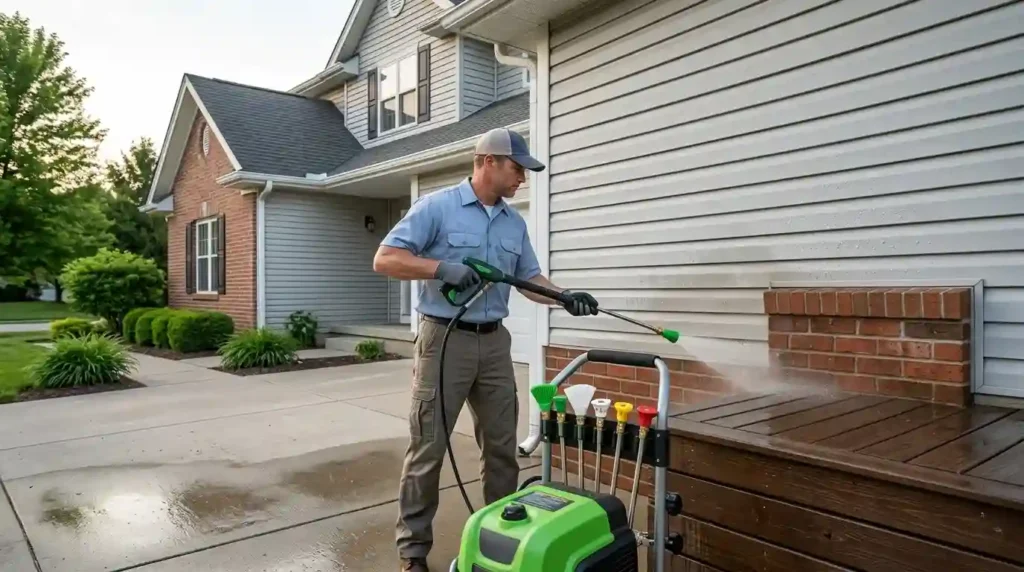
Vinyl Siding
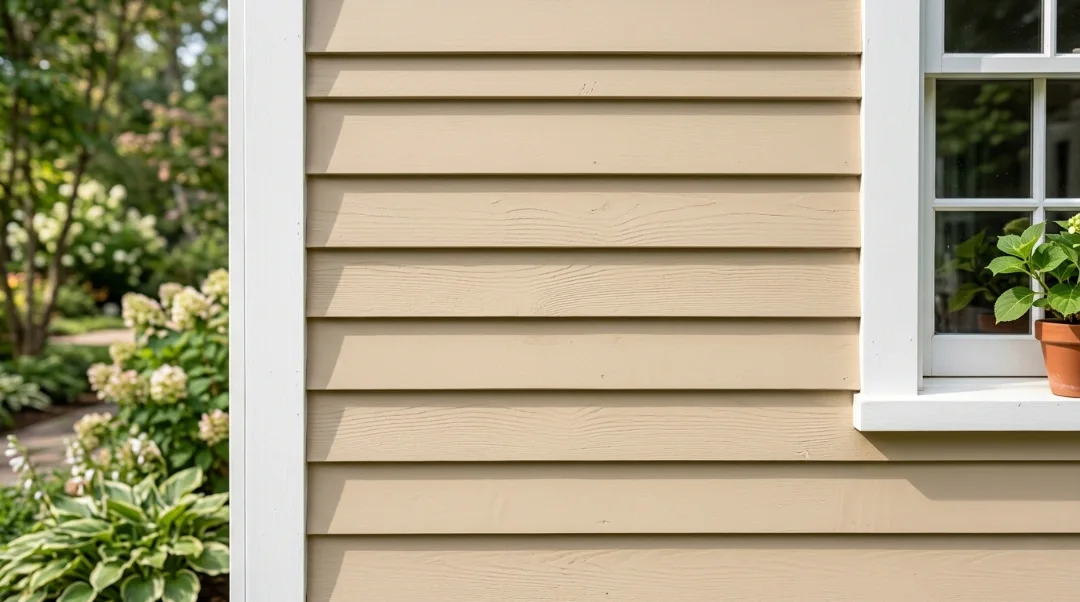
Vinyl handles moderate pressure well. Use a 25–40 degree nozzle and keep your wand moving. Stationary spraying on vinyl can warp or crack the panels.
Wood Siding
Wood is the most damage-prone surface. Stick to 1,200–1,500 PSI, use a 40-degree tip, and keep the nozzle at least 12 inches away. Spray with the grain, not against it.
Brick
Brick tolerates higher PSI, but the mortar between bricks does not. Use 2,000–2,500 PSI and avoid concentrating the spray on mortar lines.
Stucco
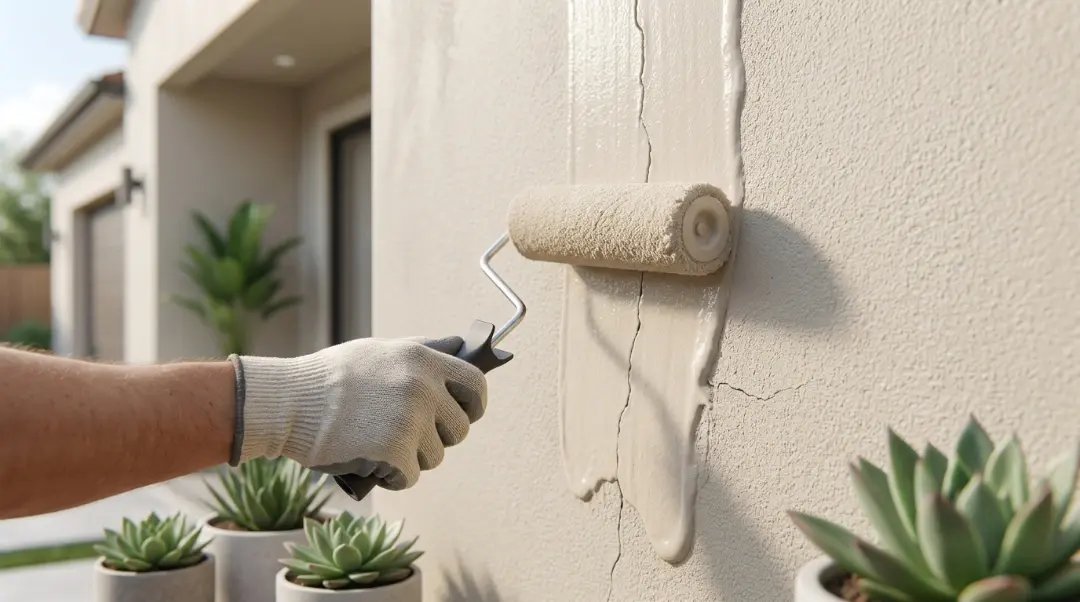
Stucco is porous and prone to cracking. If you must clean it with pressure, use the lowest PSI setting (under 1,500) and a 40-degree tip. Soft washing is the safer option for stucco.
What NOT to Pressure Wash on Your House
This is where most people make costly mistakes.
Avoid using a pressure washer on:
- Windows High pressure can crack glass or force water under window seals
- Old or peeling paint You’ll strip more paint than grime
- Electrical panels or meters Serious electrocution risk
- Asphalt shingles Pressure washing removes protective granules and voids warranties
- Soft or rotting wood Pressure makes existing damage significantly worse
- Air conditioning units Bends the delicate fins and reduces efficiency
How to Pressure Wash a House Safely
You should use safety eyewear, shoes with closed toes that grip, and ear protection when pressure washing a house. You should never use a ladder while holding a pressure wand since the rebound can quickly put you off balance. Keep the wand aimed away from people and pets at all times.
I’ve seen people try to balance on a 20-foot extension ladder while pressing the trigger on a gas-powered device. It’s a sure way to end up in the hospital. Get a “second-story nozzle kit” or a telescopic wand if you can’t get to the second level from the ground.
Avoid These Common Safety Blunders
- The “Ladders are Fine” Myth: The kickback from a pressure washer is significant. Stay on the ground.
- Power Lines: Water conducts electricity. Keep the stream far away from the lines entering your home.
- Lead Paint: If your home was built before 1978, do not pressure wash it. You’ll turn lead paint into a fine mist that settles in your soil.
How Much Does It Cost to Pressure Wash a House?
Professional pressure washing costs between $150 and $400 for an average-sized home, depending on square footage, siding type, and your location. DIY pressure washing costs $50–$100 in equipment rental or uses a $100–$300 machine you already own.
Here’s a basic cost comparison:
| Method | Cost Range |
| DIY (rented washer) | $40–$80/day |
| DIY (owned washer) | $10–$20 in detergent |
| Professional (per visit) | $150–$400 |
| Professional (2-story home) | $300–$600 |
For a 2,000 square foot house, professional services typically charge $0.10–$0.50 per square foot. That puts the cost between $200–$1,000 depending on the scope of work.
Common Pressure Washing Mistakes to Avoid
These mistakes show up constantly and they’re all preventable.
- Using too much pressure More PSI doesn’t mean cleaner. It often means damaged siding or stripped paint.
- Skipping the detergent water alone won’t kill mold or algae. You need a cleaning solution to break it down.
- Spraying upward under siding This forces water behind the panels, causing rot and mold inside the wall cavity.
- Cleaning in direct sunlight Detergent dries too fast in heat, leaving streaks and residue.
- Not rinsing completely soap residue left on siding attracts more dirt faster.
How Often Should You Pressure Wash Your House?
Once a year, most homes need to be pressure washed. In places with a lot of humidity, trees, or pollen, homes may need it twice a year. In the spring, when the winter dirt has settled, or in the fall, before the cold weather comes, is the finest time.
The best temperature range is between 40°F and 75°F. Water can freeze on surfaces and within your pressure washer if the temperature drops below 40°F.
Conclusion
Knowing how to pressure wash a house properly is the difference between a clean exterior and a damaged one. The right PSI, the right nozzle, and the top-to-bottom technique are all very important. They are what keep your siding safe and give you benefits that last. Start slowly, test first, and work in little parts. Your home will be grateful.
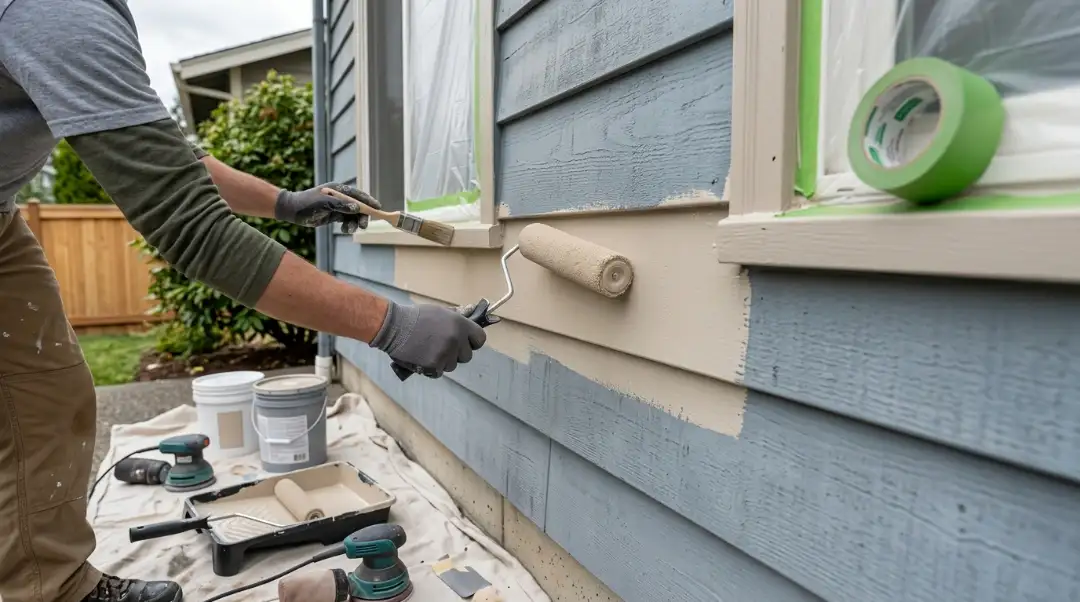
If you’d rather let professionals do it, Inter Color Painting LLC offers professional Pressure Washing Services Seattle that will clean your home’s exterior completely without causing any damage. We also offer full exterior painting services in Seattle for homeowners who wish to give their homes a whole new look. Want to know what happens after a nice wash of the outside? The next step is to read our related tutorial on how to get the outside of your home ready for painting.
Are you ready to start, or do you have questions? Contact Inter Color Painting LLC immediately, and our experts will be pleased to help you choose the best solution, offer you a free quote, or set up a time for a professional pressure washing session that works for you. You can get in touch with us through our website or by phone. We’re here to assist you in doing the job well.
FAQs
Can I clean my house with a power washer?
Yes, and most homeowners can accomplish it safely with an electric pressure washer that has a pressure range of 1,500 to 2,000 PSI. Using the right nozzle, staying a safe distance away, and cleaning from the top down are all important. You don’t need any expert experience to do conventional siding.
How do you best power wash your house?
Use a 25–40 degree nozzle, work in portions from top to bottom, and maintain the wand 6–12 inches away from the surface. It’s always a good idea to test on a hidden region first before working on walls that can be seen.
When is the greatest time of year to pressure wash a house?
Most places get the greatest weather in April and May. The weather is nice, and spring cleaning gets rid of the mold, pollen, and dirt that built up during the winter. Fall (September to October) is the second-best time before it becomes chilly.
Can I use Dawn dish soap in my pressure washer?
Dawn is safe for some pressure washers in modest amounts, but it can damage seals over time and make too much foam. A detergent made just for pressure washers is a better choice in the long run. Before using any soap, always read the documentation for your machine.
How much should I charge to pressure wash a 2,000 square foot house?
Professional rates typically fall between $200 and $400 for a 2,000 square foot home. Pricing depends on siding type, local labor rates, and whether a detergent treatment is included. Most contractors charge $0.10–$0.20 per square foot as a base rate.
What is the 80/20 rule in house cleaning?
The 80/20 rule means 80% of visible dirt comes from 20% of surface areas, typically entry points, north-facing walls, and shaded sections where moisture collects. Focusing extra attention on these zones gives you the biggest visual improvement with the least effort.