Old brick fireplaces can feel heavy and out of date. A lot of living rooms still feature dark or stained brick that draws attention away from the rest of the room. If you know how to paint a brick fireplace, you can make it a clear focal point without having to do a major restoration.
To get the job done quickly, clean the bricks well, fix the mortar seams, put on a masonry primer, and then paint them with two thin coats of good acrylic latex paint. This easy method leaves a new finish that lasts for years. This guide will show you every step, the correct tools, color suggestions, and mistakes to avoid.
Should You Paint a Brick Fireplace?
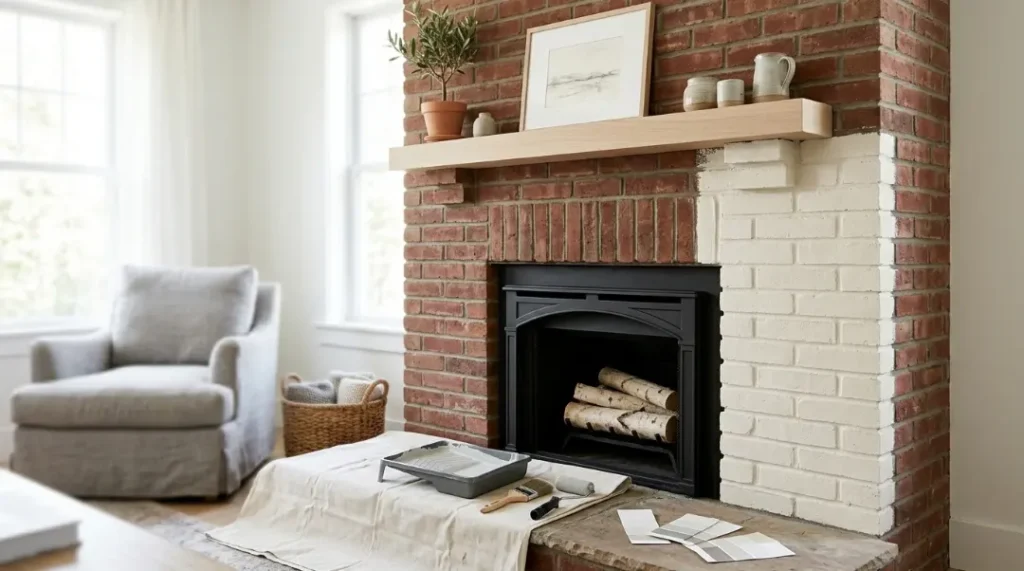
Painting a brick fireplace is a good idea if you want an affordable, high-impact room update. It costs far less than replacing or re-veneering the fireplace. However, it’s a long-term commitment removing paint from brick later requires significant sanding, scraping, and chemical stripping.
Be honest with yourself before you pick up a brush. Do you love the texture of the natural brick but not the color? It would be best to stain. Are you going to redo the whole room in a few years? Then feel free to paint. But if you’re not sure, remember that returning to bare brick is a big job.
Reasons to Paint Brick
- Brightens a dark or heavy room instantly
- Costs $50–$200 versus $3,000+ for stone replacement
- Works with almost any decor style
- Covers decades of soot stains and discoloration
- Creates a clean, modern focal point
What to Consider Before You Start
First, look at how your brick is doing. Check for mortar joints that are fractured, bricks that are loose, or grout that is eroding. Paint doesn’t fix problems with the structure; it merely hides them for a while. You need to fix any damage before you take up a brush.
You should also find out how old your fireplace is. There may be lead paint on the brick of homes built before 1978. If you’re worried about that, go to a hardware store and buy a lead test kit before you start sanding or scraping.
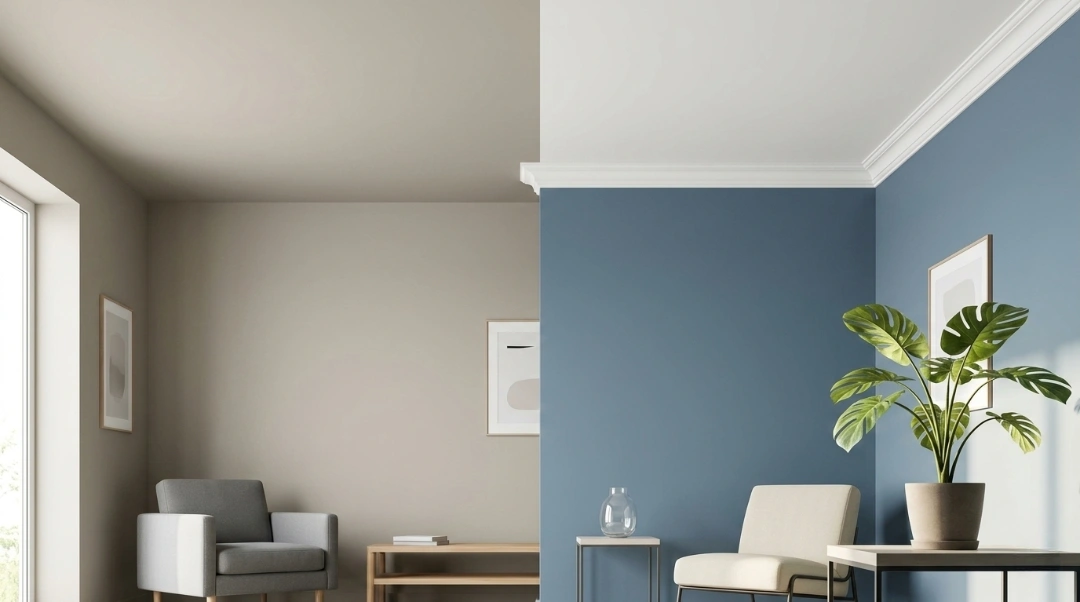
Also, think about how your room is lit. A white or off-white painted fireplace looks best in a room that faces north and doesn’t get much natural light. A room that gets a lot of sunlight can take darker colors like navy or charcoal without feeling small.
Supplies You’ll Need
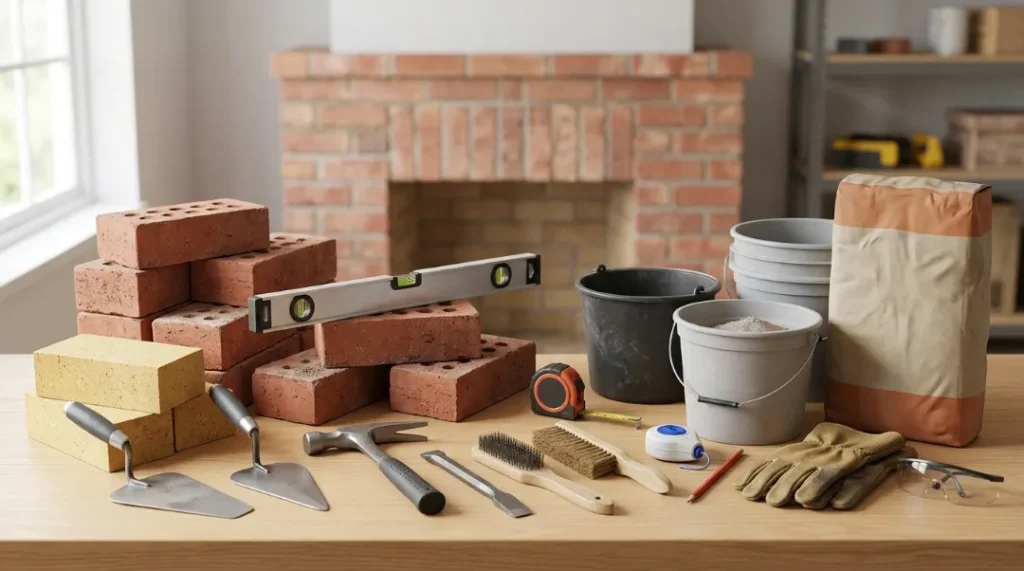
| Item | Purpose |
| Stiff wire brush | Remove loose debris from mortar joints |
| TSP cleaner or dish soap | Deep clean the brick surface |
| Painter’s tape (wide) | Protect surrounding areas |
| Drop cloths | Floor and furniture protection |
| Zinsser Bullseye Primer or masonry primer | Seal porous brick before painting |
| Acrylic latex paint (eggshell/satin) | Final color coats |
| 3″ flat brush + 2″ angled brush | Mortar joint detail work |
| Roller with thick nap | Main brick surface coverage |
| Vacuum with brush attachment | Remove loose dust after brushing |
Budget tip: Quality primer is not the place to cut corners. Cheap primer on porous brick leads to uneven paint absorption and patchy results.
Choosing the Right Paint
The best paint for a brick fireplace is high-quality acrylic latex paint formulated for masonry surfaces. Water-based paints allow the brick to breathe, resist moisture, and hold up longer than oil-based alternatives, which can trap dampness and cause peeling over time.
Avoid oil-based paint entirely on brick. It seals the surface too tightly, traps moisture, and eventually causes the paint to bubble and flake.
Eggshell or satin finishes are the best for the shine level. Dirt shows up better on flat finishes. On big brick surfaces, semi-gloss can look too shiny. Benjamin Moore Advance and Sherwin-Williams ProClassic are two brands that are good choices for long-lasting paint that is true to color.
Use paint that can handle high temperatures if you’re painting close to the opening of the firebox. Regular paint on the inside will become yellow and peel when it gets too hot.
Choosing a Color
White or off-white is the most common choice, and there’s a good reason for it. A white-painted fireplace bounces light around, makes rooms feel bigger, and goes with almost any kind of furniture. Both Behr’s Polar Bear and Benjamin Moore’s Chantilly Lace are popular and reliable colors.
Gray brick fireplace paint is the second most popular direction. Light gray adds subtle elegance. Charcoal creates a bold, modern focal point. If your walls are already a cool gray, consider a shade just two tones darker for a monochromatic, built-in look.
Don’t rule out color entirely. Forest green, deep navy, or even a warm terracotta can make a brown brick fireplace feel intentional and designed rather than dated. Just test a small patch first, porous brick absorbs color differently than drywall, so what looks right on a paint chip may dry darker on brick.
How to Prepare a Brick Fireplace for Painting
Preparation makes or breaks this project. Rushing through it is the number one mistake people make. If the brick isn’t clean and fully dry, the paint won’t bond properly and you’ll see peeling within a year.
Here’s what proper prep looks like:
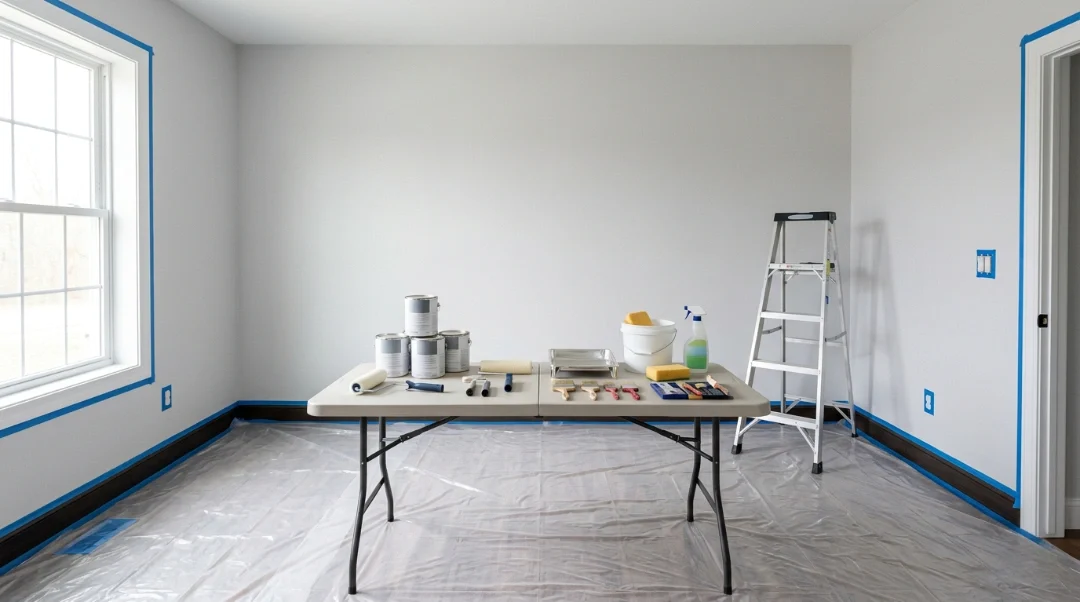
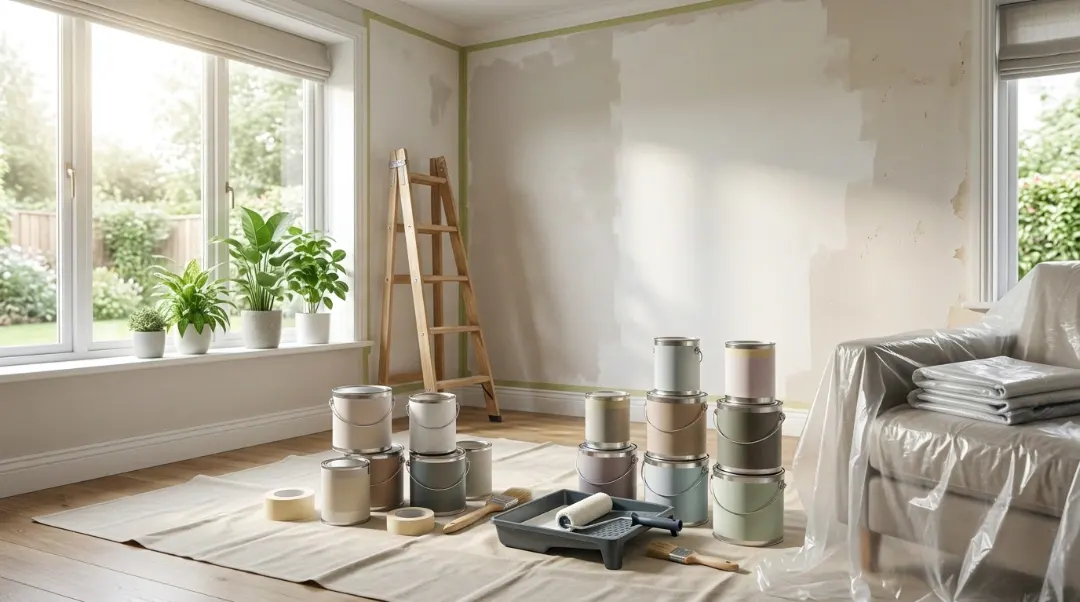
- Remove all fireplace accessories, screens, and tools
- Lay drop cloths over the floor and nearby furniture
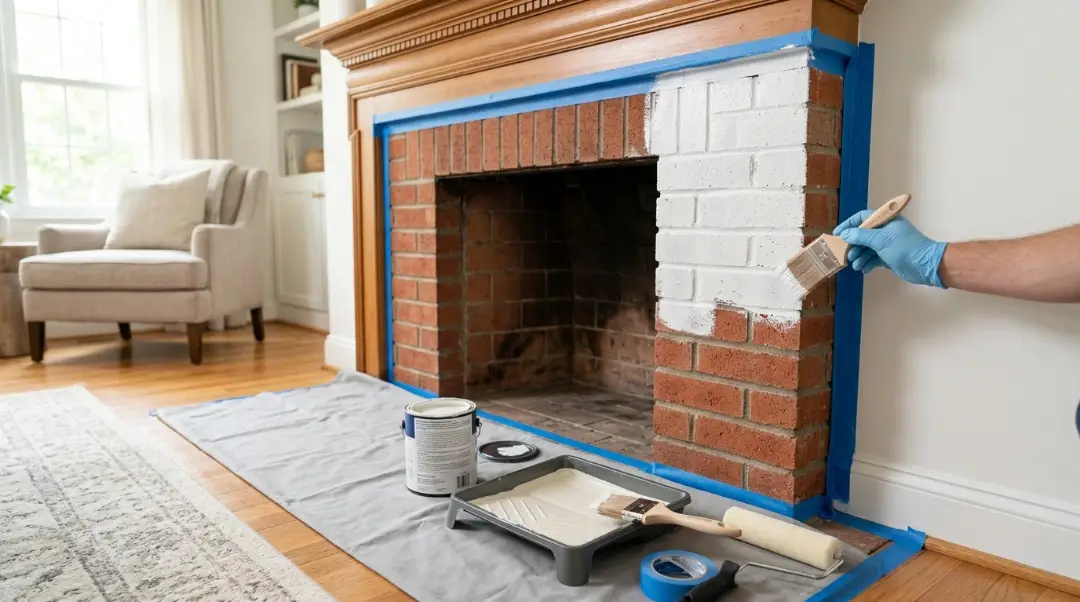
- Apply painter’s tape along the mantel, walls, and floor edges
- Open windows and temporarily turn off HVAC to reduce dust circulation
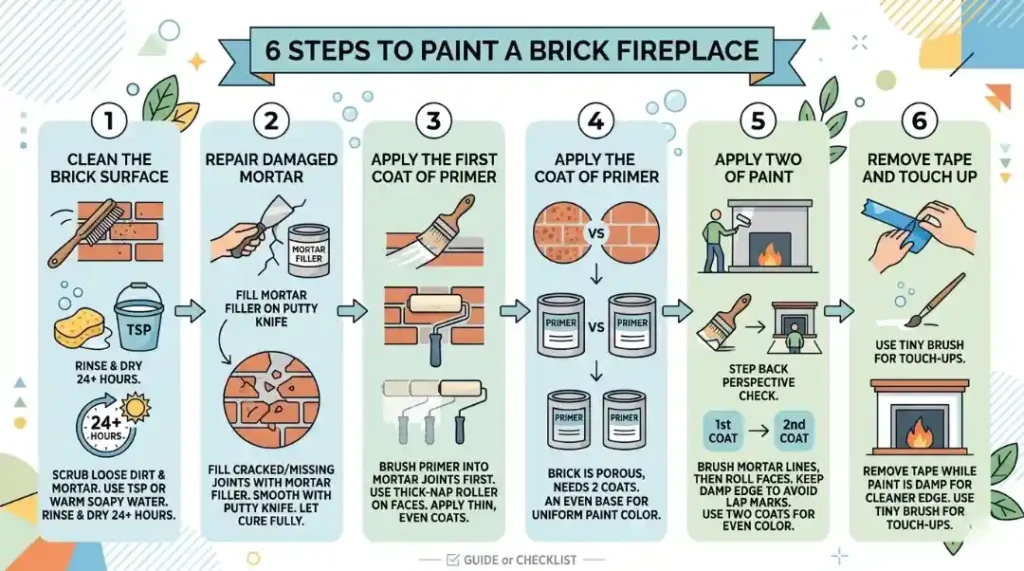
6 Steps to Paint a Brick Fireplace
Step 1: Clean the Brick Surface
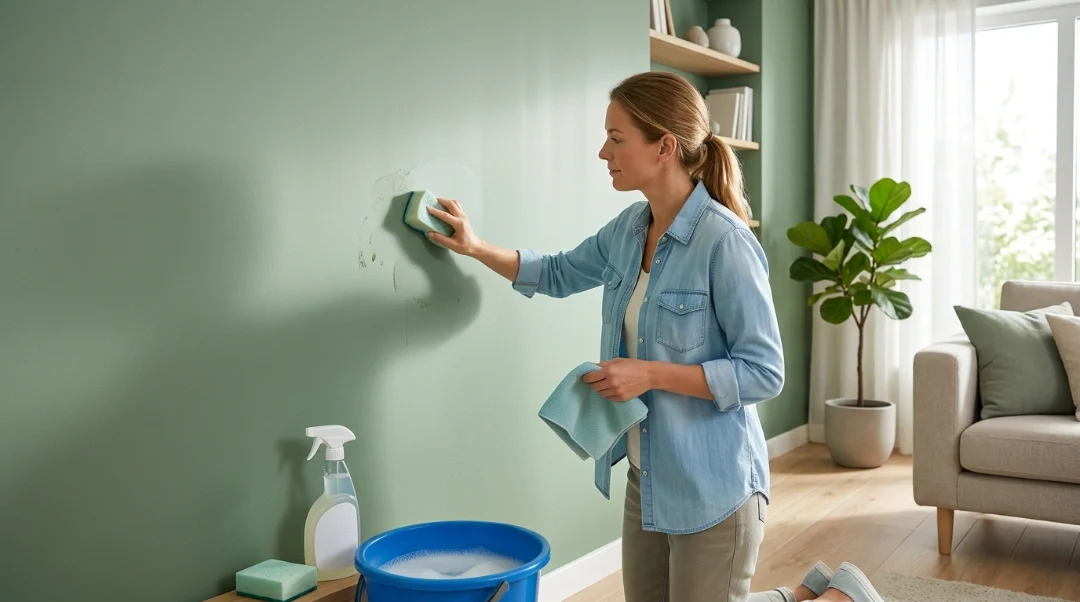
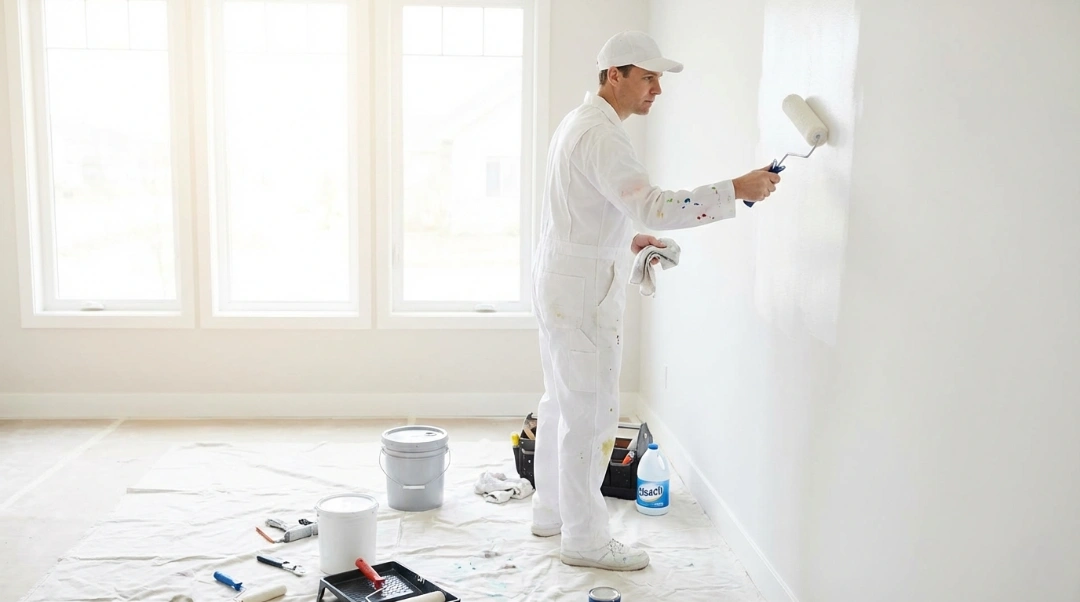
Use a sharp wire brush to scrub the brick and get rid of any loose dirt that is stuck in the mortar joints. Then, use a scrub brush and TSP solution or warm soapy water to clean the whole thing.
Rinse it well with clean water and let it dry for at least 24 hours. Don’t hurry through this step. If you paint over wet brick, the paint won’t stick and will eventually peel.
Step 2: Repair Damaged Mortar
Fill any cracked or missing mortar joints with pre-mixed mortar filler. Smooth it with a putty knife and let it cure fully according to the product instructions.
Small brick chips can be filled and lightly sanded. Major structural issues need a professional mason before you proceed.
Step 3: Apply the First Coat of Primer
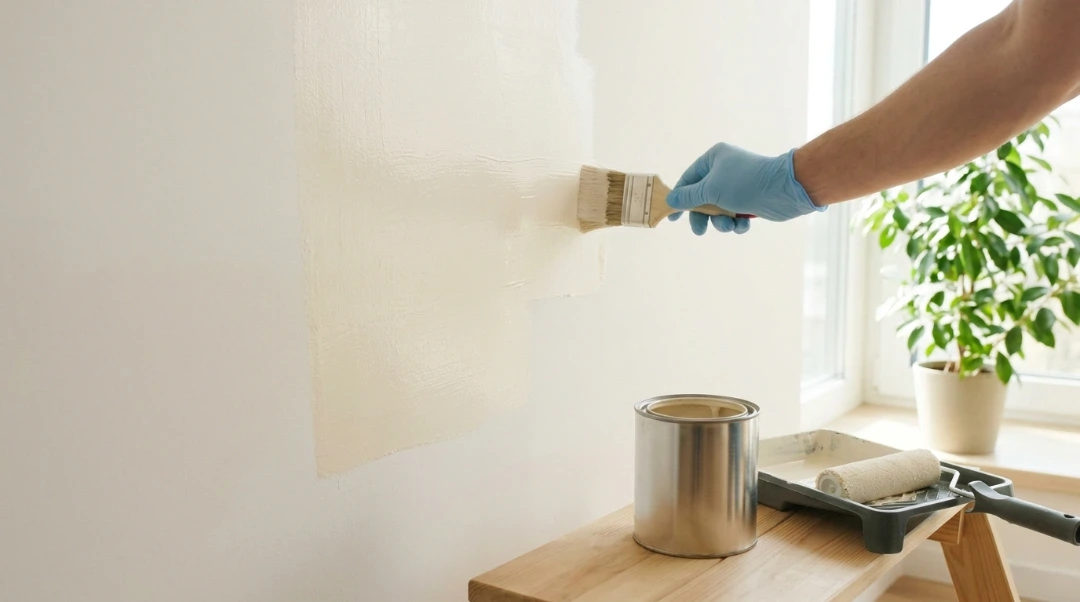
Use your angled brush to work primer into all the mortar joints first. Then use a roller with a thick nap to cover the main brick faces.
Apply thin, even coats rather than one thick layer. Thick coats dry slowly and can sag on textured brick. Let the first coat dry fully before adding the second.
Step 4: Apply the Second Coat of Primer
Yes, the brick needs two coats of primer. The surface is rather porous, so the first coat won’t go on evenly. The second coat makes the base even, which makes the color of your paint look the same.
This is really important when painting light colors over black or very dirty masonry.
Step 5: Apply Two Coats of Paint
Use your angled brush on the mortar lines first, and then roll the main brick surfaces. Keep the edge damp as you work to avoid lap marks.
Before putting on the second coat, make sure the previous one is totally dry. Most projects need two full applications to get a consistent, even color. After each coat, step back and look for thin or missed places in the side light.
Step 6: Remove Tape and Touch Up
Take off the painter’s tape while the last layer is still a little sticky, but not completely dried. This gets you a cleaner edge without having to peel off dried paint.
Use a tiny brush to fix any thin patches or borders. Before using the fireplace or putting decorations back, let the paint dry completely.
Common Mistakes to Avoid
This section is what your competitors don’t tell you and it matters.
Not putting on the second coat of primer. One coat of paint on brick is virtually never enough. No matter how many layers of paint you put on top, the paint will still seem blotchy and uneven.
Wet painting bricks. Brick holds moisture longer than it looks like it does, even when it seems dry. Wait a full day after cleaning before you start priming.
Using normal paint on the inside near the firebox. Heat will change the color of regular paint. Always use paint that can handle heat on any surface that is less than 6 inches from the firebox opening.
Take off the tape after the paint has dried completely. When you pull on the tape, the dry paint sticks to the edge and rips. Take it off while the last coat is still a little soft.
Whitewash vs. Painting a Brick Fireplace
It’s important to know about whitewashing before you decide to paint the whole thing.
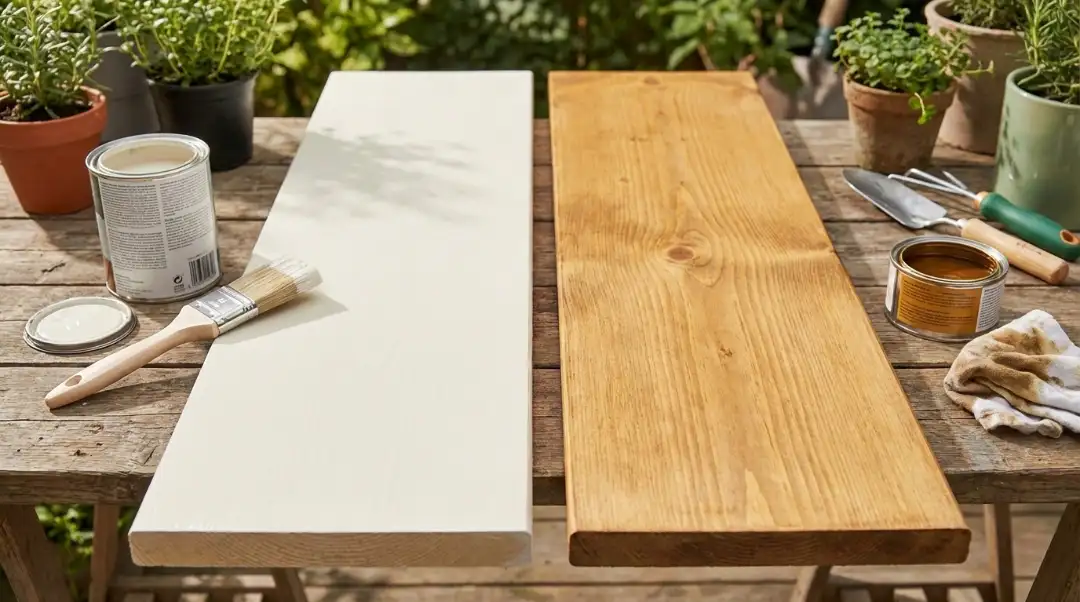
To whitewash, you mix white paint with water (usually 50% paint and 50% water) and use a brush to apply it. Then you wipe it off partially. The end result shows part of the original color and the natural roughness of the bricks. It seems more natural and less opaque than solid paint.
Full painting covers the brick completely and lets you choose the color you want. It lasts longer and looks cleaner from far away.
Choose whitewash if you want to keep some of the brick’s natural character. Choose full paint if you want a solid, contemporary look or you’re covering heavy staining and soot.
Limewash is another trending option. It’s mineral-based, creates a weathered, aged texture, and is more breathable than regular paint. It’s worth researching if you want something beyond the standard two options.
How Much Does It Cost to Paint a Brick Fireplace?
| Item | Estimated Cost |
| Masonry primer (1 gallon) | $20–$35 |
| Acrylic latex paint (1 gallon) | $30–$60 |
| Brushes and roller | $15–$25 |
| Painter’s tape and drop cloths | $10–$15 |
| Cleaning supplies (TSP, brushes) | $10–$20 |
| Total DIY Cost | $85–$155 |
Hiring a professional painting service runs $200–$600 depending on fireplace size and prep work needed. For complex projects, older fireplaces, or if you simply want guaranteed results, professional help is worth the investment.
If you’re in the Seattle area and want professional results without the weekend-long project,Interior Painting Services Seattle from Inter Color Painting LLC handles fireplace painting with full prep, premium materials, and clean results.
Conclusion
You don’t have to keep your brick fireplace black or old. If you clean the fireplace well, use a good masonry primer, and then paint it with two thin coats of acrylic latex paint, it can become a clean focal point that brightens up the whole space. Homeowners can give their living room a new look by painting their brick fireplace instead of tearing it down or initiating a pricey remodel.
If you’d prefer to let professionals do the work, the staff at Inter Color Painting LLC can help. Our experts take care of fireplace updates and comprehensive interior projects, making sure to prepare the surfaces carefully and use long-lasting finishes. Contact us immediately for a personalized quotation or project consultation. Our professionals can help you make your fireplace and home seem new again.
FAQs
Is painting a brick fireplace a good idea?
Yes, painting a brick fireplace is a good idea for most homeowners. It’s affordable, dramatically updates a room’s look, and covers years of soot and staining. The main downside is that removing paint later is labor-intensive, so treat it as a long-term change.
What kind of paint do you use for a brick fireplace?
Use acrylic latex paint that is made for brickwork and is of good quality. Water-based coatings let the brick breathe and keep moisture out better than oil-based paints. Always use paint that can handle heat around the firebox entrance to keep it from fading and flaking.
Can I paint directly onto brick?
No. You should always apply masonry primer before painting brick. Brick is highly porous and absorbs paint unevenly without primer, leading to a patchy, inconsistent finish. Two coats of primer give you the stable base your paint needs to adhere and look even.
What is the downside of painting brick?
The primary problem is that it lasts forever. It takes a lot of work to remove paint from brick, including sanding and chemical stripping. Painted brick also needs more care than natural brick. You have to touch it up every few years when the surface chips or weathers.
How long does brick last after being painted?
With proper preparation and quality paint, a painted brick fireplace can look great for 5 to 10 years before needing a refresh. Skipping primer or using low-quality paint cuts that lifespan significantly sometimes to just 2 to 3 years.